As Amazon Associates, we earn from qualifying purchases. This means we may receive a small commission at no extra cost to you if you click through and make a purchase.

Industrial prototypers, prop makers, and engineering teams frequently struggle with the bottleneck of standard build envelopes when fabricating oversized models. When an intricate model exceeds ordinary dimensions, operators must slice geometry across multiple files, insert alignment pins, and spend hours filling seams, sanding bonded joints, and correcting dimensional drift. Furthermore, maintaining consistent material temperature across extended print runs and manually replenishing resin creates unexpected failures and workflow interruptions. The Anycubic Photon Mono M7 Max addresses these exact production challenges. Engineered as a capable large format resin 3d printer, this machine combines an expansive physical capacity with automated material handling, targeting commercial designers and fabrication shops that require high-throughput output without the labor of sectioning oversized models.
For workshop managers seeking an authoritative anycubic mono m7 review, the verdict is decisive: this hardware delivers an expansive workspace paired with modern heating and autofill features that streamline massive print jobs. While the substantial 24 kg chassis and large vat volume require a dedicated workshop footprint, the printer provides dependable fidelity and substantial time savings for demanding fabrication tasks.
01 Quick Verdict
The Anycubic Photon Mono M7 Max is an exceptional workhorse for studios and commercial makers producing full-scale components, masks, and high-density production runs. It resolves the classic headaches of large-scale resin printing through intelligent automation, solid mechanical stability, and exceptional thermal control that keeps photopolymer resin at an ideal working viscosity throughout demanding cycles.
- Expansive 298 x 164 x 300 mm build volume eliminates the need to slice, pin, and glue large assembly projects.
- Advanced automated resin management system handles continuous feeding and one-key residual resin recycling.
- Dynamic temperature-controlled vat maintains consistent resin temperature for improved flow characteristics and layer adhesion.
- LighTurbo 3.0 optical system pairs a COB light source with a Fresnel lens to deliver over 90 percent light uniformity across the 13.6-inch 7K screen.
02 Anycubic Photon Mono M7 Max Features Explained
01 Huge Build Volume and Build Plate Dimensions
The defining capability of this machine is its expansive physical envelope. Offering a spacious anycubic photon mono m7 max build volume of 298mm by 164mm by 300mm, the unit provides designers and prop fabricators with the physical headroom needed to complete full-scale objects in a single uninterrupted operation. Standard desktop resin machines, such as the compact anycubic photon mono 4, excel at miniature details but force operators to segment larger sculpts into multiple interlocking parts. With this platform, large models print as single, structurally sound units that retain structural integrity without bonded seam lines.
This massive volume also translates directly into batch-manufacturing efficiency for busy workshops. Commercial production teams can populate the spacious build plate with dozens of small-to-medium parts simultaneously, streamlining fulfillment without operating multiple separate machines. High-precision positioning lead screws anchor the vertical motion, ensuring that the heavy build plate travels with exceptional mechanical rigidity throughout the full 300mm Z-axis stroke, which prevents layer shifting even when holding heavy solid models suspended above the vat.
02 LighTurbo 3.0 Optical System with 7K Resolution
Large format resin printing often encounters light divergence toward the outer perimeter of the LCD panel, which can soften details or cause uneven cure depths across expansive build areas. To counteract this physical limitation, the printer incorporates the anycubic lighturbo 3.0 optical engine. This system combines a high-output Chip-on-Board (COB) ultraviolet light source with a precision Fresnel lens, achieving a light divergence angle within 3 degrees. Factory calibration technology ensures that light uniformity across the entire 13.6-inch masking LCD surpasses 90 percent, meaning that models positioned at the extreme edges receive virtually identical ultraviolet exposure to those in the center.
The optical system works in tandem with a 13.6-inch 7K monochrome LCD screen, ensuring that fine surface features, crisp micro-textures, and sharp mechanical edges remain pristine across the entire printing area. With the anti-aliasing feature activated, the printer blends transitions between pixel boundaries smoothly, effectively minimizing visible stepping on organic contours. Operators familiar with earlier platforms like the anycubic mono 4k will appreciate how the updated optical array balances massive physical scale with fine edge definition.
03 High-Speed Intelligent Release 2.0 Mechanism
Layer separation forces represent one of the most critical mechanical challenges in resin 3D printing, especially when curing large cross-sectional areas. The anycubic mono m7 resin printer implements an intelligent release 2.0 system designed to actively mitigate suction peel forces as the cured layer detaches from the release film. By optimizing peel dynamics, the system prevents layer delamination, support breakage, and model deformation, allowing the machine to accelerate vertical transitions safely. This engineering enables an anycubic mono m7 print speed reaching up to a maximum of 60mm/h, allowing expansive models to finish far faster than traditional rates.
When evaluated in an anycubic mono m7 vs m3 max comparison, the upgraded release mechanism and optical power yield a 200 percent speed increase over the earlier generation M3 Max hardware. Faster cycle times radically transform prototype validation schedules, permitting engineers to inspect physical iterations on the same day rather than waiting through multi-day print runs. Furthermore, reduced release stress extends the working service life of the vat release film, lowering operating overhead and reducing maintenance interruptions.
04 Automated Resin Management and Dynamic Temperature Control
One of the most persistent issues when operating a large resin machine is handling photopolymer volume and viscosity. The printer features a dedicated dynamic temperature control resin vat that actively monitors and regulates resin temperature. Photopolymer resins are sensitive to ambient temperature fluctuations, with cooler conditions causing resin to thicken, increasing viscosity, and leading to under-curing or failed supports. By maintaining an optimal working temperature at all times, the heated vat ensures smooth resin reflow across the wide release film, directly enhancing print success rates regardless of workshop climate shifts.
In addition to temperature regulation, the printer includes an integrated resin auto-fill feature paired with a generous 1300ml vat capacity. The automated system continuously supplies resin during lengthy print runs, preventing resin starvation when fabricating dense, resin-hungry models. Once the print cycle finishes, operators can engage the one-key recycling feature to pump unused liquid resin back into storage bottles cleanly. This hands-free cycle eliminates messy spills, reduces manual funneling, and safeguards workshop cleanliness during heavy production schedules.
05 Ergonomic Flip-Open Cover and Resin Drip Suspension
Operating large resin hardware typically presents physical handling inconveniences, particularly lifting and storing massive plastic UV hoods. The Anycubic Photon Mono M7 Max circumvents this problem with a balanced flip-open cover design that supports effortless one-hand opening. The hinge mechanism allows the lid to hover securely at any open angle greater than 45 degrees, eliminating the need to find adjacent table space to deposit a dripping, bulky plastic cover every time you check a print or replenish materials.
Post-processing ergonomics receive another smart upgrade through the post-print suspension feature. After a build finishes, the build platform can be suspended at a tilted angle directly above the vat, enabling residual surface resin to drain directly back into the 1300ml reservoir before the operator removes the plate. This simple mechanical adjustment recaptures valuable photopolymer, decreases post-wash mess in cleaning tanks, and keeps workbench surfaces clean during model extraction.
03 Specs
| Attribute | Detail |
|---|---|
| Model | Photon Mono M7 Max |
| Brand / Manufacturer | ANYCUBIC |
| Screen Size and Resolution | 13.6-inch 7K Monochrome LCD |
| Build Volume | 298mm x 164mm x 300mm |
| Optical Engine | LighTurbo 3.0 (COB light source with Fresnel lens) |
| Light Uniformity & Divergence | Over 90% uniformity, light angle within 3° |
| Maximum Print Speed | Up to 60mm/h with intelligent release 2.0 |
| Vat Features | Dynamic temperature control, 1300ml capacity, release film |
| Resin Management | Automated resin feeding and one-key recycling |
| Machine Dimensions & Weight | 20.47″D x 20″W x 31″H; 24 kg |
| Chassis Materials | ABS, Aluminum, Polycarbonate |
04 Anycubic Photon Mono M7 Max Pros and Cons
Pros
- Expansive 298 x 164 x 300 mm build volume
- LighTurbo 3.0 optical engine with 7K screen
- Up to 60 mm/h printing speed
- Dynamic temperature control resin vat
- Automated resin feeding and one-key recycling
- Space-saving 45-degree hover flip-open cover
Cons
- Heavy 24 kg chassis requires dedicated bench space
- Large 1300 ml vat demands significant resin volume
- Tall vertical clearance needed for flip-open cover
05 Best Use Cases
- Fabricating full-size helmets, gauntlets, and wearable armor components seamlessly for anycubic mono m7 for cosplay fabrication without assembly lines.
- Producing expansive tabletop gaming terrains, architectural scale models, and diorama bases in single, unbroken print sessions.
- Batch-printing commercial runs of engineering prototypes, dental models, or collectible figurines on a single expansive build platform.
- Conducting rapid functional prototyping in professional workshops where heated vat control ensures predictable results in variable shop temperatures.
06 Before You Buy
Before introducing this machine into your production pipeline, you must evaluate workshop space and structural accommodations. With physical dimensions measuring 20.47 inches deep, 20 inches wide, and 31 inches tall, plus a total dry weight of 24 kg, this unit requires a sturdy, dedicated workbench. Users upgrading from compact desktop hardware like the anycubic photon mono 4 ultra will need significantly more clearance above the printer to comfortably utilize the flip-open cover at angles beyond 45 degrees. Adequate ventilation or an active air filtration setup is also strongly advised when working with a large-capacity 1300ml vat, as the surface area of exposed liquid resin generates noticeable airborne vapor.
Regarding compatibility and package inclusions, the listing emphasizes the primary hardware features—such as the LighTurbo 3.0 system, dynamic temperature vat, auto-fill unit, and high-precision lead screws—constructed from ABS, aluminum, and polycarbonate. However, the listing does not specify whether extra release films, slicing software licenses, or specialized cleaning toolkits are bundled in the box. Furthermore, the listing does not specify third-party resin profiles or detailed connectivity options, so buyers should ensure their workstation is equipped with appropriate post-processing wash and cure stations capable of accommodating a 300mm tall build envelope.
07 How It Compares With Similar Picks
| Product | Best For | Key Difference |
|---|---|---|
| Anycubic Photon Mono M7 Max | Large-scale high-precision resin printing and cosplay props | 13.6-inch 7K masking LCD, 298x164x300mm volume, heated vat, autofill resin handling |
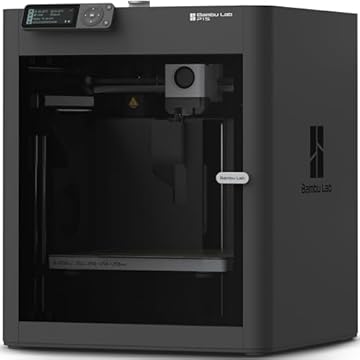
| MakerWorld Model Library | Multi-color filament printing and rapid CoreXY prototyping | FDM extrusion with Bambu Lab P1S Combo and AMS multi-color system rather than photopolymer resin |
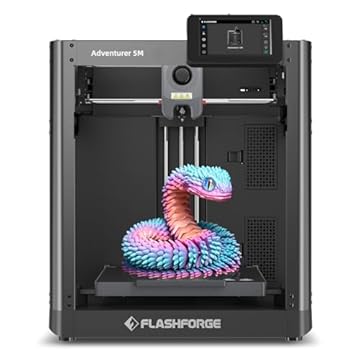
| FLASHFORGE Adventurer 5M 3D Printer | Rapid mechanical FDM parts and quick-swap nozzle convenience | CoreXY FDM printer with 220x220x220mm volume, 600mm/s print speed, and 280°C direct extruder |
| Beginner-Friendly Ecosystem with MakerWorld Model | Enclosed filament printing within an integrated model ecosystem | Enclosed CoreXY Bambu Lab P1S FDM printer designed for filament fabrication without liquid handling |
Deciding between these options hinges entirely on your material requirements and model complexity. If your workflow centers on glass-smooth surface textures, microscopic detail, and seamless full-size models, the Anycubic Photon Mono M7 Max is the clear choice. Conversely, choose an alternative like the Bambu Lab P1S Combo with MakerWorld Model Library or the Flashforge Adventurer 5M when your priority shifts to structural thermoplastics, multi-color filament parts, or quick mechanical brackets that bypass the post-curing and alcohol washing required by stereolithography systems.

08 Bottom Line
When asking is anycubic mono m7 worth it, the answer depends on how much time you currently lose to splitting 3D models and managing resin failures. The Anycubic Photon Mono M7 Max successfully removes the primary pain points of large-format resin fabrication by marrying a colossal 298 x 164 x 300 mm build volume with practical quality-of-life additions like a heated vat, automated resin top-offs, and an ergonomic flip-up hood.
For prop studios, industrial designers, and digital artists requiring reliable large-scale resin production, this machine represents a massive operational upgrade over standard desktop resin printers and older-generation equivalents. If you possess the workbench space to accommodate its 24 kg chassis and substantial height, the Photon Mono M7 Max delivers the precision, speed, and automated reliability necessary to streamline demanding manufacturing workflows.
09 FAQ
What is the maximum build volume of the Anycubic Photon Mono M7 Max?
The Anycubic Photon Mono M7 Max features a build envelope measuring 298mm in width, 164mm in depth, and 300mm in height. This spacious interior provides ample room for full-scale helmets, anatomical models, and dense production batches of small components without requiring models to be split into separate parts.
How does the dynamic temperature control resin vat work?
The dynamic temperature control vat actively regulates the temperature of the liquid photopolymer inside the 1300ml reservoir. By sustaining an optimal working temperature throughout the print cycle, it lowers resin viscosity, enhances material flow across the release film, and significantly improves layer adhesion during colder seasons or in unheated workshops.
What makes the LighTurbo 3.0 optical engine unique?
The LighTurbo 3.0 system integrates a Chip-on-Board (COB) light source with an advanced Fresnel lens and factory calibration technology. This arrangement ensures a narrow light divergence angle within 3 degrees and yields more than 90 percent light uniformity across the 13.6-inch 7K monochrome screen, preventing distortion at the edges of the build plate.
How does the printing speed compare to older models?
Equipped with intelligent release 2.0 technology, the Anycubic Photon Mono M7 Max achieves maximum print speeds of up to 60mm/h. According to manufacturer data, this represents a 200 percent speed increase compared to the previous generation Anycubic Photon M3 Max, dramatically reducing turnaround times on large prints.
Does the printer come with automatic resin refilling?
Yes, the printer includes an automated resin feeding feature that replenishes the vat during long print runs to avoid material starvation. Additionally, it offers a one-key recycling function that pumps remaining liquid resin out of the 1300ml vat and back into the bottle once printing finishes.