As Amazon Associates, we earn from qualifying purchases. This means we may receive a small commission at no extra cost to you if you click through and make a purchase.

Modern product development teams frequently lose valuable engineering hours wrestling with entry-level manufacturing tools that demand constant manual calibration. When technicians must spend their shifts adjusting bed leveling screws, diagnosing poor layer adhesion, or managing feed tension, iterative prototyping grinds to an expensive halt. The Creality Ender 3 V3 SE addresses this persistent issue by integrating hands-free bed compensation, elevated operational velocity, and a modular design built for fast workspace deployment.
For professionals seeking a dependable additive manufacturing unit without high setup overhead, this Ender 3 V3 SE review examines how automated calibration and reliable extrusion streamline hardware validation. As a practical 3D printer, Ender 3 models have traditionally served as modder platforms, but this revision focuses on automated execution straight out of the crate. While its open frame limits material selection to standard drafting filaments, its reliable mechanical baseline makes it a capable fabrication asset for daily design verification.
01 Quick Verdict
The Creality Ender 3 V3 SE provides an automated, low-friction prototyping experience that eliminates the routine calibration chores of legacy desktop machines.
- Prints up to 250mm/s with 2500mm/s² acceleration to compress prototyping cycles
- Hands-free bed leveling combining a CR Touch probe with an automated strain sensor
- Upgraded Sprite dual-gear direct extruder for reliable feeding of rigid and flexible filaments
- Fast 20-minute three-step assembly procedure that minimizes deployment downtime
02 Creality Ender 3 V3 SE Features Explained
01 250mm/s Print Speed and Acceleration Dynamics
Iterative engineering cycles depend heavily on rapid physical turnaround, and Creality Ender 3 print speed reaches an impressive ceiling of 250mm/s backed by 2500mm/s² acceleration. According to listing data, this motion capability cuts project fabrication duration by up to 73% compared to conventional printers operating at baseline speeds. Rapid head translation ensures dimensional fit checks and preliminary functional models can transition from computer models to the physical workbench in a single shift.
Sustaining print fidelity at elevated speeds requires precise control of moving mass and structural resonance. The hardware preserves edge accuracy and dimensional consistency without introducing excessive mechanical noise or surface defects during rapid sweeps. For design offices handling multiple daily revisions, these motion parameters significantly reduce queue bottlenecks on rapid validation parts.
02 Sprite Direct Extruder and Auto Filament Handling
Extrusion precision is critical for functional components, particularly when producing compliant joints or flexible dampening pads. The Ender 3 direct extruder features Creality’s upgraded “Sprite” full metal dual-gear drive, which generates dependable pushing force within a lightweight footprint. This mechanism natively drives standard rigid materials like PLA and PETG, while reliably advancing flexible TPU (95A) without the binding issues common in Bowden configurations.
Material swaps are handled via integrated automated loading and unloading functions on the interface screen. Operators tap “Extrude” to initiate a smooth flow of filament through the heated nozzle, or select “Retract” to quickly eject the remaining strand. This automated sequence minimizes operator intervention, simplifies spool transitions between print jobs, and prevents nozzle clogging caused by improper manual pulling.
03 Automated CR Touch Leveling with Strain Sensor Calibration
Inconsistent first-layer adhesion is a primary failure point during unmonitored overnight runs, making Ender 3 auto leveling an essential baseline feature. The system pairs an active CR Touch sensor with a dedicated mechanical strain sensor mounted directly on the toolhead. The strain sensor measures physical contact between the nozzle tip and the build platform to set the Z-offset automatically, removing the guesswork of manual paper clearance adjustments.
Following Z-offset detection, the CR Touch probe scans the build surface to generate a high-density bed topology matrix that compensates for microscopic surface variations in real time. Operators are entirely freed from manual bed adjustment wheels, creating a repeatable printing surface across the full 8.66×8.66×9.84 inch build envelope.
04 Dual Z-Axis Screws and Rigid Linear Shaft Motion
Vertical stability governs whether prototypes exhibit smooth exterior walls or layer registration errors. This unit incorporates synchronized dual Z-axis lead screws that eliminate gantry tilt and deflection across the vertical axis. Maintaining level gantry alignment throughout the 9.84-inch vertical range ensures tall mechanical geometries remain structurally uniform from base to crown.
On the horizontal plane, the Y-axis carriage glides on dual 8mm linear shafts fabricated from wear-resistant steel. These rigid cylindrical shafts handle continuous bed inertia during high-speed printing, preventing layer shifts along the primary movement axis. Users transitioning from legacy platforms like the ender 3 v2 will appreciate the elimination of loose eccentric nut adjustments and wheel wear.
05 Rapid Three-Step Assembly and Commissioning
Commercial productivity demands minimal machine preparation, and Ender 3 setup time is kept remarkably low thanks to factory preassembly. Deploying the printer involves only three mechanical steps: mounting the vertical gantry to the base chassis, fastening the display interface, and attaching the filament spool holder. The listing notes that unboxing to initiating the first test print requires approximately 20 minutes.
This streamlined setup eliminates extensive squaring, cable crimping, and loose component alignment that previously frustrated new equipment onboarding. Those interested in further refinements across this platform family can explore our creality ender 3 v3 breakdown to see how design simplifications improve workspace efficiency across different machine classes.
03 Specs
| Attribute | Detail |
|---|---|
| Brand | Creality |
| Manufacturer | Creality 3D |
| Model Number | Ender 3 Upgrade V3 SE |
| Product Dimensions | 13.9″D x 13.9″W x 18.9″H |
| Item Weight | 7.12 kg |
| Print Volume | 8.66 x 8.66 x 9.84 inches |
| Maximum Printing Speed | 250 mm/s |
| Maximum Acceleration | 2500 mm/s² |
| Extruder Type | “Sprite” Full Metal Dual-Gear Direct Extruder |
| Leveling System | CR Touch Auto Leveling and Strain Sensor Auto Z-Offset |
| Supported Materials | PLA, PETG, TPU(95A) |
| Support Coverage | 12-month after-sales service with 24-hour response via Amazon |
04 Creality Ender 3 V3 SE Pros and Cons
Pros
- 250mm/s maximum print speed
- Automated CR Touch and strain sensor leveling
- Sprite full metal dual-gear direct extruder
- Preassembled frame with 20-minute setup
- Stable dual Z-axis and steel Y-axis shafts
- Effortless auto filament loading and unloading
Cons
- Open-frame structure without enclosure
- Materials limited to PLA, PETG, and TPU
- Listing does not specify wireless connectivity
05 Best Use Cases
- Rapid physical iteration of mechanical CAD models requiring fast dimensional verification using standard PLA or PETG.
- Fabrication of flexible protective boots, compliant gaskets, and ergonomic handles using 95A durometer TPU.
- Low-friction desktop manufacturing in design consultancy workspaces that cannot spare hours for manual calibration.
- Small-scale batch production of custom installation brackets and benchtop fixtures within an 8.66×8.66×9.84 inch boundary.
06 Before You Buy
Reviewing the official Ender 3 3D printer specs highlights a clear focus on entry-level prototyping materials. Because this machine uses an open-frame Cartesian bed-slinger architecture, it is engineered primarily for PLA, PETG, and TPU (95A). The listing does not specify compatibility with engineering polymers such as ABS, ASA, or polycarbonate, which require high-temperature enclosed chambers to avoid ambient thermal drafts and severe warping. If your prototyping needs center primarily on ultra-fine visual details, smooth surfaces, or microscopic features rather than structural filament parts, dedicated resin units such as the elegoo mars 5 provide an entirely different tooling path.
Prospective buyers should also examine workspace environment requirements and connectivity limitations. The listing does not specify integrated chamber enclosures, air filtration systems, or built-in camera monitoring hardware. What the package does supply is a mechanically rigid printer backed by Creality’s 12-month official support service with stated 24-hour response times through Amazon messaging channels. This provides reliable operational protection for commercial teams that need quick vendor responsiveness if unexpected hardware issues arise.
07 How It Compares With Similar Picks
| Product | Best For | Key Difference |
|---|---|---|
| Creality Ender 3 V3 SE | Rapid, automated prototyping with standard PLA, PETG, and TPU | Open-frame bed slinger with 250mm/s speed, Sprite direct extruder, and dual-sensor auto leveling. |
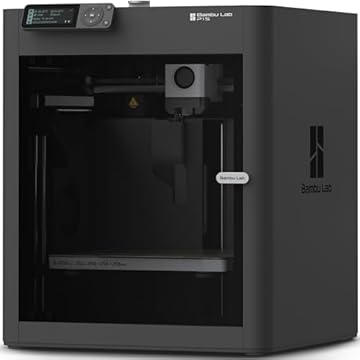
| MakerWorld Model Library | High-speed multi-color production and cloud ecosystem workflow | CoreXY platform featuring multi-color printing capabilities via the AMS unit and Bambu Lab P1S Combo integration. |
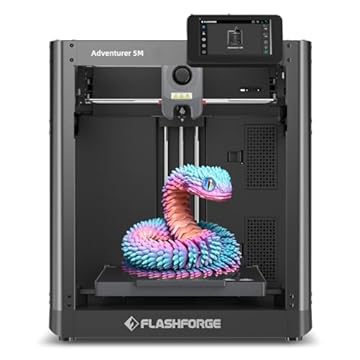
| FLASHFORGE Adventurer 5M 3D Printer | High-velocity enclosed drafting and higher-temperature nozzles | CoreXY all-metal architecture boasting 600mm/s max print speed and a 280°C direct extruder with 3-second detachable nozzle. |
| Beginner-Friendly Ecosystem with MakerWorld Model | Enclosed single-extrusion technical parts in a turnkey environment | Fully enclosed CoreXY Bambu Lab P1S chassis built for high-speed precision printing and model library integration. |
Selecting among these alternatives depends largely on your material scope, velocity needs, and structural enclosure requirements. If your projects involve complex visual presentations or color-coded mechanical assemblies, the MakerWorld Model Library bundle delivers multi-color AMS capabilities straight out of the box. Teams needing extreme drafting velocity and high-temperature nozzles can consider the FLASHFORGE Adventurer 5M 3D Printer, which reaches speeds up to 600mm/s with a quick-swap 280°C nozzle. For studios that prioritize an enclosed workspace for consistent ambient thermal control without multi-material accessories, the Beginner-Friendly Ecosystem with MakerWorld Model offers a self-contained CoreXY alternative.

08 Bottom Line
When determining whether the Ender 3 is worth it for a busy commercial environment, the Creality Ender 3 V3 SE offers a compelling balance of high speed and minimal user intervention. By incorporating genuine hands-free leveling, strain sensor Z-offset calibration, and a reliable dual-gear Sprite extruder, it eliminates the tedious manual maintenance routines that historically plagued budget 3D printing.
Deploying the Ender 3 for prototyping allows engineers to test fit, form, and functional clearances rapidly without devoting valuable staff hours to machine tuning. With its 250mm/s capability, stable dual Z-axis motion system, and quick 20-minute setup routine, it stands out as an efficient, dependable tool for fast-paced development benches.
09 FAQ
What is the actual setup time required for the Creality Ender 3 V3 SE?
Unpacking to initiating the first test print takes approximately 20 minutes due to the preassembled modular design. Operators only need to complete three simple mechanical assembly steps: securing the vertical gantry to the base, mounting the display panel, and snapping on the spool holder before running initial calibration.
Does the CR Touch sensor eliminate manual bed leveling entirely?
Yes, the system combines a CR Touch auto-leveling probe with an integrated strain sensor that automatically calculates the nozzle Z-offset. This eliminates the need for manual bed leveling thumbwheels, paper feeler gauge testing, or continuous manual compensation during early print stages.
Can the Creality Ender 3 V3 SE handle flexible filaments like TPU?
Yes, the upgraded Sprite direct extruder features a full-metal dual-gear drive system that feeds flexible TPU (95A) reliably. Because the drive gears sit directly above the hotend rather than through a long Bowden tube, flexible filaments push through smoothly without buckling or jamming.
How does the print speed compare to older Ender 3 revisions?
The Ender 3 V3 SE achieves speeds up to 250mm/s with 2500mm/s² acceleration, saving up to 73% of print time compared to traditional printers. Older legacy Ender models typically operated at 50mm/s to 60mm/s, making this version significantly faster for turnaround cycles.
What materials can you print on this machine?
According to the listing specifications, the Creality Ender 3 V3 SE natively supports PLA, PETG, and TPU (95A). The listing does not specify support for abrasive or higher-temperature materials like ABS, ASA, or carbon fiber blends, which typically require enclosed build environments.
What warranty and after-sales support does Creality provide?
Creality provides a 12-month official after-sales service agreement for the machine. The listing specifies that customer inquiries and technical support requests submitted via Amazon receive a response within 24 hours.