As Amazon Associates, we earn from qualifying purchases. This means we may receive a small commission at no extra cost to you if you click through and make a purchase.

Remote professionals operating outside metropolitan fiber corridors face constant trade-offs between fragile cellular hotspots and sluggish legacy satellite connections. The Starlink Standard Kit addresses this connectivity deficit by combining an advanced phased-array satellite antenna with modern networking hardware engineered to deliver high-speed, low-latency broadband anywhere with an unobstructed sky view. Geared toward residential power users, field engineers, remote consultants, and decentralized teams, this system eliminates the geographic penalties of working beyond urban telecom grids.
For business travelers and homeowners weighing whether to modernize their off-grid setup, our comprehensive look at the starlink standard 4x kit reveals a mature hardware iteration focused on deployment speed, local routing power, and reliable throughput. By bundling a high-performance router and an intuitive alignment workflow, it serves as a turnkey connectivity terminal capable of sustaining synchronous video conferences, massive cloud synchronization tasks, and multi-client workplace demands.
01 Quick Verdict
The Starlink Standard Kit delivers dependable broadband connectivity in remote and rural settings, replacing motorized dish assemblies with a streamlined kickstand and a capable Wi-Fi 6 router.
- High-speed throughput reaching up to 220 Mbps download and 20 Mbps upload.
- Tri-band Wi-Fi 6 wireless architecture with backwards compatibility across 802.11ax, 802.11ac, and 802.11n.
- Includes two integrated Gigabit Ethernet ports on the router for direct wired local area network connections.
- Two-step deployment model utilizing kickstand positioning, mobile app management, and automated network provisioning.
02 Starlink Standard Kit Features Explained
01 Tri-Band Wi-Fi 6 Architecture
At the center of local area distribution sits a high-specification routing unit equipped with starlink tri-band wifi 6 technology. Unlike conventional dual-band units that experience severe spectrum bottlenecks when several devices stream or transfer heavy assets simultaneously, the tri-band wireless array separates network traffic across distinct spectrum lanes to maintain clean transmission paths. Operating across 802.11ax protocols while retaining legacy 802.11ac and 802.11n backward compatibility, the router utilizes three internal antennas to beam consistent wireless signals throughout business, gaming, or home settings.
This radio configuration provides significant latency stabilization during real-time remote meetings and high-bandwidth cloud backups. By spreading laptops, smart televisions, tablets, gaming consoles, and smartphones across isolated wireless frequencies, local congestion is kept to a minimum. The system manages device density efficiently, preventing a single intensive download from disrupting mission-critical communications across other connected endpoints.
02 Integrated Ethernet Connectivity
A notable hardware upgrade in this generation is the inclusion of starlink standard kit ethernet ports directly on the router body. The router includes two dedicated 1000 Mbps LAN ports, eliminating the requirement for proprietary aftermarket dongles or passive network taps when bridging to wired hardware. This allows remote workers to link network switches, workstation docks, direct-attached network storage, or dedicated security surveillance endpoints like an axis communications 01232-001 network interface directly into the Starlink ecosystem.
For demanding business workflows, running physical Cat6 cabling to desktop workstations provides an unshakeable connection unburdened by RF interference or structural physical obstacles. Supporting full Gigabit line rates, these ports allow power users to feed downstream mesh access points or third-party firewall controllers without bottlenecking the satellite receiver’s raw data flow.
03 Rapid Deployment and Gen 3 Router Integration
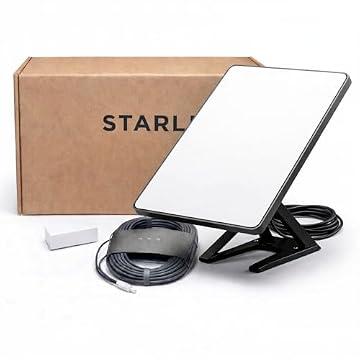
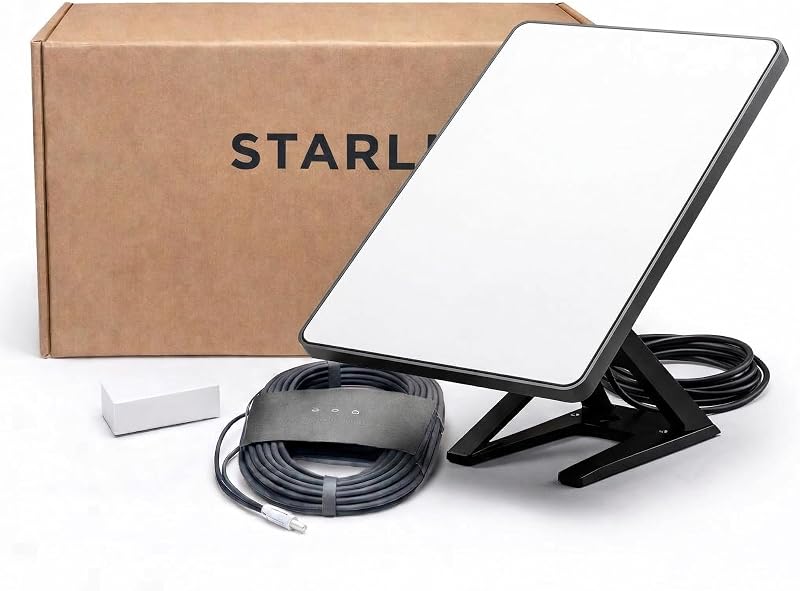
Setting up off-grid satellite connectivity historically involved intricate alignment meters, compass headings, and tedious manual calibrations. The starlink gen 3 router setup reduces the commissioning sequence to two direct steps: plug the hardware into standard utility or inverter power, and point the phased array surface toward an open view of the sky. The kit provides the complete physical hardware chain in a single package, including the primary satellite dish, an integrated kickstand, the Gen 3 router, the interconnecting system cables, and the dedicated power supply.
System configuration and operational monitoring are executed through a mobile application interface. Rather than navigating convoluted terminal commands or web admin panels, users oversee network parameters, verify real-time obstruction metrics, and adjust system states directly from their smartphones. This streamlined provisioning workflow dramatically reduces operational downtime for mobile field teams moving between dispersed job sites.
04 Enterprise Security and Remote Management
Security architecture in decentralized field environments is paramount for corporate compliance. The hardware operates on ZyNOS and supports WPA2-Enterprise alongside standard WPA2-PSK wireless encryption protocols. The presence of WPA2-Enterprise ensures that corporate deployments can authenticate devices using individual credentials and centralized access servers rather than sharing static pre-shared passphrases across an entire team.
In addition to enterprise authentication options, the router incorporates a basic firewall security layer and native remote access capabilities. Network administrators can check connection health, manage security policies, and evaluate fleet status from distant locations via the centralized management app. These integrated security mechanisms help maintain data isolation and perimeter protection across dispersed remote branches.
05 Throughput and Low-Latency Performance
Evaluating raw starlink 4x kit speed metrics shows a system tuned for demanding professional workflows. The terminal achieves downstream data transfer rates reaching up to 220 Mbps, backed by upstream data transfer rates reaching up to 20 Mbps. These figures easily outpace legacy geostationary satellite links, supporting seamless video conferencing, large codebase pulls, cloud desktop hosting, and simultaneous multi-user streaming.
The phased array dish is built inside a rugged, weatherproof housing designed to withstand extreme environmental elements. Whether deployed on exposed job sites, coastal areas, or mountainous off-grid cabins, the terminal maintains beam alignment with orbital satellites without requiring delicate mechanical tracking motors, reducing physical points of failure.
03 Specs
Detailed technical specifications for the starlink 4x kit specs reflect modern networking standards and robust outdoor construction:
| Attribute | Detail |
|---|---|
| Brand | STARLINK |
| Wi-Fi Generation | Wi-Fi 6 (802.11ax, 802.11ac, 802.11n) |
| Frequency Band Class | Tri-Band |
| Data Transfer Rate | 220 Mbps |
| Maximum Upstream Rate | 20 Mbps |
| LAN Port Bandwidth | 1000 Mbps |
| Number of Ethernet Ports | 2 |
| Number of Antennas | 3 (Internal) |
| Operating System | ZyNOS |
| Security Protocols | WPA2-Enterprise, WPA2-PSK |
| Firewall Security Level | Basic |
| Special Features | Internet Security, Remote Access, Weatherproof |
| Included Components | Kickstand, Gen 3 Router, Cables, Power Supply |
| Control Method | App |
04 Starlink Standard Kit Pros and Cons
Pros
- Up to 220 Mbps download and 20 Mbps upload
- Tri-band Wi-Fi 6 with three internal antennas
- Two built-in 1000 Mbps Gigabit Ethernet ports
- Simple two-step plug and point physical deployment
- Enterprise security featuring WPA2-Enterprise and ZyNOS
Cons
- Requires separate ongoing monthly service plan subscription
- Roof mounting brackets not included in basic kit
- Listing does not specify dimensions and operating temperatures
05 Best Use Cases
- Deploying the starlink 4x kit for remote work in off-grid cabins, regional offices, and mobile job trailers requiring low latency for cloud productivity.
- Establishing primary, high-throughput household broadband in rural regions lacking access to fiber-optic or high-speed cable infrastructure.
- Providing mission-critical network failover and auxiliary WAN routing for business branches and critical telecom sites.
- Supporting mobile travel, overland vehicles, and pop-up expedition bases requiring rapid two-step satellite deployment.
- Powering multi-device environments where gaming consoles, smart televisions, and desktop computers share a single tri-band local network.
06 Before You Buy
Operating the starlink standard kit v4 requires an active Starlink satellite service subscription; purchasing the hardware alone does not provide internet access. Users must activate the system by selecting a subscription plan tailored to their specific operational model, choosing between dedicated fixed household plans for permanent residential installations or travel-oriented plans for mobile use. Long-term planners comparing hardware generations should also evaluate next-generation developments such as the starlink v5 kit when forecasting their future infrastructure investments.
Buyers should carefully review their installation surroundings and mounting needs prior to deployment. The kit includes an integrated kickstand for temporary ground or flat-surface positioning, but permanent mounting hardware, pole adapters, and specialized roof brackets are sold separately. Furthermore, while the listing specifies weatherproof construction, the listing does not specify exact physical dish dimensions, unit weight, power consumption ratings in watts, or operational temperature tolerances.
07 How It Compares With Similar Picks
| Product | Best For | Key Difference |
|---|---|---|
| Starlink Standard Kit | High-demand residential, remote office, and stationary travel deployments | Features a separate Gen 3 tri-band Wi-Fi 6 router, 220 Mbps speed, and two 1000 Mbps Ethernet ports. |
| Portable Satellite Internet Mini Kit | Backpacking, RV travel, camping, and ultra-portable off-grid expeditions | Features an all-in-one phased array antenna with integrated Wi-Fi tailored for compact roaming. |
| Heavy Duty Pivot Roof Mounting | Permanent residential or commercial rooftop installations on angled surfaces | Dedicated mounting bracket with adjustable tilt angle rather than an active satellite antenna terminal. |
Choose the Portable Satellite Internet Mini Kit when trunk space, minimal pack weight, and all-in-one integrated portability take precedence over dedicated tri-band router flexibility and physical Ethernet ports. Conversely, if your goal is securing the dish to a steep residential pitch or commercial rooftop, pair the terminal with the Heavy Duty Pivot Roof Mounting kit to achieve a solid, adjustable tilt installation that withstands persistent high winds.
08 Bottom Line
For remote professionals, rural property owners, and mobile teams asking is starlink 4x kit worth it, this hardware delivers exceptional value by removing previous generation bottlenecks. The inclusion of two native Gigabit Ethernet ports, robust Wi-Fi 6 tri-band routing, and WPA2-Enterprise security makes it a dependable enterprise-grade terminal for off-grid operations.
While the recurring subscription commitment and requirement for clear sky visibility remain universal to satellite broadband, this hardware package represents a stable, high-throughput solution that easily handles heavy digital workloads far beyond the reach of standard terrestrial telecommunications.
09 FAQ
How fast can the satellite terminal be set up in the field?
The system is engineered for two-step deployment: simply connect the power and terminal cables using the included kickstand, then point the dish toward the open sky. Configuration and fine alignment are finalized within minutes using the companion mobile application.
Does this hardware package include an active internet data plan?
No, a separate service plan is required to use the system. You must activate the terminal through the provider by choosing an appropriate plan tailored for residential households or on-the-go travel.
Can I connect wired workstation devices directly to the router?
Yes, the included Gen 3 router features two built-in Gigabit LAN Ethernet ports supporting up to 1000 Mbps bandwidth, allowing you to connect desktop PCs, network switches, or direct-attached devices without needing accessory adapters.
Is the satellite hardware durable enough to leave outside permanently?
The terminal features weatherproof construction engineered to endure outdoor exposure across residential, commercial, or remote field sites, though the listing does not specify exact ingress protection IP ratings or temperature extremes.
Can this system support multi-user corporate video conferencing and remote work?
With data transfer speeds up to 220 Mbps downstream and 20 Mbps upstream, coupled with tri-band Wi-Fi 6 spectrum management, the system readily accommodates simultaneous Zoom calls, VPN sessions, and massive file transfers across multiple client devices.