As Amazon Associates, we earn from qualifying purchases. This means we may receive a small commission at no extra cost to you if you click through and make a purchase.

Professional remote workers, traveling consultants, and rural business operators constantly struggle with unstable cellular hotspots and sluggish legacy satellite connections when working away from urban fiber grids. The Starlink Standard Kit addresses this critical bottleneck by providing a high-capacity satellite hardware terminal engineered to deliver enterprise-grade connectivity across remote locations. Designed to handle bandwidth-intensive tasks such as high-definition teleconferencing, large data transfers, and continuous cloud backups, this comprehensive system bridges the gap between nomadic flexibility and fixed-office network reliability.
The short verdict is that this hardware deployment is an indispensable asset for professionals demanding dependable connectivity in unserved or underserved regions. Integrating an updated V4 antenna array with a high-capacity Gen 3 wireless base station, the kit delivers balanced throughput and responsive performance for demanding workflows. For an in-depth contextual view of earlier equipment generations, our review of the starlink 4x kit outlines how satellite hardware continues to evolve for commercial and field operations.
01 Quick Verdict
The Starlink Standard Kit is a streamlined, high-performance satellite internet bundle built to eliminate dead zones for remote operators, digital nomads, and rural households requiring dependable throughput.
- High-speed architecture delivering 220 Mbps downstream and 20 Mbps upstream transfer rates for heavy workloads.
- Advanced tri-band Wi-Fi 6 router running ZyNOS with WPA2 enterprise-grade security protocols.
- Two integrated gigabit Ethernet ports providing 1000 Mbps local connectivity for critical wired workstations.
- Rapid two-step physical installation supported by a dedicated mobile management application.
02 Starlink Standard Kit Features Explained
01 Hardware Architecture and Two-Step V4 Dish Setup
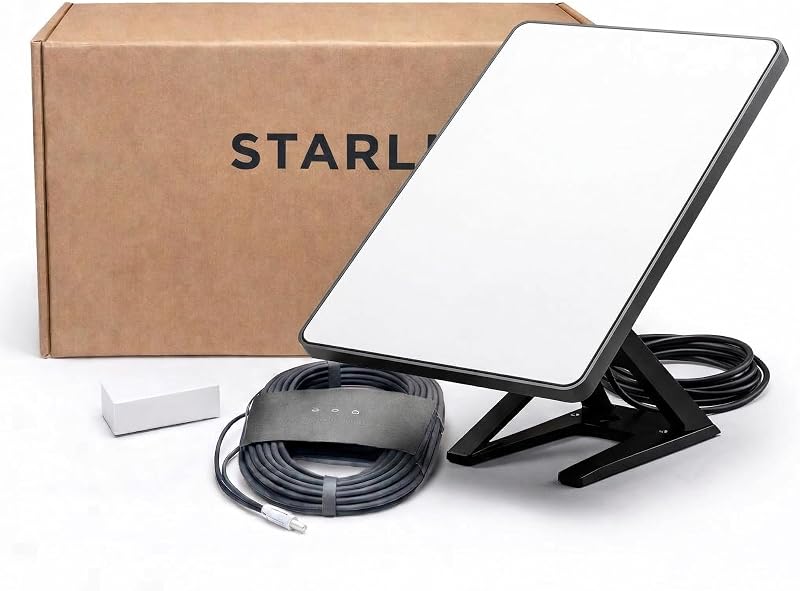
Deploying satellite hardware in off-grid workspaces is often complicated by delicate alignment steps and proprietary mounting brackets. The Starlink Standard Kit simplifies field logistics by pairing an internal three-antenna array with an intuitive kickstand mount designed for rapid field deployment. The starlink v4 dish setup requires just two operational steps: connect the provided cables to the power supply and aim the terminal toward an unobstructed view of the open sky. Because the hardware terminal is manufactured with weatherproof physical protection, professionals can deploy the antenna outdoors in home, business, or field office environments without risking performance degradation from adverse weather conditions.
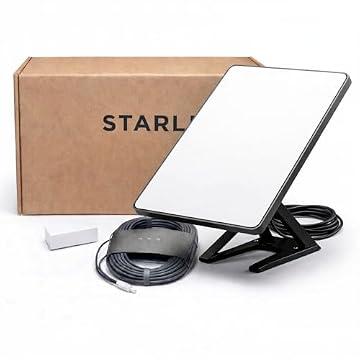
The complete packaging provides everything needed to establish a functioning network terminal immediately, including the external dish, kickstand, gen 3 router, interconnect cables, and dedicated AC power supply. Remote professionals operating in rapidly shifting environments will appreciate that physical alignment does not involve motorized internal tracking components, relying instead on high-gain internal phased antennas and software guidance through the companion mobile app. As users explore potential satellite configurations, checking documentation such as our starlink v5 kit evaluation can offer wider context on standard versus upgraded deployment scenarios.
02 Gen 3 Tri-Band Wi-Fi 6 Router Performance
At the center of the local network is the included Gen 3 router, which represents a massive upgrade in modern wireless routing standards. Operating across three distinct wireless broadcast bands, the starlink tri band wifi 6 architecture supports 802.11ax alongside backwards compatibility for 802.11ac and 802.11n devices. This tri-band wireless environment distributes channel bandwidth intelligently, preventing congested client channels when personal computers, smart televisions, tablets, gaming consoles, and mobile phones access the network simultaneously. The starlink gen 3 router performance ensures consistent signal integrity throughout the working perimeter, reducing packet collisions and signal dropouts during mission-critical tasks.
Managing the router hardware is an onboard ZyNOS operating system, paired with basic firewall security routines and robust WPA2-PSK or WPA2-Enterprise authentication protocols. For corporate team members who must follow strict enterprise compliance mandates, the availability of enterprise security settings allows the network to interface cleanly with company laptops and virtual private network tunnels. The system also supports direct app-based control and secure remote access, enabling system administrators or remote homeowners to check link health, monitor client device status, and configure operational settings from anywhere in the world.
03 High-Speed Data Transfer and Latency Benchmarks
For remote knowledge workers, raw speed means little if real-time collaboration platforms experience jitter, delays, or dropped calls. The starlink standard kit specs indicate a top downstream data transfer rate of 220 megabits per second alongside a maximum upstream throughput of 20 megabits per second. This 220 Mbps pipe provides generous overhead for multi-user households or field teams running simultaneous audio and video conferencing, cloud file syncing, and real-time database indexing. Because the system routes traffic through a low-Earth orbit satellite constellation using the V4 internet band, the starlink standard kit latency remains consistently low compared to legacy geostationary satellite services that introduce disruptive multi-second delays.
When executing bandwidth-heavy operations such as downloading large raw video archives, syncing complex Git repositories, or hosting group presentations, the 20 Mbps upload ceiling maintains crisp voice packets and smooth outbound video feeds. While local atmospheric events can occasionally influence instantaneous transfer rates, the underlying tri-band delivery and low-latency orbital link ensure that distributed knowledge workers retain uninterrupted access to corporate productivity suites, digital workspaces, and critical communications platforms.
04 Integrated Gigabit Ethernet Connectivity and Local Ports
Modern remote work often demands the absolute stability of a direct wired link, especially when working on latency-sensitive virtual desktops or high-security financial portals. The starlink standard kit ethernet ports directly solve the limitations found on older satellite generations by providing two built-in LAN ports with 1000 Mbps bandwidth capacity. These gigabit ports eliminate the need to purchase external dongles or aftermarket breakout adapters, letting users plug a mission-critical workstation, network switch, or dedicated hardware firewall directly into the rear panel of the Gen 3 router.
Having two integrated gigabit Ethernet jacks gives technical professionals the flexibility to integrate existing wired infrastructure seamlessly into remote outposts. You can run one 1000 Mbps line directly to a primary desktop workstation or network-attached storage unit, while utilizing the second port to uplink into a broader commercial switch or secondary mesh network node. This balance of tri-band Wi-Fi 6 coverage and rock-solid wired Ethernet capability ensures the hardware accommodates both mobile smart gadgets and high-throughput corporate hardware without compromises.
03 Specs
| Attribute | Detail |
|---|---|
| Product Name | Starlink Standard Kit (V4 AX 4X System) |
| Wi-Fi Generation | Wi-Fi 6 (802.11ax, 802.11ac, 802.11n) |
| Router Frequency Bands | Tri-Band |
| Maximum Downstream Data Transfer Rate | 220 Mbps |
| Maximum Upstream Data Transfer Rate | 20 Mbps |
| Ethernet Ports | 2 x LAN Ports (1000 Mbps bandwidth) |
| Antenna Configuration | Internal (3 Antennas) |
| Security Protocols | WPA2-Enterprise, WPA2-PSK, Basic Firewall |
| Operating System | ZyNOS |
| Environmental Rating | Weatherproof |
04 Starlink Standard Kit Pros and Cons
Pros
- Fast 220 Mbps download and 20 Mbps upload capability
- Tri-band Wi-Fi 6 Gen 3 router included
- Two built-in 1000 Mbps gigabit Ethernet ports
- Rapid two-step setup with kickstand mount
- Weatherproof construction for outdoor deployment
Cons
- Requires separate paid active Starlink service plan
- Requires unobstructed view of the open sky
- Listing omits cable length and physical dish dimensions
05 Best Use Cases
- Providing reliable primary broadband for rural home offices and off-grid remote professionals who require continuous teleconferencing and enterprise cloud access.
- Establishing high-throughput wired and wireless connectivity for mobile command posts, disaster response operations, and temporary field work sites.
- Powering multi-device households in remote geographical zones where personal computers, streaming televisions, and gaming consoles share a single satellite connection.
- Serving as an immediate, deployable backup internet connection for businesses seeking continuity during terrestrial cable and fiber provider outages.
06 Before You Buy
Before purchasing this satellite hardware, buyers must account for the mandatory active subscription required to establish network communication. The kit hardware does not deliver standalone connectivity; you must activate Starlink by selecting an ongoing service plan tailored specifically for either stationary households or portable travel use. These service tiers are managed through Starlink directly and determine whether your hardware is assigned prioritized home data or roaming capabilities across diverse geographic areas. Ensuring that your operating location has an unobstructed view of the sky is equally critical, as tall trees, overhangs, or dense structural obstructions will interrupt the satellite signal path.
Additionally, review the exact inclusions and physical boundaries of this package. The listing confirms the kit ships with the primary V4 satellite dish, a kickstand, the Gen 3 tri-band router, essential connection cables, and an AC power supply. However, the listing does not specify precise cable lengths, power consumption wattage, operating temperature ranges, or physical dish dimensions. If your remote setup requires complex rooftop mounting poles, masonry clamps, or extended cable runs beyond the supplied components, you will need to plan for those structural adaptations separately.
07 How It Compares With Similar Picks
| Product | Best For | Key Difference |
|---|---|---|
| Starlink Standard Kit | High-bandwidth remote work, business continuity, and multi-user homes | Full-size V4 terminal, standalone Gen 3 Tri-Band Wi-Fi 6 router, and two 1000 Mbps Ethernet ports |
| Portable Satellite Internet Mini Kit | Ultra-compact travel, RV roamers, camping, and lightweight off-grid setups | Phased array antenna with integrated Wi-Fi built directly into a compact roam travel form factor |
When analyzing the starlink standard kit vs mini trade-off, prioritize the Standard Kit if your primary requirement is uncompromised network throughput, multi-client wireless handling, and dedicated gigabit Ethernet jacks for professional workstations. The Standard Kit’s independent Gen 3 router and tri-band Wi-Fi 6 system deliver superior multi-device routing capacity compared to compact integrated units. Conversely, select the Portable Satellite Internet Mini Kit if your priority is minimal packed volume and streamlined mobility for frequent backpacking, RV trips, or remote camping where an all-in-one antenna with integrated Wi-Fi is easier to transport.
08 Bottom Line
For professionals weighing whether the starlink standard kit for remote work is capable of replacing traditional fixed-line internet, this hardware package represents a definitive solution. By combining 220 Mbps download capabilities, low-latency orbital connectivity, modern tri-band Wi-Fi 6 wireless distribution, and two physical gigabit Ethernet connections, the terminal provides the stability needed for serious commercial and domestic duties. It effectively removes geographical barriers, allowing you to operate a high-demand home office, run cloud infrastructure, or coordinate distributed teams from almost any location with an open sky.
So, is starlink standard kit worth it for off-grid and remote professionals? Absolutely, provided you pair the hardware with an appropriate service tier and maintain clear line-of-sight overhead. The inclusion of native Ethernet connectivity and robust enterprise-grade security protocols makes the system a dependable, enterprise-ready networking foundation that delivers enterprise-grade utility wherever your work takes you.
09 FAQ
Does the Starlink Standard Kit include a router?
Yes, the package includes an official Gen 3 router. This router features a tri-band Wi-Fi 6 wireless architecture running on the ZyNOS operating system, basic firewall security, and two built-in gigabit LAN ports supporting up to 1000 Mbps local bandwidth.
What download and upload speeds can you expect from the Starlink Standard Kit?
According to the product specifications, the system delivers a maximum data transfer rate of 220 megabits per second downstream and up to 20 megabits per second upstream. Actual performance can vary based on your selected service plan, local satellite traffic, and sky clearance.
Does the Starlink Standard Kit have physical Ethernet ports?
Yes, the included Gen 3 router features two built-in 1000 Mbps Ethernet ports. These allow users to connect PCs, switches, gaming consoles, or specialized enterprise hardware directly without having to purchase external dongles or adapters.
What components are included in the box?
The listing states that the kit comes with everything needed to get online, specifically the satellite antenna dish, an integrated kickstand mount, the Gen 3 router, the necessary interconnect cables, and the system power supply.
Can the Starlink Standard Kit be used for travel and mobile setups?
Yes. The hardware is classified for portable internet use and features a weatherproof external design with a kickstand for rapid two-step deployment. Starlink allows users to choose between household and travel service plans, enabling high-speed connectivity whether stationed at a permanent residence or operating in mobile environments like field sites and RV camps.