As Amazon Associates, we earn from qualifying purchases. This means we may receive a small commission at no extra cost to you if you click through and make a purchase.

Engineering prototyping frequently stalls when consumer-grade machines fail to handle high-temperature, fiber-reinforced thermoplastics. For engineering teams, rapid fabricators, and serious designers who demand rigid structural parts without thermal warping or delamination, standard open-frame desktop setups are insufficient. The QIDI Q2 addresses this production bottleneck by packaging active thermal management, a 370°C hotend, and a rigid enclosed frame into a desktop footprint. Rather than requiring external modifications or aftermarket enclosures, this machine is designed to deliver repeatable functional components using advanced filaments right out of the box.
In this qidi q2 review, our verdict is straightforward: this CoreXY platform is an outstanding, production-ready solution for professionals requiring composite capability. With its 65°C active chamber heater and extreme temperature hotend, the machine simplifies printing difficult materials like carbon-fiber polyamides and PPS-CF that typically defeat standard desktop units. While entry-level hobbyists purely printing basic decorative trinkets might find simpler machines adequate, such as options discussed in our creality k2 se 3d printer analysis, the Q2 stands out as a serious, dedicated workhorse for demanding prototyping workflows.
01 Quick Verdict
The QIDI Q2 delivers uncompromising thermal capability for technical manufacturing by integrating active chamber heating and ultra-high-temperature extrusion in an enclosed CoreXY architecture. It successfully bridges the gap between accessible desktop prototyping and industrial composite fabrication, making high-strength functional parts practical for design studios, engineering labs, and advanced makers.
- Active 65°C chamber heating via a 2nd-generation PTC element substantially eliminates warping and layer separation in high-shrink technical polymers.
- High-temperature 370°C nozzle assembly unlocks engineering thermoplastics including PPS-CF, carbon-fiber nylon, and polycarbonate.
- High-speed CoreXY kinematics equipped with precision linear rails achieve travel and deposition rates reaching up to 600mm/s.
- Comprehensive multi-stage air filtration system incorporating G3 pre-filtration, H12 HEPA, and activated carbon safely manages emissions in indoor office environments.
02 QIDI Q2 Features Explained
01 Active Thermal Regulation and 65°C Heated Chamber
A primary challenge when fabricating parts from technical thermoplastics like ABS, polycarbonate, and structural composites is premature cooling, which generates severe internal stress, warping, and layer splitting. The qidi q2 heated chamber resolves this through a second-generation PTC active heating module capable of maintaining ambient chamber temperatures up to 65°C. By keeping the thermal boundary layer around the extruded part elevated throughout the entire build process, the printer facilitates uniform crystallization and stress relief, establishing exceptional layer adhesion across tall geometries.
This closed-loop temperature control is coupled with multiple safety sensors and a flame-retardant chamber envelope to guarantee operational security during extensive production runs. Unlike standard passive enclosures that rely solely on radiant heat bleeding off the print bed, the active PTC heater continuously circulates thermal energy to sustain an even, regulated microclimate. For engineers testing functional prototypes under mechanical stress, this consistent thermal environment ensures that finished parts achieve predictable tensile and impact properties.
02 Extrusion System and 370°C High-Temperature Nozzle
Standard desktop extruders generally top out at 260°C to 300°C, locking users out of high-performance polymer families. The qidi q2 370c nozzle expands thermal operating envelopes significantly, accommodating high-melting-point materials such as PPS-CF, polyamide composites, and polycarbonate blends. This high thermal threshold ensures rapid, uninterrupted polymer melting even during sustained high-volumetric extrusion rates.
Furthermore, the physical nozzle serves as the active leveling sensor for the bed calibration sequence. By utilizing the nozzle tip itself to probe the build platform, the system eliminates mechanical offset drift caused by thermal expansion or varying surface build plates. This direct contact measurement produces pristine first-layer adhesion without requiring continuous manual z-offset adjustments, guaranteeing consistent foundation layers on complex builds.
03 CoreXY Architecture and High-Speed Motion
The structural rigidity of a 3D printer dictates its ability to maintain dimensional accuracy when moving at rapid accelerations. Engineered with a full-metal CoreXY frame and precision linear rails, the motion platform handles rapid directional changes with minimal mechanical deflection. The qidi q2 corexy speed reaches maximum velocities of up to 600mm/s, enabled by an upgraded 1.5GT synchronous belt system designed to transfer motor torque smoothly without introducing ringing, ghosting, or belt slack.
This rigid kinematic arrangement means engineering departments can dramatically shorten design iteration loops. Instead of waiting an entire day for a functional prototype bracket or housing, the printer deposits filament rapidly while maintaining tight tolerances. For teams managing tight development schedules, the combination of high-acceleration CoreXY kinematics and linear rail guidance ensures rapid turnaround without sacrificing surface fidelity or joint fitment.
04 Advanced Filament Support and Composite Compatibility
Deploying the qidi q2 for engineering materials allows users to move fluidly between prototyping media and end-use structural components. The direct-drive toolhead reliably feeds flexible filaments like TPU alongside abrasive engineering grades including PA, PC, ABS, PETG, and composite matrices reinforced with chopped carbon or glass fibers. When performing qidi q2 carbon fiber printing, the hardened components resist the extreme abrasiveness of chopped fiber strands that would rapidly erode standard brass components.
In addition, the architecture integrates filament run-out detection and tangle detection sensors to prevent costly failed prints during overnight cycles. When paired with the external QIDI BOX unit, users gain access to dry-while-print capability and multi-material versatility supporting up to 16 colors or material combinations. Keeping technical filaments like nylon actively dry throughout lengthy print jobs preserves melt integrity and eliminates moisture-induced surface voids.
05 Indoor Air Quality and Triple Filtration
Vaporized volatile organic compounds and ultrafine particles are inevitable when melting engineering polymers like ABS, nylon, and fiber composites. To safeguard desktop and office work environments, the printer incorporates an integrated triple filtration system consisting of a G3 mechanical pre-filter, an H12 HEPA particulate filter, and an activated carbon filtration stage. This progression captures airborne particulate matter while adsorbing noxious odors and chemical vapors before air leaves the chamber.
For organizations operating prototyping hardware inside shared office spaces, design studios, or educational classrooms, ambient safety is mandatory. The enclosed chassis prevents uncontrolled particulate escape, while the multi-stage filter actively pulls the internal atmosphere through dense filtration media. This self-contained setup provides peace of mind when running prolonged high-temperature print schedules indoors.
03 Specs
| Specification | Detail |
|---|---|
| Maximum Nozzle Temperature | 370°C |
| Chamber Heating | Active 2nd-generation PTC heated chamber up to 65°C |
| Maximum Speed | Up to 600mm/s |
| Kinematics Structure | Full-metal CoreXY with precision linear rails and 1.5GT belts |
| Filtration System | Triple filtration (G3 pre-filter, H12 HEPA, activated carbon) |
| Bed Leveling | Direct nozzle-sensor automatic bed leveling |
| Supported Filaments | PLA, ABS, PETG, TPU, PA, PC, PPS-CF, carbon/glass-fiber composites |
| Multi-Color Capability | Up to 16 colors and multi-material dry-while-print with QIDI BOX |
| Dimensions and Weight | 15.83″D x 17.24″W x 19.45″H, 18.1 kg |
04 QIDI Q2 Pros and Cons
Pros
- Active 65°C PTC heated chamber
- High-temp 370°C nozzle handles PPS-CF
- CoreXY motion reaches up to 600mm/s
- Nozzle-based automatic bed leveling
- Triple filtration with HEPA and carbon
Cons
- Heavy 18.1 kg desktop footprint
- Multi-material printing requires separate QIDI BOX
- Build chamber dimensions not detailed in specs
05 Best Use Cases
- Rapid prototyping of structural brackets, tooling jigs, and functional fixtures using carbon-fiber-reinforced polyamides and PPS-CF composites.
- Low-volume production of end-use enclosures and industrial components made from warp-prone engineering plastics like ABS and polycarbonate.
- Multi-material design verification requiring moisture-sensitive engineering filaments maintained via dry-while-print integration.
- High-speed educational and workshop design sprints where fully automated bed calibration and enclosed air filtration allow safe indoor operation.
06 Before You Buy
Before purchasing the QIDI Q2, carefully assess your workspace footprint and utility requirements. Weighing 18.1 kg and measuring 15.83 inches deep by 17.24 inches wide by 19.45 inches high, this machine features a robust metal chassis that demands a sturdy, vibration-resistant workbench capable of supporting rapid CoreXY directional shifts. The manufacturer listing does not specify the exact internal build volume in millimeters, nor does it detail software platform specifics beyond hardware sensor parameters, so buyers planning ultra-large monolithic prints should verify dimensional envelopes. If your workshop demands ultra-fine miniature resin detail instead of composite FDM parts, examining an alternative technology like the elegoo mars 5 might better align with your specific modeling needs.
Additionally, note configuration dependencies when planning your material workflows. While the printer natively supports high temperatures up to 370°C and active 65°C chamber heating, utilizing qidi q2 multi-color printing across up to 16 spools requires the auxiliary QIDI BOX hardware. The listing highlights the dry-while-print capability and multi-material switching enabled by this accessory, but does not specify whether the base package includes the QIDI BOX as standard equipment or requires a separate purchase. Users planning advanced technical prints should verify bundle inclusions to ensure they have the drying and multi-filament management hardware needed from day one.
07 How It Compares With Similar Picks
| Product | Best For | Key Difference |
|---|---|---|
| QIDI Q2 | High-temp composite and engineering materials | Active 65°C PTC heated chamber and 370°C nozzle capacity |
| MakerWorld Model Library | Multi-color prototyping with automated filament management | Includes AMS combo integration and MakerWorld model library access |
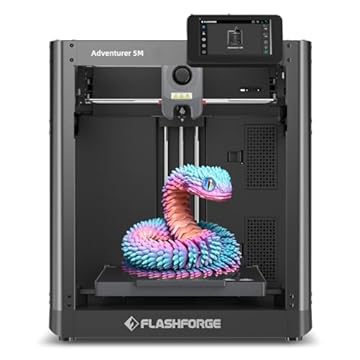
| FLASHFORGE Adventurer 5M 3D Printer | Standard filament high-speed prototyping | 280°C direct extruder with 3-second detachable nozzle and 220x220x220mm volume |
| Beginner-Friendly Ecosystem with MakerWorld Model | Plug-and-play enclosed CoreXY printing | Enclosed CoreXY chassis paired with the beginner-friendly MakerWorld library ecosystem |
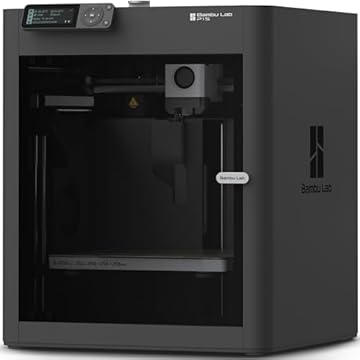
When analyzing the qidi q2 vs bambu lab p1s ecosystem represented by the MakerWorld options, the decisive factor is thermal capability versus software community integration. The Bambu Lab P1S alternatives emphasize streamlined ecosystem support and multi-color printing through the AMS, but they rely on passive enclosures without active chamber heating. Conversely, the FLASHFORGE Adventurer 5M offers high-speed 600mm/s movement with a quick-swap 280°C nozzle, making it an accessible option for standard filaments, though its lower hotend temperature and open architecture limit its composite utility. Buyers should select the QIDI Q2 specifically when high-temperature engineering filaments like PPS-CF, polycarbonate, and structural polyamides form the core of their production workload.

08 Bottom Line
The QIDI Q2 establishes itself as a capable technical manufacturing tool by packing high-tier thermal hardware into a compact desktop footprint. By combining an active 65°C heated chamber, a 370°C nozzle, and a full-metal CoreXY chassis riding on precision linear rails, it successfully tackles warping and layer separation in tough industrial polymers. For professionals who require consistent mechanical strength in end-use parts, the platform eliminates the usual roadblocks associated with desktop composite fabrication.
For technical workshops asking is qidi q2 worth it, the answer depends on whether your projects demand high-temperature composites. If your projects rely primarily on standard PLA or PETG models, simpler machines or entry-level family setups like a 3d printer kids toybox provide adequate performance with less complexity. However, for engineers, product designers, and technical workshops needing high-speed turnaround on high-temperature, carbon-fiber-reinforced prototypes, examining the qidi q2 3d printer specs reveals an exceptional combination of heat control, mechanical stability, and clean indoor operation.
09 FAQ
What engineering materials can the QIDI Q2 print reliably?
Thanks to its 370°C hotend and 65°C active PTC heated chamber, the QIDI Q2 supports an extensive range of technical thermoplastics. The listing specifies full compatibility with PLA, ABS, PETG, TPU, PA (nylon), PC (polycarbonate), PPS-CF (polyphenylene sulfide with carbon fiber), and both carbon-fiber and glass-fiber composite materials.
How does the nozzle-based auto-leveling system operate?
The QIDI Q2 utilizes the extrusion nozzle itself as the leveling sensor to probe the print surface directly. This approach establishes precise first-layer height and calibration without relying on separate inductive or optical probes, preventing offset errors caused by thermal expansion or changing print bed surfaces.
What filtration system is built into the printer for indoor use?
The machine includes an integrated triple filtration unit consisting of a G3 pre-filter, an H12 HEPA filter, and an activated carbon filtration stage. This multi-layer system captures airborne particulate matter and adsorbs volatile organic compounds generated when melting technical filaments, ensuring safer indoor office operation.
Can the QIDI Q2 perform multi-color and multi-material prints?
Yes, when combined with the QIDI BOX accessory, the QIDI Q2 supports up to 16-color and multi-material 3D printing. The system features dry-while-print technology to keep sensitive polymers free of ambient moisture during active printing cycles, ensuring consistent extrusion and surface finish.
How fast can the CoreXY motion system print?
The printer is built with a full-metal CoreXY frame, precision linear rails, and an upgraded 1.5GT synchronous belt system. This rigid kinematic configuration enables maximum movement speeds of up to 600mm/s while maintaining the stability and layer accuracy required for professional functional prototyping.