As Amazon Associates, we earn from qualifying purchases. This means we may receive a small commission at no extra cost to you if you click through and make a purchase.

Prototyping mechanical components, test fixtures, and functional brackets often grinds to a halt when entry-level desktop machines demand hours of manual bed calibration and frequent nozzle unclogging. Engineering workstations and commercial fabrication shops require dependable dimensional output without turning every production run into a troubleshooting project. The ELEGOO Neptune 3 Pro addresses this recurring operational bottleneck by integrating a dual-gear direct drive extruder with automated platform measurement, delivering a dependable neptune 3d printer built for rapid turnaround directly out of the box.
For time-pressed makers evaluating whether this machine fits their workflow, our practical neptune 3 pro review cuts through marketing claims to assess real-world motion stability, thermal handling, and workshop noise levels. Featuring quiet motor operation down to 47dB and a practical 225x225x280 mm build envelope, this hardware provides consistent layer adhesion across technical polymers while eliminating the bed-leveling frustrations associated with older manual platforms.
01 Quick Verdict
The ELEGOO Neptune 3 Pro provides an efficient, quiet, and stable fabrication solution for busy operators who need reliable prototyping without constant mechanical tinkering.
- A durable SUS303 stainless steel dual-gear direct drive system with a 3:1 gear ratio ensures uniform extrusion across flexible and standard filaments.
- The 36-point auto bed leveling system eliminates manual leveling steps to guarantee consistent first-layer adhesion.
- Independent dual Z-axis lead screws driven by dual motors eliminate horizontal gantry sag across tall builds up to 280 mm.
- An integrated STM32 silent motherboard keeps workshop acoustic emissions as low as 47dB during continuous printing.
02 ELEGOO Neptune 3 Pro Features Explained
01 Dual-Gear Direct Drive Extruder
Feeding flexible or soft filaments through long Bowden tubes often causes feeding inconsistency, severe stringing, and internal nozzle jams. The elegoo neptune 3 pro direct drive solves this limitation by positioning the motor and drive mechanism directly above the hotend assembly. Featuring durable SUS303 stainless steel drive gears configured in a 3:1 reduction ratio, the extruder exerts high, consistent gripping pressure along the filament path. This direct mechanical coupling allows for precise, rapid retraction control, substantially improving print fidelity on complex geometries with frequent retractions.
Material versatility is a core benefit of this mechanical arrangement. While older open-frame machines like the original ender 3 3d printer struggle when feeding flexible polymers, the Neptune 3 Pro handles TPU, PLA, PETG, and ABS with consistent feed rates. The heavy-duty stainless steel internal gears resist physical wear over time, preventing drive slippage during lengthy fabrication cycles where continuous retract and prime movements generate intense mechanical friction.
02 Automated 36-Point Platform Leveling
Platform calibration is one of the most critical stages of additive manufacturing, as microscopic gaps or tilts result in detached prints, warping, or bed gouging. With neptune 3 pro auto bed leveling, manual adjustments are replaced by an automated sensor matrix that measures 36 distinct points across the build surface. The printer firmware stores this topology map and dynamically compensates along the vertical axis during operation, maintaining precise nozzle clearance over every square millimeter of the build platform.
This automated compensation makes the neptune 3 pro for beginners and deadline-driven professionals significantly easier to operate. Users no longer need to spend valuable shop time adjusting thumbwheels before critical runs. While large-format industrial platforms like the neptune 4 max cater to oversized structural assemblies, this 36-point system offers the exact level of automated reliability needed for daily fabrication cycles.
03 Thermal Dissipation and Clog-Resistant Hotend
Heat creep occurs when thermal energy migrates upward from the heater block into the cold feeding zone, causing filament to melt prematurely and seize inside the heat break. ELEGOO prevents this failure mode by equipping the Neptune 3 Pro with a titanium throat tube combined with a widened aluminum heat sink. Titanium possesses poor thermal conductivity relative to copper or aluminum, forming a sharp thermal barrier that keeps the upper feed section cool even during prolonged high-temperature extrusions.
A front-mounted cooling fan directs high-velocity airflow across the widened aluminum heat sink fins, accelerating convective cooling. Paired with a standard brass nozzle engineered for uniform thermal transfer, this setup maintains stable volumetric melt rates across broad speed ranges. While specialized hardware like an aftermarket elegoo neptune 4 plus nozzle assembly offers alternative flow rates for high-velocity units, the Neptune 3 Pro factory hotend architecture maximizes clog resistance for everyday production materials.
04 Dual Lead Screw Z-Axis Architecture
Single lead screw designs frequently suffer from cantilever gantry droop on the undriven side, resulting in uneven layer heights, banding artifacts, and poor dimensional accuracy on vertical surfaces. The ELEGOO Neptune 3 Pro prevents frame racking by implementing dual Z-axis lead screws driven by two dedicated stepper motors. Both sides of the horizontal X-axis beam lift simultaneously in exact synchronization, maintaining strict parallel alignment relative to the print surface across the entire build height.
Smooth, low-friction motion is maintained using durable POM V-guide wheels that travel within precision-machined aluminum extrusions. These engineered thermoplastic wheels provide quiet tracking, resist flat-spotting under sustained loads, and damp operational vibrations. The resulting neptune 3 pro print quality exhibits clean layer lines, uniform wall thicknesses, and consistent vertical dimensions up to the maximum 280 mm vertical boundary.
05 Silent Mainboard and Production Safeguards
High motor noise can make additive manufacturing disruptive inside shared offices, design studios, or living spaces. The ELEGOO Neptune 3 Pro features an advanced 32-bit STM32 motherboard equipped with silent stepper motor drivers, capping ambient operational noise at approximately 47dB. This whisper-quiet sound profile allows the unit to run continuously beside a primary desk without generating distracting motor whine.
To protect multi-hour fabrication jobs from unexpected failures, the printer incorporates integrated hardware sensors. A filament runout sensor automatically pauses printing if the spool empties or the strand breaks, preventing the hotend from printing air. Furthermore, the power-loss resume feature stores spatial coordinates if power cuts out unexpectedly, enabling the machine to resume execution from the exact layer when electrical service returns.
03 Specs
| Specification | Detail |
|---|---|
| Build Volume | 225 x 225 x 280 mm (8.85 x 8.85 x 11 inches) |
| Extruder Type | Dual-gear direct drive with 3:1 reduction ratio |
| Extruder Gear Material | SUS303 stainless steel |
| Bed Leveling | 36-point automatic mesh calibration |
| Motherboard | 32-bit STM32 silent mainboard |
| Operational Noise | As low as 47dB |
| Z-Axis Mechanism | Dual lead screws with dual independent motors |
| Motion System | POM V-guide wheels on aluminum frame |
| Compatible Filaments | PLA, TPU, PETG, ABS |
| Product Dimensions | 23 inches D x 9 inches W x 19 inches H |
| Machine Weight | 22 pounds |
04 ELEGOO Neptune 3 Pro Pros and Cons
Pros
- 3:1 dual-gear direct drive with stainless steel gears
- Automated 36-point platform leveling grid
- Dual lead screws with independent Z-axis motors
- Silent STM32 mainboard operating down to 47dB
- Titanium throat tube prevents hotend heat creep
Cons
- Open-frame structure lacks enclosed thermal chamber
- Listing does not specify included spare nozzles
- Deep 23-inch physical footprint requires ample bench space
05 Best Use Cases
- Functional prototyping: Producing dimensionally accurate mechanical housings, brackets, and snap-fit assemblies using PLA and PETG.
- Flexible elastomer fabrication: Printing custom vibration dampers, non-slip feet, and protective seals directly with flexible TPU filament.
- Noise-sensitive environments: Running continuous multi-hour prototyping jobs in home offices, classrooms, and shared creative spaces due to silent 47dB operation.
- Vertical enclosures: Fabricating tall cylindrical ducts, architectural models, and structural containers up to 280 mm in height without gantry wobble.
06 Before You Buy
Before purchasing, buyers must evaluate the workspace requirements and open-chassis architecture of this machine. Measuring 23 inches deep by 9 inches wide and 19 inches high with a total mass of 22 pounds, the unit requires adequate clear space for the moving print bed along the Y-axis and vertical clearance for the top-mounted spool holder. Because this hardware features an open-frame design lacking an enclosed heated build chamber, printing wide components using ABS may lead to corner warping if exposed to ambient drafts.
Carefully examining the neptune 3 pro specs confirms that the machine comes partially pre-assembled to streamline the neptune 3 pro setup process, allowing users to assemble and calibrate the hardware within minutes. However, the listing does not specify whether extra brass nozzles, specialty maintenance tools, or replacement parts are included in the carton. Buyers planning intense, continuous fabrication schedules should expect to maintain a stock of standard consumable nozzles and replacement build surfaces.
07 How It Compares With Similar Picks
| Product | Best For | Key Difference |
|---|---|---|
| ELEGOO Neptune 3 Pro | Everyday single-material functional prototyping and quiet operation | Open-frame bed-slinger format featuring 36-point leveling and dual Z-axis motors |
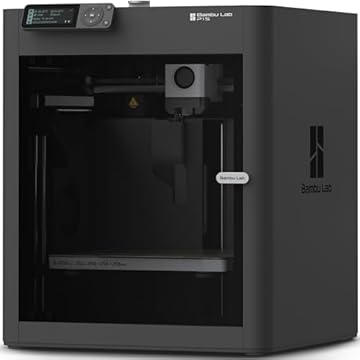
| MakerWorld Model Library | Multi-color printing and integrated model ecosystem workflows | Enclosed CoreXY Bambu Lab P1S Combo configuration including an AMS multi-material feeder |
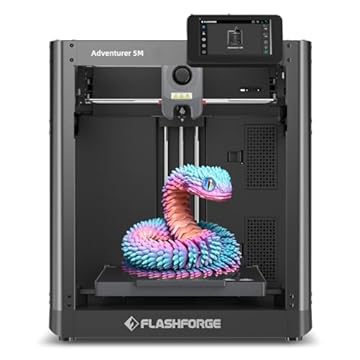
| FLASHFORGE Adventurer 5M 3D Printer | Ultra-fast mechanical fabrication with quick maintenance | CoreXY all-metal frame capable of 600mm/s speeds with a 280°C hotend and 3S detachable nozzle |
| Beginner-Friendly Ecosystem with MakerWorld Model | Enclosed high-speed printing with cloud model library integration | Enclosed CoreXY Bambu Lab P1S architecture built for rapid, ready-to-use production |
Choosing an alternative comes down to speed requirements, material containment, and multi-color needs. If your fabrication workflow requires enclosed thermal control for technical polymers or automated multi-material switching, enclosed CoreXY options like the Bambu Lab P1S or Adventurer 5M are superior choices. However, if your goal is an accessible, whisper-quiet elegoo neptune 3d printer that provides proven direct drive extrusion and rock-solid platform leveling for standard engineering filaments, the Neptune 3 Pro delivers exceptional utility without unnecessary software overhead.
08 Bottom Line
When asking is neptune 3 pro worth it, the answer is an unambiguous yes for designers and engineers who prioritize mechanical stability, direct drive reliability, and low noise levels. The integration of a dual-gear direct drive system, titanium throat tube, and dual Z-axis lead screws eliminates the mechanical weaknesses that historically plagued desktop fabrication equipment.
While it lacks an enclosed build chamber for specialized high-temperature polymers and does not match the rapid travel speeds of CoreXY architectures, its 47dB silent operation, 36-point mesh leveling, and 225x225x280 mm envelope establish it as an outstanding daily prototyping platform. The ELEGOO Neptune 3 Pro offers a dependable, low-maintenance workhorse for any productive workshop.
09 FAQ
How difficult is the neptune 3 pro setup for beginners?
The machine arrives with its major modular components pre-assembled, allowing users to finish mechanical setup in just a few straightforward steps. Automated 36-point bed leveling handles the critical platform calibration electronically, eliminating the complex manual calibration routines required by older desktop models.
Can the ELEGOO Neptune 3 Pro print flexible filaments like TPU?
Yes, the 3:1 dual-gear direct drive extruder uses stainless steel gears to grip flexible filaments right at the hotend entrance. By avoiding the long feeding paths of Bowden tubes, the extruder feeds flexible TPU without buckling, jamming, or erratic extrusion lines.
What happens if power is interrupted during an active print?
The printer includes an integrated power-loss recovery function that records active coordinates directly to internal memory. Once electrical power is restored, the system prompts the operator to resume fabrication from the exact layer where operation halted, preventing lost materials on long jobs.
Does the open-frame build limit ABS printing capabilities?
While the hotend supports ABS processing temperatures, the lack of an enclosed build chamber makes wide ABS components susceptible to thermal contraction and edge warping from ambient air drafts. For large ABS components, an external draft enclosure is recommended.
How quiet is the printer during daily workshop operation?
Equipped with an STM32 32-bit motherboard and silent stepper motor drivers, the unit operates with noise levels as low as 47dB. This sound level is comparable to a quiet library, making it well-suited for home offices, classrooms, and shared creative spaces.
While the stock Neptune 3 Pro handles daily prototyping reliably out of the box, long-term workshop integration often depends on broader hardware compatibility. If you plan to customize firmware features or swap components on other machines across your print farm, reviewing current Motherboard Picks provides valuable insight into silent stepper drivers and processing capabilities. Choosing the right control board ensures your entire setup maintains the same quiet efficiency and dimensional accuracy during extended production runs.