As Amazon Associates, we earn from qualifying purchases. This means we may receive a small commission at no extra cost to you if you click through and make a purchase.

Maintaining legacy desktop fabrication equipment presents ongoing mechanical hurdles for busy engineering workshops, university makerspaces, and rapid prototyping labs. When managing a workhorse platform like the 3d printer lulzbot taz, shop managers frequently encounter structural fatigue in the lower gantry assemblies. The original equipment architecture relied heavily on open-source, 3D-printed ABS brackets to secure the vertical stepper motors. Over thousands of operating hours, these thermoplastic brackets absorb thermal emissions from the motor casings, succumb to continuous mechanical vibration, and deform under belt and leadscrew tension. The Lysee Lulzbot TAZ Z-Motor Mount addresses this specific failure mode by replacing flexible printed parts with rigid, CNC-machined metal brackets designed to maintain permanent dimensional accuracy.
For workshop managers committed to keeping their legacy Cartesian printers operational, our verdict is clear: this aluminum z motor mount lulzbot replacement kit is an essential mechanical stabilization upgrade that eliminates thermoplastic creep. Although the product listing provides sparse technical documentation and does not detail included fasteners, the physical switch from printed polymer to solid metal alloy delivers the structural rigidity necessary to resolve recurring layer inconsistency and mechanical binding along the vertical axis.
01 Quick Verdict
The Lysee Lulzbot TAZ Z-Motor Mount is an aftermarket hardware retrofit kit built to reinforce the lower vertical drive assemblies of Lulzbot TAZ platforms by substituting durable metal alloy brackets for standard printed plastic supports.
- Engineered from solid metal aluminum alloy to eradicate frame flex, motor tilt, and thermal deformation.
- Delivered as a balanced left and right side kit to preserve symmetrical motion across dual vertical leadscrews.
- Categorized under linear rail motion hardware for direct structural integration into TAZ4 gantry systems.
- Functions as an enduring hardware upgrade kit, although the manufacturer listing does not specify mounting screws or setup instructions.
02 Lysee Lulzbot TAZ Z-Motor Mount Features Explained
01 Metal Aluminum Alloy Construction
Early open-source desktop 3D printers gained widespread popularity because they could replicate their own components, but printed brackets introduce long-term mechanical compromises in high-duty industrial environments. The original motor brackets on the TAZ series were printed using ABS or similar polymers. As vertical stepper motors sustain continuous holding current during tall builds, their internal coils generate heat that transfers into the bracket body. Over extended print runs, this localized heat softens polymer mounts, allowing the motor shafts to lean slightly inward under the weight of the X-axis gantry and leadscrews.
This lulzbot taz z motor mount resolves thermal creep by utilizing solid metal aluminum alloy. Aluminum maintains its structural profile across temperature ranges far exceeding anything a desktop stepper motor can emit. By swapping out flexible plastic for rigid alloy, technicians ensure that motor shafts remain perpendicular to the lower aluminum extrusions. This rigidity eliminates micro-deflections that cause subtle layer banding artifacts, ensuring that your lulzbot taz for 3d printing retains reliable mechanical positioning regardless of how many consecutive days the machine operates.
02 Dual-Sided Left and Right Kit Architecture
The Cartesian drive architecture of the TAZ motion system employs dual independent NEMA stepper motors to lift the horizontal X-axis carriage along two parallel vertical axes. Lysee supplies this component set as a matched pair containing both the left and right side motor brackets. In dual-leadscrew motion systems, mechanical symmetry is critical; installing a stiff metal bracket on one side while leaving a compliant printed bracket on the other causes unequal mechanical dampening and uneven load distribution across the horizontal gantry.
By supplying a paired kit, Lysee allows technicians to overhaul both sides of the drive system simultaneously. Uniform mechanical rigidity prevents gantry racking—a condition where one side of the X-axis lags behind the other during vertical micro-stepping moves. While modern automated desktop systems like the bambu a1 3d printer incorporate integrated monocoque bodies to avoid gantry skewing altogether, modular open-frame machines rely on balanced structural anchors like this dual-bracket set to maintain parallel travel across the entire build volume.
03 Linear Rail and Guide Rod Motion Alignment
The manufacturer categorizes this hardware under the linear rail item type. In precision additive manufacturing, linear motion systems depend entirely on absolute parallelism between the rotating leadscrew and the stationary smooth guide rods or linear rails. If the motor bracket allows the stepper motor to tilt even a fraction of a millimeter off-axis, the leadscrew binds inside the brass or POM carriage nut, introducing severe vertical banding, surface ringing, or missed steps.
An aluminum motor mount acts as a true reference plane for the lower drive assembly. Because the metal alloy does not flex under axial load, the rotational force generated by the stepper motor translates purely into smooth vertical motion rather than parasitic lateral oscillation. For facilities sourcing lysee lulzbot taz parts to restore aged equipment, this mechanical stability is crucial for achieving smooth exterior wall finishes on tight-tolerance engineering parts.
04 Lysee Sourcing and Manufacturing Origin
Manufactured in China under the Lysee brand, these components represent specialized aftermarket fabrication tailored to maintain discontinued open-source hardware. When original equipment manufacturers discontinue legacy replacement components or phase out support for older printer generations, third-party component fabricators fill an essential operational role by machining replacement parts according to published open-source community schematics.
Sourcing these brackets provides a direct mechanical solution without the steep cost of purchasing full proprietary assemblies. However, because Lysee distributes parts primarily through wholesale and industrial component channels, the consumer packaging is utilitarian. The listing focuses strictly on the machined metal brackets themselves, leaving hardware sourcing, calibration, and installation procedures entirely in the hands of the technician.
03 Specs
| Specification Attribute | Manufacturer Detail |
|---|---|
| Brand Name | Lysee |
| Manufacturer | Lysee |
| Product Identification | Lulzbot TAZ4 3D Printer Metal Aluminum Alloy Z-Motor Mount |
| Material Composition | Metal Aluminum Alloy |
| Component Configuration | Left and Right Side Kit (Matched Pair) |
| Designated Compatibility | Lulzbot TAZ4 (as designated in listing title) |
| Hardware Item Type | Linear Rail |
| Country of Origin | China (CN) |
| Fasteners Included | The listing does not specify |
| Physical Dimensions and Mass | The listing does not specify |
04 Lysee Lulzbot TAZ Z-Motor Mount Pros and Cons
Pros
- Rigid metal aluminum alloy build
- Matched left and right bracket pair
- Direct replacement for heat-sensitive printed brackets
- Classified for linear rail motion setups
Cons
- Mounting hardware and fasteners not specified
- Installation documentation omitted from listing
- Compatibility restricted to specific TAZ versions
05 Best Use Cases
- Replacing cracked, warped, or heat-fatigued plastic factory brackets on an active production-floor TAZ4 printer.
- Eliminating repetitive Z-axis mechanical binding and layer shifting on machines running continuous multi-day print cycles.
- Executing an all-metal motion overhaul as part of a comprehensive workshop refurbishment program.
- Rebuilding second-hand or surplus open-source Cartesian frames to ensure long-term structural alignment.
06 Before You Buy
Before purchasing this bracket set, carefully verify the structural generation and chassis dimensions of your printer against the official lulzbot taz specs. The Amazon listing explicitly identifies compatibility with the Lulzbot TAZ4. While early iterations of the TAZ platform shared standardized aluminum extrusion profiles and motor spacing, subsequent revisions introduced structural changes, including altered motor faceplate orientations, integrated guide brackets, and differing leadscrew constraints. The listing does not specify compatibility with TAZ 5, TAZ 6, or Workhorse editions, meaning operators of later-generation models must cross-reference their current chassis hole spacing against open-source TAZ4 mechanical drawings to prevent mechanical interference.
Additionally, take inventory of your workshop hardware supply before beginning teardown. While the product listing confirms the inclusion of the left and right metal aluminum alloy brackets, the listing does not specify whether mounting fasteners, extrusion T-nuts, motor attachment bolts, or leadscrew couplers are supplied in the package. Technicians should anticipate reusing the existing M3 or M4 hardware from their original printed mounts or sourcing high-tensile fasteners independently to ensure a secure, flush installation against the printer chassis.
07 How It Compares With Similar Picks
| Product | Best For | Key Difference |
|---|---|---|
| Lysee Lulzbot TAZ Z-Motor Mount | Upgrading and restoring existing TAZ Cartesian motion platforms | Aftermarket aluminum alloy motor bracket pair designed for legacy printer maintenance |
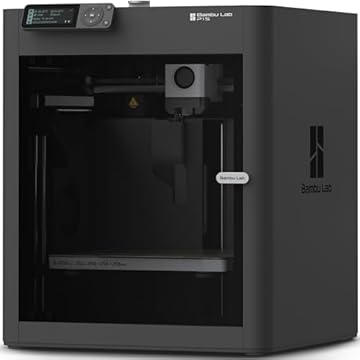
| MakerWorld Model Library | High-speed multi-color production environments | Complete Bambu Lab P1S Combo CoreXY printer package featuring automatic bed leveling and integrated AMS unit |
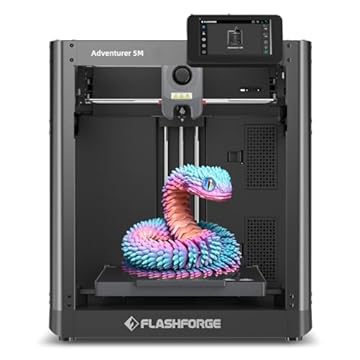
| FLASHFORGE Adventurer 5M 3D Printer | Turnkey rapid prototyping with minimal operational overhead | Fully assembled CoreXY system with 600mm/s print speed, 280°C direct extruder, and auto-leveling |
| Beginner-Friendly Ecosystem with MakerWorld Model | Out-of-the-box enclosed manufacturing workflows | Standalone enclosed Bambu Lab P1S CoreXY printer integrated with cloud-based slicer connectivity |
Deciding between rebuilding an existing machine with aftermarket components and purchasing a modern turnkey platform depends on your facility’s operational priorities. If your lab relies heavily on the open-source architecture, large build volume, and heavy toolhead flexibility of an established TAZ platform, procuring dedicated lulzbot taz replacement parts like the Lysee aluminum mounts preserves that machine capital at minimal expense. Conversely, if your workshop is losing productive billable hours to manual bed leveling, slow Cartesian print speeds, and ongoing mechanical calibration, shifting resources toward modern enclosed CoreXY systems like the Bambu Lab P1S Combo or Flashforge Adventurer 5M will provide automated convenience, active vibration compensation, and higher manufacturing throughput.

08 Bottom Line
The Lysee Lulzbot TAZ Z-Motor Mount delivers a targeted, durable solution for workshops seeking to resolve the mechanical shortcomings of 3D-printed motor supports. By swapping heat-sensitive plastic brackets for solid CNC-machined aluminum alloy, this upgrade stabilizes the lower drive system, keeps leadscrews aligned, and prevents the gantry binding that degrades print quality over extended production runs.
While buyers must manage the lack of included mounting documentation and verify frame compatibility independently, the physical build quality of the metal brackets makes them an excellent investment for hands-on operators. If your maintenance schedule calls for eliminating vertical layer artifacts and reinforcing the mechanical foundation of a TAZ4 frame, this aluminum bracket pair is a practical, dependable addition to your workshop bench.
09 FAQ
Is the Lysee Z-motor mount compatible across all Lulzbot TAZ versions?
The manufacturer listing explicitly references the Lulzbot TAZ4. Because subsequent revisions of the TAZ lineup altered extrusion configurations, leadscrew dimensions, and bracket geometries, the listing does not specify direct compatibility with TAZ 5, TAZ 6, or Workhorse models. Operators running other models should inspect their existing motor brackets against TAZ4 open-source schematics before ordering.
Why is aluminum alloy superior to original 3D-printed motor brackets?
Factory-printed brackets made from ABS or PETG flex under tension and soften when stepper motors generate heat during extended operations. Aluminum alloy provides structural rigidity, zero thermal softening under standard motor temperatures, and unyielding thread retention. This keeps the stepper motor shafts completely square to the vertical motion axis, curbing Z-wobble and layer inconsistencies.
Are mounting screws and assembly hardware included in the package?
The listing does not specify whether mounting screws, chassis T-nuts, or motor bolts are included in the kit. Technicians should plan to reuse the fasteners securing their original printed brackets or source appropriate metric hardware from their internal shop supply prior to installation.
Does this kit include mounts for both sides of the printer?
Yes, the listing confirms that this product is supplied as a left and right side kit. Replacing both motor brackets simultaneously is essential on dual-leadscrew Cartesian printers to prevent uneven gantry flex, binding, or unequal mechanical damping between the two vertical axes.
Is Lulzbot TAZ worth it for modern production environments?
Evaluating whether a TAZ machine remains practical depends on your manufacturing objectives. If you need an open-format chassis capable of accepting experimental toolheads, customized extruders, and thick engineering filaments, maintaining the machine with solid replacement hardware remains highly viable. However, if your team demands hands-off automation, rapid speeds, or simplified education-oriented operation, contemporary alternatives like the toybox alpha 3d printer or high-throughput machines like the spark x i7 3d printer provide streamlined workflows that bypass manual mechanical maintenance.