As Amazon Associates, we earn from qualifying purchases. This means we may receive a small commission at no extra cost to you if you click through and make a purchase.

Manual spool swaps and mid-print material shortages routinely interrupt high-output manufacturing setups. The Creality CFS addresses this persistent bottleneck by automating material delivery, spool failover, and environmental defense inside a unified, sealed containment module. For technicians and commercial print operations handling complex multi-part components, this multi-material feeder eliminates the need to intervene during intricate fabrication cycles.
Engineered to interface directly with next-generation platforms, this filament management ecosystem shifts additive manufacturing away from single-spool restrictions. In this Creality filament system review, our evaluation shows that while it utilizes passive desiccant storage rather than powered thermal drying, its automated toolpath communication, real-time sensor array, and high-capacity spool relay system establish it as an essential tool for uninterrupted production.
01 Quick Verdict
The Creality CFS is a durable, intelligent multi-material feeder designed to deliver hands-off multi-color printing, reliable runout switching, and clean dissolvable support generation for high-speed Creality ecosystems.
- Accommodates four spools natively and expands up to sixteen distinct channels across four parallel units
- Maintains filament integrity using an airtight aluminum structure with a digital humidity and temperature screen
- Accelerates toolpath setup through automatic RFID identification and Creality Print G-code mapping
- Protects long unattended jobs using hardware-level filament tangle detection and instant runout pause controls
02 Creality CFS Features Explained
01 Automated Multi-Material Feeder and 16-Color Scaling
At the center of the unit is a motorized filament feed drive capable of managing four independent spools simultaneously. The feeder channels materials into the toolhead dynamically, withdrawing retracted lines and advancing incoming filaments without operator involvement. By handling the feeding sequence mechanically, the system reduces the friction and tip deformation that often lead to extruder clogs during multi-material cycles.
For large-scale display models and high-detail functional prototypes, scaling beyond basic four-channel printing is straightforward. The rear panel incorporates an integrated connection hub that links up to four separate units in a unified array. Deploying a Creality CFS 16 color setup allows users to run comprehensive sixteen-color jobs without pausing to exchange spools or manually painting parts after the print finishes.
02 Intelligent Filament Mapping and RFID Detection
Workflow automation depends heavily on how well the hardware communicates with your slicing software. This unit is programmed to sync directly with Creality 3D printers and the Creality Print slicer. During job preparation, the slicer reads the loaded filament inventory and maps designated colors and material profiles directly to the toolpath instructions embedded in the G-code file. This hands-off synchronization provides a reliable production pipeline similar to modern industrial workflows seen on the creality k2 se 3d printer platform.
To eliminate configuration mistakes, the feeder features built-in Creality CFS RFID recognition. When loaded with Tristar Hyper series consumables, particularly Hyper RFID spools, the system instantly identifies the exact material chemistry, color code, and extrusion parameters. This auto-detection prevents temperature mismatches and ensures the print head operates with verified material presets.
03 Filament Switching, Relays, and Sensor Safety
Unattended printing carries substantial risks when spools reach their end unexpectedly. The Creality CFS automatic filament switching system resolves this through smart spool relay programming. If an active spool runs out mid-print, the unit detects the terminal end and automatically commands an identical backup spool in an adjacent slot to pick up the extrusion line, preserving hours of machine time.
Each channel is monitored by hardware-level sensors that track both mechanical movement and line tension. If a spool develops a knot or catches on its rim, the integrated tangle sensor detects the resistance, pauses the print head immediately, and transmits an alert before the extruder strips the filament or pulls the gantry out of alignment. Note that the listing indicates this switching system is not compatible with flexible TPU, wet BVOH/PVA, or warped cardboard filament spools.
04 Environmental Sealing and Moisture Protection
Hygroscopic materials such as standard PLA, PETG, and specialized support compounds rapidly absorb ambient moisture, which leads to stringing, foaming, and layer delamination. The Creality CFS incorporates an airtight enclosure that prevents external air infiltration during operation. Dedicated internal desiccant chambers capture internal moisture to maintain dry ambient conditions from initial spool loading to project completion.
Monitoring the interior storage climate requires no external hygrometers. The unit features an integrated digital display showing continuous temperature and relative humidity readouts. If internal humidity rises above operational thresholds, the system delivers a timely warning so operators can refresh the desiccant before print quality suffers.
05 Breakaway and Soluble Support Material Handling
Printing intricate geometries with steep overhangs often leaves rough scars when supports are broken away manually. The system enables snapshot support functionality, which allows operators to load a secondary support interface material alongside the primary model resin. The feeder delivers the interface material specifically at the boundary layer between the model and the support framework.
Because the feeder supports water-soluble and dedicated breakaway support filaments, finished models detach cleanly without leaving mechanical witness marks. This capability preserves fine surface detailing on mating surfaces, internal voids, and delicate overhangs, drastically reducing post-processing and surface sanding.
03 Specs
| Attribute | Detail |
|---|---|
| Brand Name | Creality |
| Model Number | Creality CFS |
| Manufacturer Part Number | CFS_1002120001_US1 |
| Global Trade Identification Number | 00198549026909 |
| Item Weight | 5.8 kg |
| Chassis Material | Aluminum |
| Color | Black |
| Native Spool Capacity | 4 spools |
| Maximum Multi-Device Expansion | Up to 16 colors (4 parallel units) |
| Integrated Hardware Sensors | Filament runout, tangle detection, temperature, humidity |
04 Creality CFS Pros and Cons
Pros
- Connects up to four units for 16-color printing
- Automated filament mapping and RFID recognition
- Airtight aluminum body with digital environmental display
- Smart tangle detection and automatic runout pause
- Snapshot support allows clean breakaway and soluble interfaces
Cons
- Not compatible with flexible TPU materials
- Incompatible with wet BVOH or PVA spools
- Cannot accept warped cardboard filament reels
- Relies on desiccant rather than active heat drying
05 Best Use Cases
- Commercial batch production operations that require automatic spool relay switching to avoid downtime during unattended overnight runs.
- Multi-color consumer goods manufacturing demanding vibrant multi-hue components without secondary assembly or manual painting.
- Complex engineering prototyping where soluble or breakaway support materials are necessary to achieve pristine overhang finishes.
- Production shops operating in humid regions that require an airtight enclosure to protect sensitive filament inventory during active use.
06 Before You Buy
Confirming Creality CFS compatibility requires checking your specific 3D printer hardware before purchasing. The listing confirms native compatibility with the K2 Plus and Hi Series 3D printers. The unit is optimized to accept standard filament reels and Tristar Hyper series consumables, but it has strict operational limits: it is not compatible with flexible TPU, wet BVOH/PVA, or warped cardboard filament spools. In addition, when planning multi-unit routing across custom setups, operators frequently integrate dedicated guide paths such as the creality cfs buffer to stabilize feeding resistance.
The product listing specifies the aluminum housing, internal sensors, and core feeder mechanisms, but it does not specify the exact lengths of included PTFE Bowden tubing, the quantity of desiccant packs in the box, or whether multi-unit expansion communication cables come pre-packaged with a single unit. If your production plan relies on active high-temperature filament drying rather than passive desiccant storage, you should plan on drying your moisture-sensitive spools in an oven or active dry box before loading them into this unit.
07 How It Compares With Similar Picks
| Product | Best For | Key Difference |
|---|---|---|
| Creality CFS | Multi-material production on K2 Plus / Hi Series | Four-spool automated switching, RFID recognition, tangle detection, and 16-spool expansion hub |
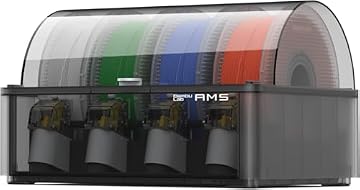
| Enables Simultaneous Printing & Drying | Bambu Lab AMS users needing thermal heating | Active 70°C heating element designed as an add-on for Bambu Lab AMS Gen 1 enclosures |
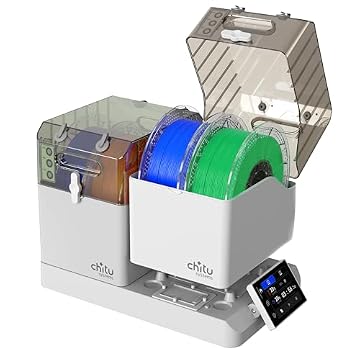
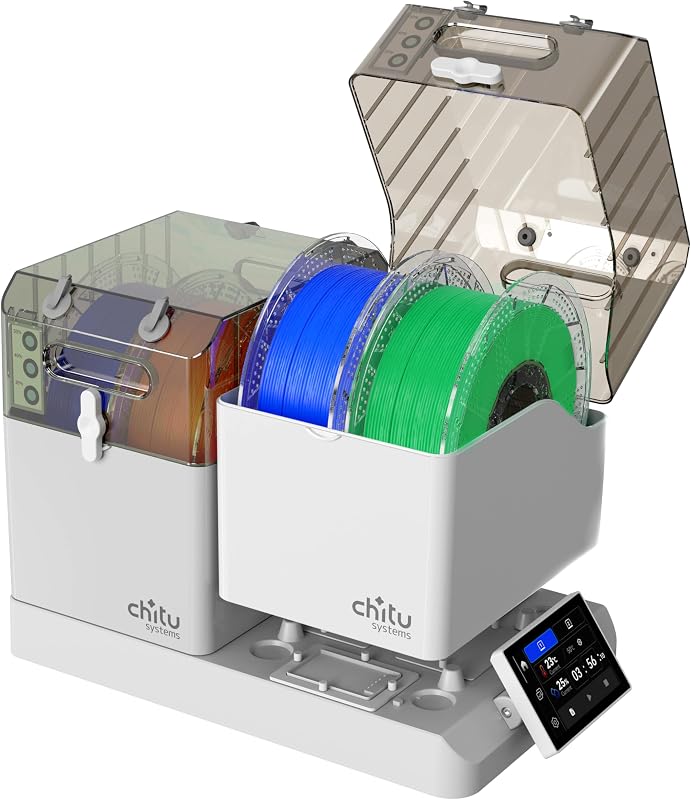
| Chitu Systems E1 Filament Dryer | Active dual-chamber multi-material conditioning | Standalone four-spool heated dryer with two removable chambers and AMS Lite compatibility |
| Support Multi Colors Materials 3D | Bambu Lab AMS 2 Pro users | Direct multi-color material system with integrated 65°C active chamber heating and auto-loading |
Choosing an alternative depends entirely on your printer ecosystem and filament drying requirements. If you operate Bambu Lab hardware, the listed alternatives cater to that specific platform, with models like the Chitu Systems E1 and Bambu-oriented heaters delivering active thermal drying up to 65°C or 70°C to bake out trapped moisture. In contrast, the Creality CFS is the dedicated solution for Creality K2 Plus and Hi Series machines, focusing on automated multi-material routing and airtight desiccant storage rather than powered active drying. For standalone single-material production on different platforms, independent systems like the spark x i7 3d printer handle spools independently without networked multi-material switching.
08 Bottom Line
When assessing Creality CFS specs and production value, the system solves the most frustrating aspects of multi-material printing: manual spool swapping, mid-print runouts, and scarred support surfaces. The aluminum build quality, responsive tangle detection, and smooth integration with the Creality Print slicer make it a workhorse for professional maker spaces.
So, is Creality CFS worth it for your workshop? If you run a compatible K2 Plus or Hi Series printer and want to produce complex multi-color parts or pristine soluble-support prints without constant supervision, the Creality CFS delivers the reliable material management and hardware automation necessary to elevate your print operations.
09 FAQ
What printers are compatible with the Creality CFS?
The Creality CFS is specifically listed as compatible with Creality K2 Plus and Hi Series 3D printers. It communicates directly with these machines and the Creality Print slicer for automated toolpath execution.
Can the Creality CFS print flexible filaments like TPU?
No. The listing explicitly states that the Creality CFS is not compatible with flexible TPU materials, wet BVOH/PVA, or warped cardboard filament spools, as these can cause feed errors and jams in the internal motorized drive.
How does the Creality CFS 16 color setup work?
The unit features a rear connection hub that allows up to four CFS units to be linked together in parallel. This setup lets the host printer access sixteen independent filament lines during a single automated print job.
Does the Creality CFS feature an active heating element?
No. The Creality CFS uses an airtight aluminum enclosure paired with desiccant chambers to keep dry filament from absorbing atmospheric moisture. It monitors the interior with a digital temperature and humidity display, but it does not contain a powered heater.
How does automatic spool relay prevent print failures?
When a spool runs out mid-print, the integrated sensors detect the runout condition and trigger the automatic filament switching system to feed an identical backup spool loaded in another slot, allowing printing to continue uninterrupted.