As Amazon Associates, we earn from qualifying purchases. This means we may receive a small commission at no extra cost to you if you click through and make a purchase.

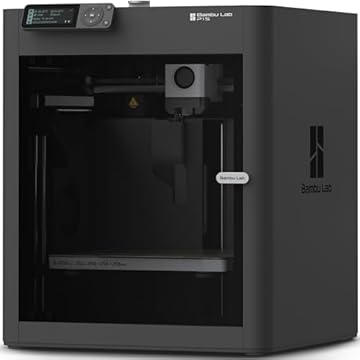
For engineers, product designers, and busy professionals, desktop 3D printing often introduces tedious operational friction rather than rapid physical progress. Calibration routines, failed manual bed tramming, warping issues on temperature-sensitive materials, and cumbersome spool swaps regularly stall commercial prototyping workflows. The Bambu Lab P1S Combo directly addresses this engineering bottleneck by packaging enclosed CoreXY mechanics, multi-spool automation, and automated sensor arrays into an out-of-the-box system designed to deliver production-grade functional prototypes without manual tinkering.
Shoppers evaluating the broader ecosystem, including the flagship bambu labs x1 platform, frequently wonder if they can secure enterprise-grade throughput and enclosure stability without paying for auxiliary sensors they might never deploy. Our evaluation reveals that the P1S Combo provides an exceptionally pragmatic compromise, offering blazing speeds, automated multi-material delivery, and a robust structural enclosure that makes it an indispensable tool for fast-paced professional workspaces.
01 Quick Verdict
The Bambu Lab P1S Combo strips out extraneous luxury hardware while keeping the CoreXY kinematic architecture, enclosed build volume, and multi-color automation that modern professionals demand. For workshops needing consistent functional parts and rapid concept models across varied materials, it delivers unmatched workflow speed and turnkey reliability straight out of the crate.
- Rapid 15-minute out-of-the-box deployment eliminates initial assembly frustration and gets parts printing immediately.
- Native multi-material feeding via the automated AMS system supports intricate multi-color models and soluble support interfaces.
- Fully enclosed metal chamber retains heat to stabilize ABS and ASA prints against ambient drafts and shrinkage.
- Peak velocity of 500mm/s coupled with 20000 mm/s² acceleration drastically shortens mechanical iteration cycles.
02 Bambu Lab P1S Combo Features Explained
01 Bambu Lab CoreXY Speed and Acceleration Dynamics
At the mechanical core of the P1S Combo lies an ultra-rigid metal CoreXY motion system capable of reaching print speeds up to 500mm/s and acceleration figures reaching 20000 mm/s². In contrast to conventional bed-slingers like the bambu a1 3d printer where the mass of the printed model moves back and forth on the Y-axis, CoreXY kinematics keep the build plate constrained along the vertical Z-axis. This dynamic architecture keeps moving mass down to the toolhead, drastically suppressing ringing artifacts and mechanical vibration during aggressive high-speed directional changes.
For product teams operating under tight development timelines, this rapid bambu lab corexy speed reduces standard print cycles from half a day to a few hours. The massive 20000 mm/s² acceleration ensures that the toolhead reaches its target velocity almost instantaneously, maximizing time spent at peak extrusion rates even across models with complex geometries, tight perimeters, and intricate structural pockets.
02 Bambu Lab AMS Multi-Color Printing Integration
The bundled Automatic Material System (AMS) transforms single-material extrusion into an automated multi-spool workflow. By mounting directly alongside or atop the printer, the AMS automatically feeds, retracts, and cuts filaments during multi-color or multi-material print jobs. Operating with four spools natively and expandable up to 16 colors when connecting additional AMS units, the system unlocks expansive possibilities for clear graphic labeling, multi-tone aesthetic styling, and distinct material pairing on a single build.
Beyond aesthetic visual styling, bambu lab ams multi-color printing proves essential for functional prototyping when pairing standard build filaments with dedicated soluble support materials like PVA. Complex internal geometries, continuous overhangs, and precision mechanical clearances that would otherwise require destructive post-processing or compromised surface finishes can be printed cleanly with dense interface layers that detach cleanly or dissolve completely in post-processing.
03 Bambu P1S Enclosed 3D Printer Chamber Performance
The fully enclosed chassis represents a massive operational leap over open-frame desktop printers. Constructed with a durable metal structure and full exterior panels, this bambu p1s enclosed 3d printer traps internal thermal energy radiating from the heated bed. This passive thermal containment buffers the print zone against cool laboratory drafts, preventing the rapid uneven cooling that causes internal stress, edge warping, and structural layer separation in temperature-sensitive polymers.
This enclosed thermal environment significantly expands your usable material palette. While open-format desktop machines like the portable bambu labs a1 mini excel predominantly with standard low-warp polymers, the enclosed P1S readily accommodates high-temperature materials including ABS, ASA, and PET, allowing engineers to produce end-use outdoor housings and mechanically resilient functional components with predictable dimensional stability.
04 Bambu P1S Auto Bed Leveling System
First-layer reliability is the single most critical factor in additive manufacturing success, and manual bed leveling remains the most common source of operator error. The P1S integrates an automated routine that maps the print surface before every build cycle. The bambu p1s auto bed leveling routine uses sensor arrays directly on the toolhead to measure physical bed variance across multiple coordinates, calculating a real-time compensation matrix that dynamically adjusts Z-axis motion across the entire surface.
This automated calibration eliminates the tedious manual adjustment dials, feeler gauges, and subjective paper-drag tests that defined previous generations of desktop 3D printers. The system consistently generates flawless first-layer squish, ensuring excellent adhesion to the build sheet and preventing the detached corners or nozzle scrapes that ruin long overnight production runs.
05 Bambu Lab P1S Filament Compatibility Profile
Material versatility is an essential requirement for functional design work, and the bambu lab p1s filament compatibility matrix covers a broad range of standard and technical plastics. According to official manufacturer specifications, the printer is rated ideal for PLA, PETG, TPU, PVA, PET, ABS, and ASA. Loading standard spools like bambu labs pla basic filament yields clean surface finishes and crisp structural detail with negligible shrinkage or stringing.
For more demanding functional applications, the listing notes the system is capable of running advanced engineering polymers including PA and PC. However, prospective buyers should heed the manufacturer warning: the printer is explicitly not recommended for carbon fiber or glass fiber reinforced polymers. Printing abrasive composite filaments requires hardened drive gears and hardened nozzles, which are not standard equipment on the base P1S hardware configuration.
03 Specs
| Specification Attribute | Product Detail |
|---|---|
| Model Number | P1S Combo |
| Brand & Manufacturer | BAMBULAB |
| Chassis Material | Metal |
| Chassis Color | Black |
| Product Dimensions | 18.72 in D x 23.01 in W x 18.72 in H |
| Item Weight | 47.5 pounds |
| Max Print Speed | 500 mm/s |
| Max Acceleration | 20000 mm/s² |
| Filament Capacity | Up to 16 Colors (AMS connection required) |
| Initial Setup Time | Set Up in 15 Minutes |
04 Bambu Lab P1S Combo Pros and Cons
Pros
- 500mm/s speed and 20000 mm/s² acceleration
- Fully enclosed metal body for ABS and ASA
- Bundled AMS supports up to 16 colors
- Automatic bed leveling ensures reliable first layers
- Fast 15-minute setup out of the box
Cons
- Not recommended for carbon or glass fiber polymers
- Heavy 47.5-pound metal frame demands sturdy bench
- Chamber filtration details not specified in listing
05 Best Use Cases
- Deploying the bambu lab p1s combo for prototyping mechanical brackets, functional enclosures, and snap-fit assemblies requiring durable ABS or ASA materials.
- Fabricating multi-color product mockups, industrial control panels, and ergonomic user-interface components with sharp embedded graphics and color-coded labels.
- Printing complex geometric sculptures and challenging overhang designs utilizing PVA soluble support interfaces fed through the automated AMS module.
- Running high-volume, rapid-turnaround PLA proof-of-concept models where 500mm/s motion dynamics drastically accelerate project turnaround times.
06 Before You Buy
Before purchasing, prospective buyers should review the physical footprint requirements alongside the official bambu lab p1s combo specs. Weighing 47.5 pounds with external dimensions of 18.72 inches deep, 23.01 inches wide, and 18.72 inches high, the unit demands a rigid, sturdy workbench or industrial shelf capable of absorbing rapid kinetic forces generated by 20000 mm/s² acceleration. Users planning prolonged production runs should also consider dedicated accessories like an extra bambu lab p1s plate to allow rapid turnarounds between prints while completed jobs cool down.
It is equally crucial to understand hardware boundaries outlined in the manufacturer data. The listing does not specify internal chamber filtration details, nozzle temperature ceilings, or bed temperature maximums. While capable of extruding PA and PC, running abrasive carbon-fiber or glass-fiber reinforced blends is explicitly not recommended by the manufacturer on this setup. Furthermore, achieving the maximum 16-color capacity requires connecting multiple external AMS units, whereas the included combo package comes equipped with a single four-spool AMS unit.
07 How It Compares With Similar Picks
| Product | Best For | Key Difference |
|---|---|---|
| Bambu Lab P1S Combo | Enclosed multi-color workflows and engineering materials | Fully enclosed metal chassis with bundled 4-spool AMS multi-color system |
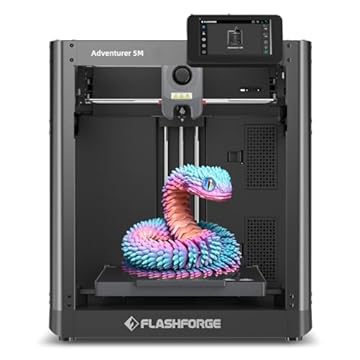
| FLASHFORGE Adventurer 5M 3D Printer | High-speed single-material open-frame printing | Offers 600mm/s speed, 280°C direct extruder, 3S detachable nozzle, and 220x220x220mm print size without multi-color automation |
| MakerWorld Model Library | Next-generation automated printing with advanced monitoring | Features P2S printer, AMS 2 Pro, and AI error detection according to listing data |
| Beginner-Friendly Ecosystem with MakerWorld Model | Entry-level enclosed CoreXY single-material production | Standalone enclosed P1S base machine without the bundled AMS multi-material module |
Choose the Flashforge Adventurer 5M if your operational demands center purely on rapid single-spool utility printing up to 600mm/s with quick-swap 3S nozzles. Choose the standalone P1S package if you need thermal enclosure for technical polymers but have no requirement for multi-material feeding. However, for professionals seeking an all-in-one platform capable of automated filament management, multi-tone aesthetic printing, and soluble support deposition, the P1S Combo remains the most comprehensive turnkey solution.

08 Bottom Line
When asking whether the bambu lab p1s vs x1 comparison justifies choosing this specific model, the operational verdict is decisively positive for pragmatic professionals. The P1S Combo strips away non-essential luxury features while delivering identical CoreXY acceleration, 500mm/s linear velocity, and enclosed thermal stability. You get dependable industrial reliability and high-speed execution without paying a premium for peripheral extras.
If you require a plug-and-play desktop manufacturing station that sets up in 15 minutes, automates multi-spool routing, and reliably processes structural plastics like ABS and ASA, this package delivers outstanding mechanical efficiency. It stands out as one of the most capable, streamlined, and friction-free additive manufacturing investments available for productive engineering teams.
09 FAQ
Is Bambu Lab P1S Combo worth it for small engineering teams?
Yes. Considering its 15-minute setup time, 500mm/s top speed, fully enclosed chassis, and automatic material management, it eliminates the calibration headaches that burden technical staff. It functions as a reliable rapid prototyping tool rather than a maintenance-heavy hobby project.
How does the Bambu Lab P1S compare to the Bambu Labs X1?
Both machines share the foundational enclosed CoreXY motion architecture, high acceleration, and seamless AMS integration. The primary differences lie in sensor arrays and enclosure materials; the P1S provides the essential speed and enclosed temperature stability for ABS and ASA without the premium lidar and auxiliary electronics found on the X1 series.
What filaments can the Bambu Lab P1S Combo print reliably?
The manufacturer listing designates PLA, PETG, TPU, PVA, PET, ABS, and ASA as ideal filaments for this platform. It is also capable of handling PA and PC. However, carbon fiber and glass fiber reinforced polymers are explicitly not recommended for use on this standard hardware configuration.
How many colors can you print with the Bambu Lab P1S Combo?
The bundled combo package includes one AMS unit supporting four simultaneous spools. By connecting additional Bambu Lab AMS units, the system can be expanded to support up to 16 colors or materials in a single automated print workflow.
Does the Bambu Lab P1S Combo require manual bed leveling?
No manual bed tramming is required. The printer features built-in automatic bed leveling that scans the platform surface before printing and compensates for dimensional variations, ensuring consistent first-layer adhesion without manual adjustment screws.