As Amazon Associates, we earn from qualifying purchases. This means we may receive a small commission at no extra cost to you if you click through and make a purchase.
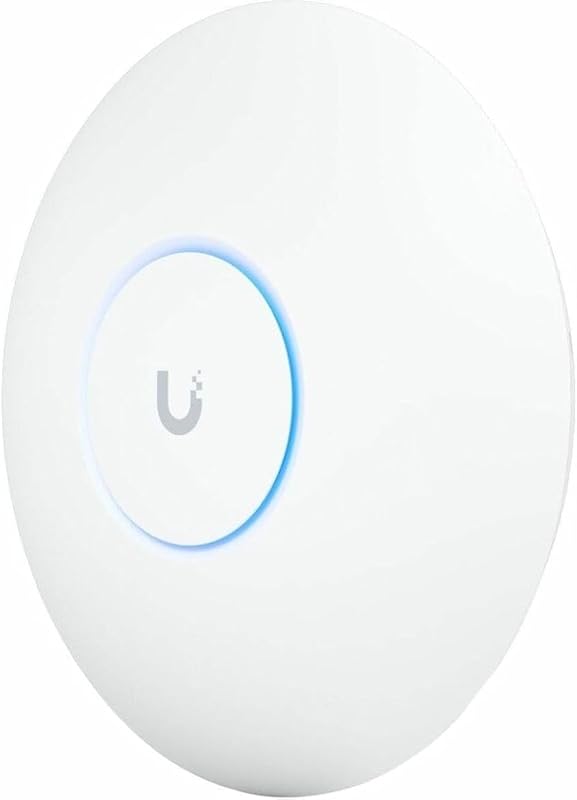
Commercial offices, high-density workspaces, and engineering environments frequently face severe RF congestion when dozens of active client stations compete for airtime across oversaturated 2.4 GHz and 5 GHz channels. When traditional wireless networks experience packet collisions, sluggish file transfers, and erratic video streaming, system administrators need infrastructure built specifically to bypass legacy channel contention. The Ubiquiti UniFi U7 Pro addresses this performance bottleneck by providing next-generation WiFi 7 connectivity paired with dedicated 6 GHz channel support. Engineered for demanding, large-scale enterprise environments, this ceiling-mounted access point distributes throughput across six spatial streams to maintain ultra-low latency and predictable wireless bandwidth for modern client hardware such as personal computer workstations.
Our ubiquiti u7 pro review indicates that this hardware is a decisive upgrade for facilities ready to support modern wireless protocols, provided their local switching infrastructure is prepared. While previous deployments using the ubiquiti unifi u6 pro offered stable enterprise coverage on older standards, the unifi u7 pro wifi 7 platform adds dedicated 6 GHz capacity to eliminate neighborhood interference entirely. However, because the package requires PoE+ power delivery and does not include an external power supply, prospective buyers must evaluate their switch hardware before rolling it out across an entire building. For teams with appropriate PoE+ power infrastructure in place, this unit provides exceptional long-term bandwidth stability.
01 Quick Verdict
The Ubiquiti UniFi U7 Pro is an enterprise-grade wireless access point designed to deliver clean, interference-free wireless connectivity in dense client environments by harnessing the power of 6 GHz WiFi 7 technology. It is best suited for organizations operating compatible personal computers and high-bandwidth workstations that need centralized management through UniFi OS and robust spatial capacity.
- Delivers cutting-edge WiFi 7 connectivity with dedicated 6 GHz band access.
- Features six spatial streams and six internal antennas for high concurrency.
- Offers up to 5.7 gigabytes per second maximum data transfer rate.
- Requires a dedicated PoE+ power source with 57 volts direct current.
02 Ubiquiti UniFi U7 Pro Features Explained
01 Next-Generation WiFi 7 and 6 GHz Spectrum Support
The primary architectural advancement of this access point is its integration of WiFi 7 technology alongside dedicated 6 GHz frequency allocation. In standard enterprise deployments, legacy 2.4 GHz and 5 GHz frequency bands suffer from severe channel overlap caused by neighboring networks, Bluetooth hardware, and legacy office equipment. By opening communication across the 6 GHz spectrum, the unifi u7 pro 6 ghz performance bypasses legacy noise, allowing compatible personal computer hardware to communicate over wide, pristine channels without contending with older Wi-Fi clients.
According to the product specifications, the access point supports 802.11ax wireless compatibility while operating on the newer WiFi 7 generation framework, delivering a maximum data transfer rate of 5.7 gigabytes per second. While the listing notes a dual-band frequency class alongside 6 GHz support, deploying this hardware creates an expansive, high-throughput wireless highway. For IT teams evaluating higher capacity models such as the unifi 7 pro max, this unit offers a focused balance of multi-gigabit throughput and streamlined enterprise deployment.
02 Six Spatial Streams for High-Density Multi-Client Environments
Managing airtime efficiency in dense corporate spaces requires more than raw data speeds; it demands parallel client servicing. The Ubiquiti UniFi U7 Pro incorporates six spatial streams backed by six internal antennas to facilitate simultaneous transmission streams across connected devices. This multi-stream configuration prevents channel saturation when numerous personal computers, laptops, and mobile terminals initiate simultaneous cloud backups, VoIP calls, and large data transfers, making the unifi u7 pro for business a reliable core component of high-traffic corporate networks.
In addition to its spatial stream configuration, the listing classifies the device with a hybrid router network type and notes a maximum upstream data transfer rate of 312.5 megabits per second. The multi-antenna array operates internally to provide balanced omnidirectional signal coverage without requiring protruding external antenna elements. The listing also identifies touch as a control method alongside standard network interface controls, giving network administrators flexible operational access during physical inspection and device maintenance.
03 Ceiling-Mounted Hardware Architecture and Power Requirements
Physical placement plays a decisive role in enterprise wireless propagation, and this access point utilizes a dedicated ceiling-mounted architecture. Mounting the hardware to the ceiling ensures unobstructed line-of-sight propagation across open-plan offices, boardrooms, and manufacturing floors, reducing the signal attenuation caused by cubicle partitions and structural columns. The internal antenna design is optimized to direct RF energy downward and outward, ensuring consistent signal delivery across large floor plans during an enterprise ubiquiti access point u7 pro installation.
Deploying this access point requires strict attention to the u7 pro poe requirements. The hardware operates on 57 volts of direct current delivered over Ethernet, but the product listing explicitly notes that a PoE+ adapter is not included in the retail box. Network installers must connect the unit directly to an 802.3at PoE+ compliant network switch or procure a standalone PoE+ power injector. The physical interface includes a single network port supporting 1000 Mbps LAN port bandwidth, handling both data transmission and operational power through a single structural cable run.
04 Centralized Network Management Through UniFi OS
Enterprise administrators managing distributed wireless access points require uniform software management. The Ubiquiti UniFi U7 Pro is driven natively by UniFi OS, allowing centralized configuration, real-time RF channel inspection, automated client steering, and firm policy enforcement from a unified console. Conducting a unifi u7 pro setup involves discovering the access point on the local management subnet, adopting it into the UniFi OS controller interface, and applying predefined corporate SSIDs and VLAN tags across the facility in minutes.
From an operational standpoint, centralized management provides visibility into connected client performance, upstream link health, and RF interference. While administrators coordinating small branch networks or remote workstations might compare this platform with compact gateway units like the unifi express 7 ux7, the U7 Pro remains focused entirely on high-capacity wireless broadcast. The listing specifies WPA2 security protocols and includes WPS support, providing baseline enterprise authentication and straightforward device provisioning across managed network segments.
03 Specs
| Attribute | Detail |
|---|---|
| Wi-Fi Generation | WiFi 7 |
| Wireless Compatibility | 802.11ax |
| Data Transfer Rate | 5.7 gigabytes_per_second |
| LAN Port Bandwidth | 1000 Mbps |
| Operating System | UniFi OS |
| Operating Voltage | 57 volts_of_direct_current |
| Spatial Streams | 6 spatial streams |
| Number of Antennas | 6 (Internal) |
| Security Protocols | WPA2, WPS |
| Form Factor | Ceiling-mounted |
04 Ubiquiti UniFi U7 Pro Pros and Cons
Pros
- Support for 6 GHz band WiFi 7
- Six spatial streams for dense environments
- Maximum data rate up to 5.7 Gbps
- Centralized management with UniFi OS
- Ceiling-mounted design with six internal antennas
Cons
- PoE+ power adapter not included
- Requires 57V direct current power supply
- Single network port limits local switching
05 Best Use Cases
- High-density corporate conference rooms and shared workspaces where numerous personal computers require concurrent wireless airtime.
- Creative media studios and software engineering departments that demand high-speed local data transfer rates over clean 6 GHz spectrum.
- Enterprise campus environments expanding existing UniFi OS infrastructure with modern WiFi 7 ceiling-mounted hardware.
- Commercial facilities operating legacy 802.11ax hardware that need a seamless transition path toward interference-free wireless bands.
06 Before You Buy
Before proceeding with a ubiquiti u7-pro deployment, IT managers must audit their existing physical network switching infrastructure. The listing confirms that the hardware operates at 57 volts direct current and requires PoE+ power delivery, yet a PoE+ power adapter is not included in the standard retail package. Organizations that currently rely on standard 802.3af PoE switches will find them insufficient to power this device, necessitating an upgrade to an 802.3at PoE+ switch or the purchase of external PoE+ injectors. Additionally, the unit features a single Ethernet port with 1000 Mbps LAN bandwidth, meaning you cannot daisy-chain downstream secondary network gear directly from the ceiling mount.
Prospective buyers should also review the documented specifications against their deployment requirements. The listing designates wireless compatibility with 802.11ax while featuring WiFi 7 generation technology and WPA2 security protocols with WPS. The listing specifies personal computer compatibility and internal home antenna location, though its physical form factor is designed for ceiling-mounted enterprise spaces. Finally, the listing does not specify exact physical chassis dimensions, overall unit weight, operating temperature tolerances, or included ceiling mounting bracket accessories, so administrators planning specialized surface mounting should verify those physical clearances prior to installation.
07 How It Compares With Similar Picks
| Product | Best For | Key Difference |
|---|---|---|
| Ubiquiti UniFi U7 Pro | High-density enterprise WiFi 7 networks | Features 6 GHz support, 6 spatial streams, and UniFi OS management with 5.7 Gbps data transfer rate |
| Ubiquiti UniFi nanoHD Compact 802.11ac | Compact legacy installations | Operates on 802.11ac Wave2 MU-MIMO in a compact form factor without WiFi 7 or 6 GHz capabilities |
| WiFi 6 Dual Band | Omada-managed standalone businesses | Provides AX3000 WiFi 6 dual-band coverage, includes a DC adapter, and integrates with Omada management |
| Desktop WiFi Bridge | Desktop workstation range extension | AC1200 dual-band desktop bridge with four fixed antennas and client extender modes rather than ceiling mounting |
When conducting a u7 pro vs nanohd evaluation, the decision hinges entirely on network generation and wireless throughput. The Ubiquiti UniFi nanoHD Compact 802.11ac provides reliable service for legacy environments running Wave 2 802.11ac hardware where compact physical footprints matter, but it lacks the 6 GHz support and spatial stream capacity of the U7 Pro. Alternatively, the WiFi 6 Dual Band Omada-managed unit is suitable for businesses invested in the TP-Link ecosystem that require an included DC power adapter and AX3000 speeds. For standalone personal computer stations needing client range extension or bridging rather than a ceiling-mounted enterprise broadcast, the Desktop WiFi Bridge delivers a desktop form factor with four fixed antennas at AC1200 performance.
08 Bottom Line
For organizations evaluating whether is unifi u7 pro worth it, the answer is a clear yes for facilities with modern client hardware and existing PoE+ switching infrastructure. By introducing 6 GHz wireless channels alongside six spatial streams and UniFi OS oversight, the access point resolves common RF saturation challenges and guarantees responsive, interference-free connectivity across demanding workspaces. Its maximum data transfer rate of 5.7 gigabytes per second ensures high headroom for data-intensive business applications.
Nevertheless, buyers must remember the operational prerequisites before committing to a full deployment. The requirement for 57 volts direct current over PoE+, the omission of an included power adapter, and the presence of a single 1000 Mbps LAN port require structured network planning. If your facility possesses compliant PoE+ ports and seeks a durable, next-generation wireless upgrade for personal computer workstations, the Ubiquiti UniFi U7 Pro stands as a reliable, high-performance foundation for modern corporate wireless infrastructure.
09 FAQ
Does the Ubiquiti UniFi U7 Pro come with a PoE+ power adapter?
No, the product listing explicitly indicates that a PoE+ power adapter is not included in the package. The device requires 57 volts of direct current supplied via an 802.3at PoE+ compliant switch or an external PoE+ power injector to power on and operate.
What wireless frequency bands does this access point support?
The access point supports next-generation WiFi 7 communication with dedicated 6 GHz channel support to deliver interference-free performance. While the listing notes a dual-band class specification, it highlights the 6 GHz band to eliminate congestion from legacy wireless equipment.
Can this access point be mounted on the ceiling?
Yes, the Ubiquiti UniFi U7 Pro is designed specifically as a ceiling-mounted access point. This orientation allows its six internal antennas to project wireless signals downward and outward across large, open enterprise spaces without physical obstructions.
What network management system does this hardware utilize?
The unit runs on UniFi OS, which provides centralized management across the local network. Network administrators can configure SSIDs, monitor client bandwidth, evaluate RF activity, and manage security settings through the unified UniFi dashboard interface.
What is the maximum data transfer rate specified for the device?
The listing specifies a maximum data transfer rate of 5.7 gigabytes per second. It also notes an upstream data transfer rate of 312.5 megabits per second and a physical LAN port bandwidth rating of 1000 Mbps.


