As Amazon Associates, we earn from qualifying purchases. This means we may receive a small commission at no extra cost to you if you click through and make a purchase.
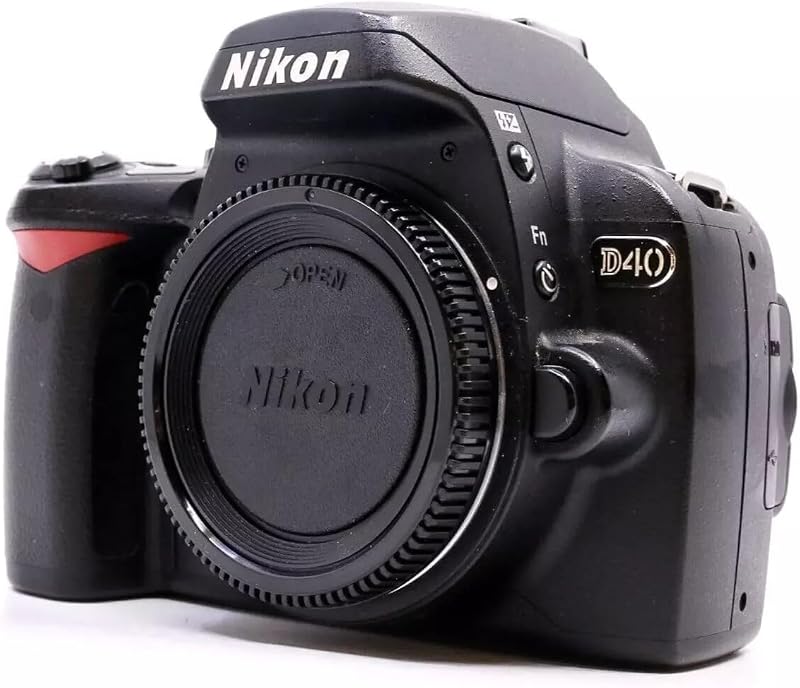
Finding an uncomplicated camera for personal projects, family documentation, or fundamental photographic education often proves frustrating amid today’s complex devices filled with video menus and wireless options. Many enthusiasts and aspiring photographers simply seek an approachable tool that prioritizes tactile ergonomics and optical framing over software complexity. The Nikon D40 directly addresses this preference as a lightweight digital SLR built for clear, dependable still capture. By centering on traditional photographic mechanics and a straightforward layout, it presents a functional platform for mastering composition, shutter timing, and aperture control without unnecessary digital clutter.
Our verdict is that the Nikon D40 remains a practical, user-friendly entry point for basic still imaging, provided expectations align with its hardware vintage. While its 6.1-megapixel CCD sensor and absence of video functionality distinguish it from modern mirrorless gear, its instant shutter response, lightweight chassis, and distinctive daylight color rendering deliver genuine utility. For casual hobbyists, outdoor daylight photography, and introductory camera instruction, it offers an engaging and reliable workflow.
01 Quick Verdict
The Nikon D40 functions as an accessible, streamlined DSLR designed specifically for intuitive everyday photography, capturing crisp, richly saturated still frames straight from the camera without overwhelming users with menus.
- Lightweight 1.2-pound form factor provides comfortable all-day carrying.
- Responsive 6.1 MP CCD sensor yields pleasing natural color fidelity.
- Bundled 18-55mm f/3.5-5.6G ED II zoom lens delivers solid everyday focal coverage.
- Tactile controls and clear screen assist in rapid exposure learning.
02 Nikon D40 Features Explained
01 CCD Sensor and Nikon D40 Image Quality
At the center of the Nikon D40 dslr is a 6.1-megapixel APS-C format CCD sensor paired with an exclusive Nikon image processing engine. Unlike modern CMOS architecture, a classic nikon d40 ccd sensor is recognized for producing vibrant, punchy colors and natural skin tones straight out of the camera, especially in bright daylight environments. While 6.1 megapixels is modest compared to modern standards, the APS-C dimensions provide a physical imaging area far larger than standard compact sensors, enabling genuine optical depth of field and soft background separation. The manufacturer specifications confirm that this sensor captures sufficient detail to produce photo-quality 14 x 19-inch prints with clarity.
Regarding raw file options, images can be saved in compressed NEF (RAW) format for post-capture adjustments, or in standard JPEG (Exif 2.21) for immediate viewing and sharing. When assessing overall nikon d40 image quality, the camera maintains dependable exposure balance across high-contrast daylight scenes. The minimum expanded sensitivity begins at ISO 200, which keeps digital noise low under daylight conditions, while integrated digital image stabilization assists in retaining image sharpness. The 1.60:1 aspect ratio ensures that framing matches common print sizes and digital displays without awkward cropping.
02 Ergonomics, Form Factor, and Display
Weighing only 1.2 pounds, the Nikon D40 was created specifically to eliminate the heavy, intimidating bulk historically associated with digital SLR camera bodies. Its deep right-hand grip and thoughtful balance allow users to manage the camera comfortably during family gatherings, vacations, or casual walking tours. Key controls, including the command dial and shutter release, sit naturally under the fingers, facilitating rapid adjustments without pulling your eye away from the optical viewfinder.
The rear panel features a 2.5-inch LCD screen equipped with three distinct display options to present exposure parameters clearly. Rather than relying on cryptic text menus, the graphical interface displays aperture, shutter speed, and remaining exposures in an intuitive circular format that shifts visually as you adjust settings. While this model does not feature live-view framing—requiring photographers to compose all pictures through the optical reflex viewfinder—the screen offers sharp playback for checking focus, reviewing histograms, and navigating menu settings.
03 Autofocus, Startup, and Nikon D40 Performance
Operational responsiveness is an area where nikon d40 performance remains competitive for basic still capture, highlighted by an instant startup sequence and direct shutter response. Turning the power switch instantly readies the camera for exposure, ensuring spontaneous candid moments and expressions are captured without electronic delay. The camera provides continuous shooting capabilities at up to 2.5 frames per second, offering sufficient burst timing for capturing moving pets, sports, or playful children.
The shutter mechanism supports speeds ranging from a fast 1/4000 of a second down to 30 seconds, giving photographers broad control over freezing motion or creating long-exposure evening shots. Because composing occurs through a true optical reflex viewfinder, framing remains completely free of latency. While busy households might utilize automated security options like the tp-link tapo c120 indoor to log indoor events passively, having an instant-response dedicated camera on hand allows for intentional, high-quality family documentation whenever needed.
04 The Bundled 18-55mm f/3.5-5.6G ED II Zoom Lens
The standard nikon d40 lens kit comes equipped with the 3x 18-55mm f/3.5-5.6G ED II AF-S DX Zoom-Nikkor lens, covering an essential focal range from wide-angle vistas to portrait perspectives. Featuring a maximum aperture of f/3.5 at the 18mm focal length that shifts to f/5.6 at the 55mm telephoto end, the optic incorporates Extra-low Dispersion (ED) glass elements designed to mitigate chromatic aberrations and deliver crisp edge-to-edge optical performance.
The lens features an integrated Auto Focus-S (AF-S) silent wave motor, which is required for autofocus operation on this camera body because the D40 lacks an in-body mechanical focus drive spindle. The mechanical zoom ring operates smoothly with tactile resistance, allowing for exact framing adjustments. In terms of lens compatibility, the camera accepts both Nikon F (DX) and Nikon F (FX) mountings, though autofocus functionality is maintained exclusively with lenses containing internal focusing motors.
05 Exposure Control and Integrated Flash
The camera offers versatile exposure modes accessible directly via the top control dial, including specialized scene modes for Portrait, Landscape, Children, Sports, Close-up, and Night Portrait, along with a fully Automatic mode. These presets automatically select optimal aperture, shutter speed, and internal tone curves, allowing novice photographers to focus on framing and composition without technical hesitation. For those developing their manual exposure skills, standard manual, aperture-priority, and shutter-priority modes offer unrestricted creative command.
When supplemental lighting is needed in low-light environments, the built-in pop-up flash provides quick fill illumination for portraits or dark indoor spaces. The camera body also includes an integrated ISO hot shoe on top, enabling the attachment of dedicated external flash units for bounced or directional lighting setups. Power is supplied by a rechargeable Li-ion EN-EL9 battery pack, which secures inside the grip to provide dependable endurance for an extended shooting session.
03 Specs
| Attribute | Detail |
|---|---|
| Photo Sensor Resolution | 6.1 MP |
| Photo Sensor Size | APS-C |
| Sensor Type | CCD |
| Lens Mount Compatibility | Nikon F (DX), Nikon F (FX) |
| Maximum Shutter Speed | 1/4000 seconds |
| Minimum Shutter Speed | 30 seconds |
| Continuous Shooting Speed | Up to 2.5 frames per second |
| Screen Size | 2.5 inches (three display options) |
| File Formats | Compressed NEF (RAW), JPEG (Exif 2.21), DCF 2.0, DPOF |
| Item Weight | 1.2 pounds |
04 Nikon D40 Pros and Cons
Pros
- Lightweight 1.2-pound ergonomic camera body
- Rich color rendition from CCD sensor
- Instant startup and rapid shutter response
- Includes versatile 18-55mm AF-S zoom lens
- Clear 2.5-inch screen with three display options
Cons
- No video recording capabilities
- Autofocus requires lenses with internal motors
- SD memory card not included in box
05 Best Use Cases
- Practicing foundational manual photography techniques using physical dials and an optical viewfinder.
- Capturing vibrant outdoor family moments, vacations, and park outings under daylight conditions.
- Shooting crisp candid still portraits and travel scenes without carrying bulky professional rigs.
- Serving as a durable, straightforward educational camera for beginners enrolled in introductory visual arts coursework.
06 Before You Buy
Before purchasing this camera, lens compatibility represents the most important factor to consider. The Nikon D40 body lacks an integrated autofocus drive motor, meaning that autofocus is only possible when using lenses featuring internal silent wave motors, designated by Nikon as AF-S or AF-I. Older mechanical Nikon F-mount lenses will physically attach to the camera, but they require manual focusing via the focus ring. In the same manner that setting up a property security perimeter with a blink outdoor 4 3 pack requires checking mounting and network parameters, ensuring your existing or prospective lens collection aligns with this camera’s AF-S requirement prevents unexpected workflow limitations.
It is equally crucial to note storage requirements and package contents. The Nikon D40 saves photos to standard SD memory cards, but the listing confirms that a memory card is not included in the box. Because the camera uses older controller firmware, it is designed around standard SD media rather than newer, high-capacity SDXC formats. Additionally, the product listing does not specify the inclusion of accessories such as neck straps, protective lens caps, or memory card readers, meaning you should plan to supply these items separately.
07 How It Compares With Similar Picks
| Product | Best For | Key Difference |
|---|---|---|
| Nikon D40 | Dedicated still photography & exposure learning | 6.1 MP CCD sensor, optical viewfinder, 2.5 fps burst, still photos only |
| Motion Detection | Indoor monitoring & smart home security | 1080p security camera with 2-way audio, siren, night vision, and cloud/SD storage |
| 1080p Full HD Video | Pocket-friendly travel & casual vlogging | 16MP compact point-and-shoot with Full HD video, 5x optical zoom, and 2.7-inch LCD |
| 24.1 Megapixel CMOS | High-resolution photography & modern video capture | 24.1 MP APS-C CMOS sensor with built-in Wi-Fi and 18-55mm IS II lens kit |
Selecting an alternative depends heavily on whether your imaging objectives require automated surveillance, video capabilities, or modern sensor resolutions. If your primary goal is nursery logging or continuous room surveillance, dedicated equipment such as the Motion Detection camera or specialized devices like the hellobaby baby monitor 6 world first ips screen 30h battery, secure no wifi, pan tilt video camera w provide automatic motion tracking and two-way audio that an optical DSLR cannot deliver. If you require pocketable dimensions and video recording for social clips, the 1080p Full HD Video compact camera offers straightforward point-and-shoot utility. However, if your work demands modern high-resolution image files, integrated wireless sharing, and Full HD recording within a digital SLR form factor, the 24.1 Megapixel CMOS option provides modern capabilities well beyond the classic architecture of the D40.

08 Bottom Line
Determining whether the camera remains practical today centers on asking is nikon d40 worth it for your particular photographic goals. The Nikon D40 does not attempt to compete with modern smartphone computation, continuous autofocus video tracking, or wireless synchronization. Instead, it offers an authentic, tactile photography platform centered on balanced physical handling, an optical reflex viewing path, and a classic CCD sensor renowned for rendering punchy daylight colors.
For hobbyists, photography students, and budget-conscious individuals who value the mechanical feel of an SLR and desire a distraction-free environment to practice still framing, this camera fulfills a clear role. When matched with its bundled 18-55mm lens and operated within its daylight sensitivity parameters, the Nikon D40 remains an enjoyable and capable imaging companion.
09 FAQ
Does the Nikon D40 support video recording?
No, the Nikon D40 is strictly a digital still SLR camera and does not feature video recording capabilities, a movie mode, or audio capture inputs.
Is the Nikon D40 suitable for beginner photographers?
Yes, the nikon d40 for beginners provides an accessible learning platform featuring clear automatic scene modes, a physical mode dial, and a 2.5-inch LCD with graphical meter displays that help new users understand exposure fundamentals.
What memory cards are compatible with the Nikon D40?
The camera uses standard SD memory cards for photo storage, though a memory card is not included in the bundle. Due to the camera’s firmware generation, users should utilize standard SD cards rather than modern high-capacity SDXC media.
Can any Nikon lens be mounted to the Nikon D40?
The camera accepts Nikon F (DX) and Nikon F (FX) mount lenses, but autofocus requires lenses featuring built-in focus motors, designated as AF-S or AF-I. Other F-mount lenses will mount physically but require manual focusing.
What are the primary advantages of the Nikon D40 CCD sensor?
The 6.1 MP CCD sensor is widely appreciated for its distinctive, saturated daylight color science and clean tonal transitions at its base ISO 200 setting, delivering crisp JPEGs without aggressive modern software processing.


