As Amazon Associates, we earn from qualifying purchases. This means we may receive a small commission at no extra cost to you if you click through and make a purchase.
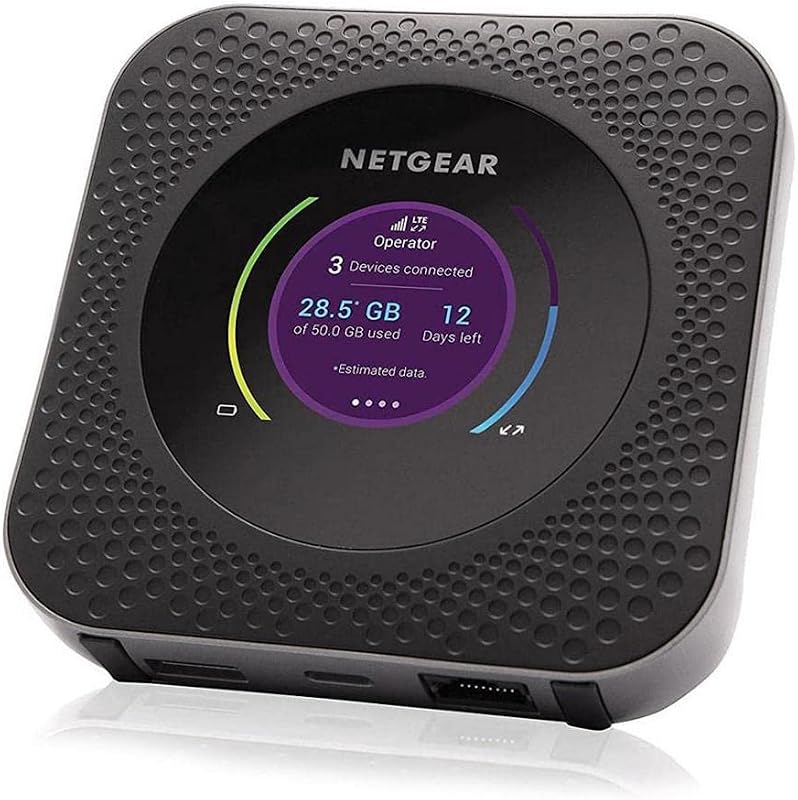
Mobile professionals, traveling executives, and remote teams frequently encounter fragile or unsecured hotel networks, congested airport connections, and unpredictable broadband drops that halt productivity. Relying on smartphone tethering quickly exhausts handheld battery reserves and caps throughput, while open public connections introduce enterprise security liabilities. The NETGEAR Nighthawk M1 addresses this infrastructure deficit by providing a dedicated, pocket-sized cellular workstation engineered for consistent mobile data delivery. Designed to operate across cellular networks—delivering optimal performance when paired with AT&T and T-Mobile—this mobile hotspot delivers enterprise-grade data access, dedicated Ethernet pass-through, and reliable local network isolation wherever business operations occur.
For professionals evaluating portable hardware, the device stands as a proven Category 16 LTE mobile router capable of reaching download speeds up to 1Gbps under optimal cellular conditions. Offering simultaneous dual-band Wi-Fi 5 support for up to twenty connected client devices, full Gigabit Ethernet failover integration, and a removable 5040mAh battery, it functions seamlessly as an in-vehicle productivity terminal or an automated home broadband backup. While fixed-location wireless continues to evolve through solutions like the nighthawk wifi 7 ecosystem, the mature LTE architecture and carrier aggregation capabilities of this hardware deliver exceptional stability for users requiring dependable 4G performance.
01 Quick Verdict
The NETGEAR Nighthawk M1 delivers reliable Category 16 LTE performance paired with physical routing interfaces, making it a premier choice for mobile executives and remote workers requiring enterprise connectivity away from fixed office infrastructure.
- Gigabit-class LTE connectivity featuring 4-band carrier aggregation and 4×4 MIMO for download speeds reaching up to 1Gbps.
- Dedicated Gigabit Ethernet port engineered for physical hardware tethering and seamless router failover during broadband outages.
- High-capacity 5040mAh rechargeable battery supporting extended off-grid productivity alongside universal USB-C charging.
- Dual-band concurrent Wi-Fi 5 transmission supporting up to 20 client devices under secure WPA2-PSK encryption.
02 NETGEAR Nighthawk M1 Features Explained
01 Gigabit LTE Speeds and Carrier Aggregation
At the core of this mobile hotspot is Category 16 LTE Advanced technology. Through the implementation of 4-band carrier aggregation and 4×4 MIMO internal antennas, the netgear nighthawk m1 download speed can reach theoretical download limits of up to 1Gbps, alongside upstream data transfer rates reaching up to 150 Mbps. Real-world speeds vary depending on cellular infrastructure proximity, network congestion, and local carrier band allocation, but the underlying multi-band aggregation combines disparate wireless channels into a single consolidated pipeline to maximize operational throughput.
This multi-band architecture ensures that remote workers handling intensive cloud file synchronization, real-time collaboration platforms, and multi-stream high-definition video conferences experience minimal latency spikes. By pulling signals across multiple tower frequencies simultaneously, the router maintains steady transmission rates even in dense radio frequency environments where traditional single-channel mobile devices experience packet drops and throughput throttling.
02 Physical Gigabit Ethernet Port for Landline Integration
A primary factor separating this mobile hotspot from standard consumer travel devices is its integrated physical interface layout. The inclusion of a dedicated netgear nighthawk m1 ethernet port enables direct wired connections to laptops, network switches, or existing enterprise routing hardware. When coupled with an existing residential or branch network, it acts as an immediate primary connection or redundant cellular failover gateway during fixed-line ISP disruptions, complementing primary multi-node deployments like a netgear orbi 770 setup.
This physical interface eliminates the wireless latency and radio interference inherent to dual-hop wireless setups. For stationary professionals operating in temporary site offices, cabins, or convention floor booths, the Ethernet connection allows direct integration into desktop workstations or point-of-sale terminals without introducing secondary Wi-Fi hops, ensuring robust throughput and uncompromised local networking reliability.
03 Comprehensive AT&T Band Support and External Antenna Ports
Network coverage depends directly on modern radio frequency band integration. The device boasts comprehensive netgear mr1100 at&t bands coverage, incorporating LTE bands 1, 2, 3, 4, 5, 7, 12, 14, 29, 30, and 66, alongside legacy 3G fallback bands 2, 4, and 5. Support for key enterprise spectrum—specifically Band 14 (used for public safety and critical infrastructure) and Band 30 (AT&T’s dedicated high-density capacity layer)—ensures prioritized, less congested communication corridors across metropolitan and regional business hubs.
To further bolster weak cellular reception in fringe suburban or rural territories, the chassis incorporates dual TS-9 external antenna ports. By connecting external 3G/4G antennas into these designated TS-9 connectors, users stationed inside shielding corporate structures, basements, or remote field sites can pull external signals directly into the dual-antenna receiver array, recovering usable data streams where internal antennas struggle.
04 High-Capacity 5040mAh Power Management
Field deployment demands stamina. The integrated 5040mAh lithium-ion battery provides substantial off-grid operating endurance, making netgear nighthawk m1 battery life sufficient for long-haul travel, airport layovers, and full remote work shifts without tethering to a wall outlet. Power delivery is routed through a modern USB-C interface, allowing standard corporate charging equipment to replenish the internal cell seamlessly.
In fixed or permanent installations where the router functions as a stationary failover box, the device supports operation via external power, preventing the battery from remaining under continuous full-charge strain during 24/7 backup readiness. The inclusion of a clear 2.4-inch LCD panel on the top face further assists power and data efficiency by offering real-time tracking of current network consumption, battery percentage, signal reception, and active device tallies.
05 Dual-Band Wi-Fi 5 Networking and Device Capacity
Distributing high-bandwidth mobile data to an entire project team requires disciplined local wireless routing. Operating on 802.11ac dual-band concurrent architecture, the hotspot broadcasts simultaneous 2.4GHz and 5GHz frequencies to accommodate legacy equipment alongside modern high-speed clients. The system handles up to 20 simultaneously connected devices, providing stable client routing managed through an onboard RouterOS platform and app-based configuration console.
Local wireless security is maintained via WPA2-PSK encryption protocols and an integrated basic-to-moderate firewall architecture, ensuring that client machines remain isolated from malicious snooping on open airwaves. While large residential mesh infrastructures rely on extended nodes like an orbi 970 satellite to cover thousands of square feet, this hotspot concentrates its radio output directly within immediate meeting spaces, temporary control centers, or personal travel perimeters.
03 Specs
| Attribute | Detail |
|---|---|
| Model Number | MR1100-100NAS |
| Cellular Category | LTE CAT 16 (4-Band Carrier Aggregation, 4×4 MIMO) |
| Maximum Download Speed | Up to 1 Gbps |
| Maximum Upload Speed | Up to 150 Mbps |
| Wi-Fi Generation | Wi-Fi 5 (802.11ac Dual-Band Concurrent) |
| Supported LTE Bands | 1, 2, 3, 4, 5, 7, 12, 14, 29, 30, 66 |
| Supported 3G Bands | 2, 4, 5 |
| Device Capacity | Connects Up to 20 Devices |
| Battery Capacity | 5040mAh Rechargeable Lithium-Ion |
| Ports and Connectors | 1x Gigabit Ethernet LAN, 1x USB-C, Dual TS-9 Antenna Ports |
| Security Protocol | WPA2-PSK with Basic to Moderate Firewall |
04 NETGEAR Nighthawk M1 Pros and Cons
Pros
- Gigabit LTE speeds up to 1Gbps download
- Physical Gigabit Ethernet port for router failover
- High-capacity 5040mAh rechargeable battery
- Connects up to 20 devices simultaneously
- Dual TS-9 external antenna ports for signal boost
Cons
- Requires carrier-provided Micro SIM and BYOD plan
- Incompatible with legacy Sprint network
- Recent T-Mobile network changes may affect plan support
05 Best Use Cases
- Deploying the netgear nighthawk m1 for remote work enables mobile executives to maintain encrypted, high-throughput cloud connectivity while bypassing vulnerable hotel and airport Wi-Fi networks.
- Utilizing the unit as a dedicated netgear nighthawk m1 travel router provides field teams with an isolated, secure Wi-Fi zone capable of supporting twenty client devices simultaneously.
- Deploying the hardware via its Gigabit Ethernet interface establishes an automated cellular failover bridge for home offices or small commercial branch locations experiencing wireline broadband outages.
- Positioning the hotspot in recreational vehicles, temporary field trailers, or mobile command units with external TS-9 antennas ensures steady broadband access across rural operational zones.
06 Before You Buy
Navigating the netgear nighthawk m1 at&t setup process requires an understanding of cellular carrier provisioning. This device is fully unlocked for GSM-based networks, functioning best on AT&T and T-Mobile while strictly excluding legacy Sprint CDMA infrastructure. Activation requires a physical Micro SIM card provided directly by your carrier and an active Bring Your Own Device (BYOD) mobile broadband data plan. Users should verify tier limits and high-speed bandwidth allotments with their provider prior to deployment, as carrier data throttles apply independently of the router’s 1Gbps maximum download threshold. Additionally, the manufacturer notes that recent plan changes implemented across T-Mobile networks may prevent some users from utilizing the MR1100, making AT&T the more reliable and straightforward carrier match for this hardware.
Potential buyers should also take note of physical specifications and package limitations. The device uses standard Micro SIM card dimensions, meaning micro-to-nano SIM adapters must be acquired separately if your carrier issues modern nano-cut cards. The listing specifies support for 220-volt charging conditions and includes dual TS-9 ports, but external antenna cables, mounting equipment, and external signal amplifiers are not included in the standard retail packaging. Furthermore, the listing does not specify the exact dimensions, weight, or individual wall adapter amperage included in the retail box, so mobile professionals should plan on utilizing standard USB-C corporate chargers for universal power delivery.
07 How It Compares With Similar Picks
| Product | Best For | Key Difference |
|---|---|---|
| NETGEAR Nighthawk M1 | Enterprise failover and high-throughput mobile work | LTE CAT 16 speeds up to 1Gbps, Gigabit Ethernet, 5040mAh battery, and dual TS-9 external ports. |
| 4G LTE | International global travel without SIM cards | Features virtual cloud SIM supporting 170+ countries with 1GB included data, limited to 10 devices. |
| Unlocked 4G LTE Mobile WiFi | Budget-conscious portable travel routing | Qualcomm chipset capped at 300Mbps Wi-Fi, smaller 3000mAh battery, connects 15 devices with WPA3. |
| Home | Multi-carrier auto-switching across 140+ countries | 5G-capable global Solis platform with SIM-free carrier auto-switching and included monthly data allocations. |
Choosing between these mobile wireless solutions depends on deployment architecture and data volume needs. The NETGEAR Nighthawk M1 remains the superior choice for users demanding enterprise Gigabit Ethernet failover, high-capacity CAT 16 aggregation, and physical carrier control via custom SIM data packages. Conversely, if your workflows mandate seamless international country-hopping without managing physical SIM cards, alternatives like the 4G LTE or the Home 5G multi-carrier solution offer cloud-provisioned roaming across over 140 to 170 nations. Meanwhile, users seeking an ultra-compact secondary travel companion for light browsing on a standard SIM may prefer the Unlocked 4G LTE Mobile WiFi with its 300Mbps rate limit and 3000mAh battery capacity.

08 Bottom Line
Deciding whether the netgear nighthawk m1 worth it comes down to throughput expectations, hardware reliability, and tethering versatility. While modern 5G hotspots dominate current headlines, the mature Category 16 LTE architecture of the M1 extracts the absolute theoretical maximum from 4G infrastructure. Its pairing of 4-band carrier aggregation, 4×4 MIMO internal radios, and optional dual TS-9 external antenna ports provides a rock-solid connectivity blanket for remote professionals across North America, particularly over AT&T’s enterprise frequency bands.
With its high-capacity 5040mAh power cell, multi-client dual-band Wi-Fi 5 routing, and critical Gigabit Ethernet bridge, this mobile hotspot bridges the gap between pocket-friendly travel connectivity and robust fixed-office backup. For executives, field specialists, and remote teams who refuse to gamble on erratic hotel wireless or weak smartphone tethering, the NETGEAR Nighthawk M1 remains a benchmark investment in business continuity.
09 FAQ
What is required for the netgear nighthawk m1 at&t setup?
Setup requires obtaining a compatible Micro SIM card from AT&T provisioned with an active Bring Your Own Device (BYOD) mobile broadband data plan. Once the Micro SIM card is inserted into the internal slot beneath the battery compartment, power the unit on to allow the RouterOS firmware to register on the AT&T network automatically. Device settings, APN profiles, and Wi-Fi security keys can be configured directly through the 2.4-inch LCD panel or via the official mobile application.
How long does the netgear nighthawk m1 battery life last during regular use?
The unit features a substantial 5040mAh rechargeable lithium-ion battery engineered to support full work shifts under typical multi-device wireless routing loads. Heavy data operations, such as continuous multi-gigabyte file transfers or serving all twenty allowable client devices simultaneously, will consume power faster. Charging is handled via the integrated USB-C port, which also allows continuous stationary operation when attached to external power.
Can the NETGEAR Nighthawk M1 be used as a home router failover system?

Yes. The hardware incorporates a full Gigabit Ethernet LAN port capable of connecting directly to the WAN port of an existing residential or commercial router. When your primary fixed broadband provider experiences an outage, the M1 supplies cellular data directly into the connected routing system, ensuring connected desktop computers and wired network appliances remain online.
Which cellular frequency bands are supported on the device?
The router supports a wide array of 4G LTE spectrum, including bands 1, 2, 3, 4, 5, 7, 12, 14, 29, 30, and 66, alongside 3G bands 2, 4, and 5. This broad spectrum integration ensures optimal performance on AT&T, incorporating dedicated enterprise bands like Band 14 and high-density capacity spectrum like Band 30. It is unlocked for GSM carriers but explicitly excludes legacy CDMA networks like Sprint.
Does the NETGEAR Nighthawk M1 support external antennas?
Yes. The chassis features dual TS-9 RF connectors concealed beneath protective port covers. These ports allow users to connect compatible external 3G/4G high-gain antennas, significantly enhancing signal reception and overall data stability in fringe rural areas or heavily shielded commercial buildings.