As Amazon Associates, we earn from qualifying purchases. This means we may receive a small commission at no extra cost to you if you click through and make a purchase.
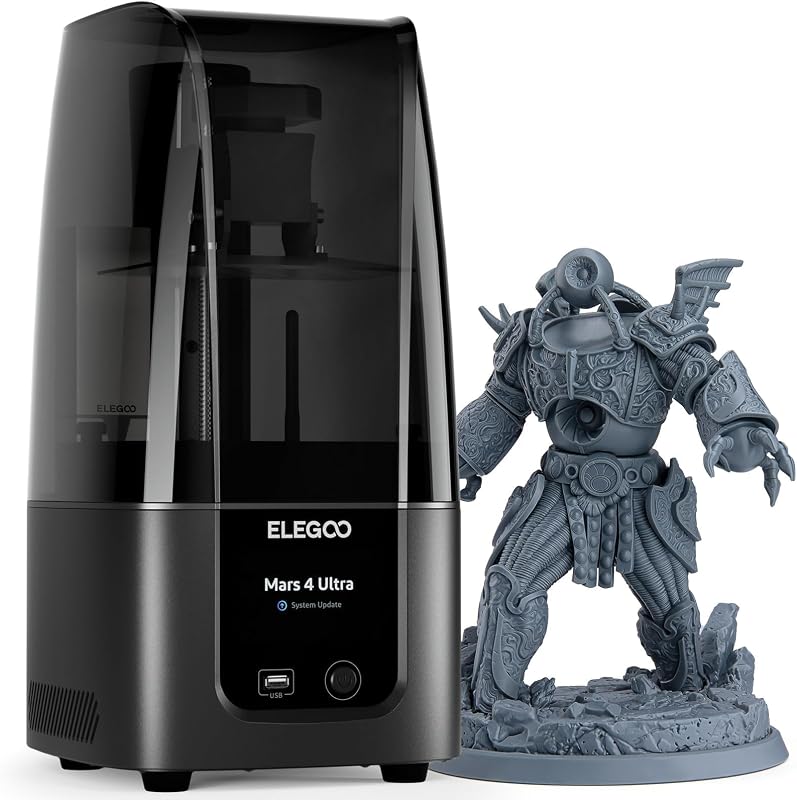
Achieving injection-mold-level detail on small desktop parts has historically required navigating sluggish file transfers, finicky manual calibration, and low-resolution masking screens that blur delicate features. For digital sculptors, tabletop hobbyists, and rapid-prototyping professionals, these bottlenecks turn what should be an efficient fabrication workflow into an exercise in constant troubleshooting. The Elegoo Mars 4 Ultra directly addresses these friction points by uniting a high-density 9K mono LCD with an embedded Linux operating system and dual-band wireless networking. This machine is engineered for users who demand extreme surface fidelity without sacrificing file-processing speed or benchtop convenience.
Our verdict is that this printer represents an exceptional refinement in desktop stereolithography, successfully pairing ultra-fine optical resolution with meaningful quality-of-life upgrades. The combination of an 18-micrometer XY resolution, rapid ACF release film, and an intuitive four-point leveling system minimizes operational headaches and maximizes detail reproduction. While resin printing still demands a dedicated workspace for washing and curing, this unit establishes a high benchmark for desktop precision and daily usability.
01 Quick Verdict
The Mars 4 Ultra 9K resin printer delivers top-tier surface clarity and reliable mechanical execution, making it an outstanding tool for creators focused on high-detail fabrication. By integrating modern system architecture with high-speed networking, it cuts down the idle time between finishing a digital sculpt and starting a physical build.
- Microscopic detail capture powered by an 8520 by 4320 resolution mono LCD screen.
- Streamlined network transfers using 2.4G and 5G dual-band wireless connectivity.
- Robust Linux-driven interface backed by 4G of onboard RAM for instant file handling.
- Consistent layer releases and strong first-layer hold via ACF liner film and laser-etched aluminum.
02 Elegoo Mars 4 Ultra Features Explained
01 7-Inch 9K Mono LCD and Optical Precision
At the core of the machine sits a 7-inch 9K monochrome LCD boasting an 8520 by 4320 resolution. This dense pixel arrangement translates into an XY resolution of 18 micrometers, allowing the printer to resolve hair-thin textures, crisp organic contours, and sharp mechanical edges that lower-resolution screens inevitably soften. When evaluating the Mars 4 Ultra print quality, the high pixel density virtually eliminates visible voxel stepping along curved geometries, producing smooth surfaces that require minimal hand-sanding or post-processing clean-up.
Optical longevity and component protection are equally critical in resin fabrication, where stray droplets or mechanical pressure can ruin an unprotected panel. Elegoo shields the 9K screen beneath a layer of 9H hardness tempered glass. This protective barrier guards the expensive monochrome LCD against accidental resin leaks, scratching during vat cleaning, and stray debris. By maintaining optical clarity while withstanding physical contact, the tempered glass ensures that the light projection remains uniform and distortion-free across extended print cycles.
02 Linux Operating System and Internal Memory
Unlike conventional desktop resin machines that rely on basic microcontrollers, this unit runs on an embedded Linux operating system backed by 4G of RAM. This computing backbone eliminates the frustrating latency often experienced when browsing large sliced files on a machine’s local storage. File previews render instantly, system menus respond without lag, and complex multi-gigabyte models load directly into active memory without taxing the processing pipeline.
The Linux environment also manages active print execution and resource distribution with greater stability. By maintaining dedicated system overhead for print execution, the printer avoids mid-print stuttering or memory overflows that can cause layer shifts or dropped exposure cycles. This software stability makes the machine feel like a reliable production appliance rather than an experimental hobby kit.
03 Dual-Band Wi-Fi File Transfer
Physical USB drives have long been an operational weak point in resin workshops, often becoming sticky with photopolymer residue or suffering data corruption from repeated plugging. The Elegoo Mars 4 Ultra Wi-Fi functionality introduces both 2.4G and 5G network support, providing steady transmission speeds ranging between 6 and 10 Mbps. Users can slice a model on their primary workstation and send it directly across the local network to the printer in seconds.
This wireless capability transforms workshop ergonomics, particularly for creators who isolate their chemical processing equipment in ventilated enclosures or separate rooms. Integrating networked hardware into a smart workshop environment—much like managing automation through a sonoff mini r4 switch—allows makers to centralize their monitoring while keeping hazardous fumes and messy liquids away from primary computer desks. By eliminating physical storage media from daily operation, the overall workflow remains clean, fast, and organized.
04 Four-Point Leveling and ACF Release Film
Bed calibration is a critical variable in resin success, and the Elegoo Mars 4 Ultra leveling mechanism uses a four-point leveling system designed for set-and-forget simplicity. By tightening four balancing screws around the build head, users lock the plate into parallel alignment with the LCD screen. The listing highlights that after completing this initial alignment, the plate holds its calibration without requiring re-leveling before every job, substantially reducing routine preparation time.
First-layer adhesion is reinforced by a laser-carved pattern on the aluminum build plate surface, which provides mechanical purchase for bottom exposure layers. Beneath the resin vat, the machine incorporates an ACF release liner film. Compared to traditional FEP or PFA films, ACF features a lower release force, allowing the build plate to peel away from cured layers more smoothly during vertical lift motions. This reduced suction minimizes mechanical stress on delicate model supports and accelerates overall cycle speeds.
05 IPS Touch Screen Interface
Local machine control is handled through a 4-inch HD IPS capacitive touch display with an 800 by 480 pixel resolution. The IPS panel offers wide viewing angles and vivid color reproduction, making it easy to read status readouts, exposure settings, and layer progression even from an offset bench position. The interface supports 12 different languages, ensuring straightforward navigation regardless of regional preferences.
The menu layout prioritizes direct access to essential functions: manual Z-axis movement, vat cleaning cycles, exposure testing, and wireless network configuration. Touch inputs register promptly without repeated tapping, while visual model previews confirm that the selected file matches the intended job before resin exposure begins.
03 Specs
| Attribute | Detail |
|---|---|
| Product Dimensions | 23.82″D x 11.22″W x 10.63″H |
| Item Weight | 18 pounds |
| Item Model Number | MARS 4 Ultra |
| Screen Type | 7-Inch 9K Monochrome LCD with 9H Tempered Glass |
| Resolution | 8520 × 4320 (18 µm XY Resolution) |
| Operating System & Memory | Linux OS with Built-in 4G RAM |
| Network Connectivity | 2.4G & 5G Dual-Band Wi-Fi (6–10 Mbps) |
| Leveling System | 4-Point Leveling System |
| Build Plate Surface | Laser-Carved Adhesion Pattern |
| Release Liner Film | ACF Release Liner Film |
| Control Display | 4-Inch HD IPS Touch Screen (800 × 480, 12 Languages) |
| Materials & Color | ABS, Aluminum, Polycarbonate; Black |
04 Elegoo Mars 4 Ultra Pros and Cons
Pros
- Crisp 9K mono LCD with 18 µm resolution
- Protective 9H hardness tempered glass screen cover
- Fast 2.4G and 5G Wi-Fi file transfers
- Responsive Linux OS with 4G internal RAM
- ACF release liner reduces peel separation force
- Laser-carved build plate ensures reliable adhesion
Cons
- Build volume dimensions not specified in listing
- Resin handling requires dedicated washing and curing space
- No automatic mechanical bed leveling
05 Best Use Cases
- Printing ultra-detailed tabletop miniatures, character sculpts, and terrain scatter with zero visible layer steps.
- Fabricating precise jewelry masters and investment casting patterns that require razor-sharp prong and filigree definition.
- Producing high-tolerance dental study models, aligner arches, and diagnostic prototypes.
- Developing small-scale mechanical prototypes requiring tight mating clearances and smooth sliding surfaces.
- Running low-volume production batches of custom decorative items where surface smoothness cuts down manual finishing work.
06 Before You Buy
Before integrating this machine into your production pipeline, review the spatial and environmental demands of desktop stereolithography. The printer chassis measures 23.82 inches deep, 11.22 inches wide, and 10.63 inches high, weighing in at 18 pounds. While compact enough for a standard workbench, you must account for overhead clearance when removing the UV-blocking cover, as well as dedicated space nearby for isopropanol washing baths and secondary UV curing stations. Those planning modern fabrication rooms or upgrading from an older machine may also want to research newer platform iterations such as the elegoo mars 5 to determine which chassis layout best matches their operational footprint.
It is equally important to examine what the product listing specifies and what it omits. While the listing confirms the presence of the 7-inch 9K LCD, 4-point leveling, ACF release liner, and dual-band Wi-Fi, the listing does not specify the exact build volume dimensions in millimeters, resin vat capacity, or the full list of included boxed accessories like scrapers, flush cutters, or sample resin. Buyers should expect to supply their own UV photopolymer resin, personal protective equipment, and post-processing hardware before beginning their first print.
07 How It Compares With Similar Picks
| Product | Best For | Key Difference |
|---|---|---|
| Elegoo Mars 4 Ultra | Microscopic resin precision and small-scale detail | 9K mono LCD (18 µm XY resolution), ACF release film, and Linux OS with dual-band Wi-Fi |
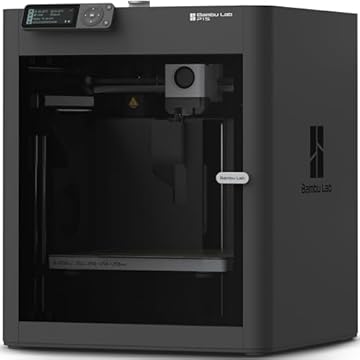
| MakerWorld Model Library | Multi-color filament printing | CoreXY FDM platform bundled with AMS multi-color filament system and auto bed leveling |
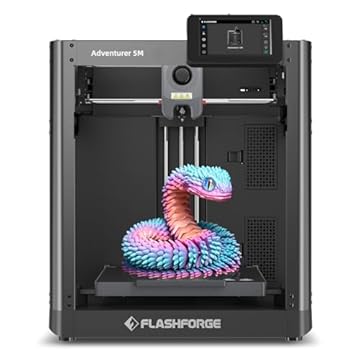
| FLASHFORGE Adventurer 5M 3D Printer | Rapid structural FDM prototyping | High-speed 600mm/s CoreXY FDM with 280°C extruder, fully auto leveling, and 220x220x220mm build size |
| Beginner-Friendly Ecosystem with MakerWorld Model | Enclosed single-extruder FDM printing | Enclosed CoreXY FDM architecture integrated with the MakerWorld model ecosystem |
Selecting between these machines comes down to fabrication chemistry, part size, and mechanical strength requirements. If your work involves figurines, jewelry casting, or organic sculpts requiring 18-micrometer precision, the Mars 4 Ultra is the correct tool for the job. Conversely, if your projects require large structural enclosures, tough functional thermoplastics, or multi-color parts without resin washing and curing steps, an FDM system like the FLASHFORGE Adventurer 5M 3D Printer or the Bambu Lab options listed above will better serve those mechanical needs.

08 Bottom Line
The Elegoo Mars 4 Ultra delivers an outstanding balance of optical fidelity, processing speed, and workshop practicality. By coupling an 8520 by 4320 monochrome screen with an ACF release liner, it reliably outputs parts with clean overhangs, razor-sharp edges, and minimal surface texture. The addition of dual-band Wi-Fi and an embedded Linux OS turns what used to be a clunky, drive-swapping routine into a responsive digital workflow.
For model makers, small-scale designers, and demanding hobbyists who want professional surface quality without enterprise equipment costs, this printer represents a smart, high-value investment. If your primary focus is microscopic visual detail and rapid turnaround on small components, this desktop machine is easily recommended.
09 FAQ
Is Mars 4 Ultra worth it?
Yes, the Mars 4 Ultra is well worth considering for creators who need crisp surface detail and an uncluttered workflow. The 9K resolution, 18-micrometer XY precision, 4G RAM Linux architecture, and dual-band Wi-Fi solve the major speed and handling pain points common to entry-level resin machines.
How does the Elegoo Mars 4 Ultra setup work?
The Elegoo Mars 4 Ultra setup is straightforward thanks to its 4-point leveling system and laser-carved build plate. Users calibrate the build platform against the screen once using the four adjustment screws, connect the printer to their 2.4G or 5G Wi-Fi network, and use the 4-inch IPS touchscreen to run baseline exposure tests before pouring resin.
What is the Mars 4 Ultra build volume?
The listing does not specify the exact printable build volume dimensions in millimeters. However, it indicates the machine features a 7-inch 9K monochrome LCD, and the overall exterior product dimensions measure 23.82 inches deep, 11.22 inches wide, and 10.63 inches high.
What are the primary Elegoo Mars 4 Ultra specs?
Key Elegoo Mars 4 Ultra specs include a 7-inch 9K mono LCD (8520 × 4320 resolution, 18 µm XY resolution) protected by 9H tempered glass, an embedded Linux OS with 4G RAM, 2.4G/5G Wi-Fi (6–10 Mbps), an ACF release liner, a 4-point leveling plate, and a 4-inch HD IPS touchscreen.
Is the Mars 4 Ultra for miniatures and tabletop figures?
The Mars 4 Ultra for miniatures is an outstanding choice. Its 18-micrometer XY resolution captures microscopic facial features, fabric folds, and fine weapon details that standard FDM printers and lower-resolution resin printers cannot resolve, while the ACF film reduces peel-force damage on delicate supports.