As Amazon Associates, we earn from qualifying purchases. This means we may receive a small commission at no extra cost to you if you click through and make a purchase.
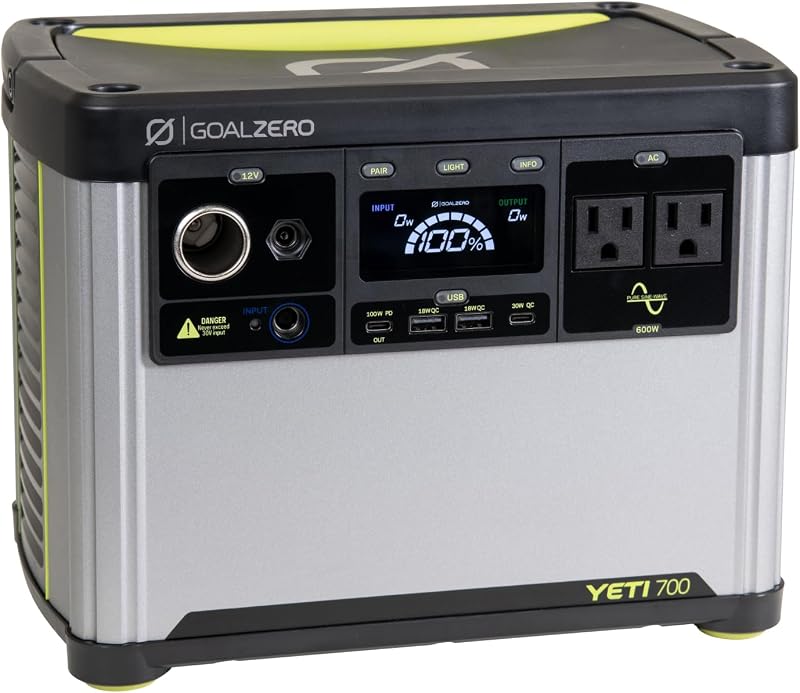
Field professionals, mobile technicians, and expedition leaders frequently struggle with unreliable portable power that degrades rapidly or fails under harsh site conditions. Traditional consumer power banks lack the sustained alternating current required to drive utility gear, while fuel-based generators introduce logistical hassles, exhaust, and continuous maintenance. The Goal Zero Yeti 700 addresses this operational friction by pairing industrial-grade resilience with a high-capacity power core engineered for demanding off-grid tasks. Investing in a reliable goal zero battery pack yeti ensures that critical work continues without interruption, whether you are running monitoring equipment, diagnostic tools, or mobile workstations in remote environments.
This goal zero yeti 700 review finds that the station delivers dependable performance for professionals who need rapid turnaround times and durable off-grid capability without excessive weight. Built around an advanced lithium iron phosphate foundation and shielded by certified particulate and water protection, it offers an uncompromising power reserve for mobile workflows. While its continuous capacity boundaries require careful energy management for heavy-load equipment, its overall build quality and solar versatility make it an exceptionally capable power hub for field operations.
01 Quick Verdict
The Yeti 700 portable power station stands out as a purpose-built energy solution for mobile operators who cannot afford downtime or equipment failures due to weather exposure. By combining a 677 watt-hour lithium reserve with 600 watts of continuous output and a 1000-watt starting surge capacity, this unit bridges the gap between pocket-sized battery banks and heavy commercial generators. It is designed to keep mission-critical electronics, field refrigeration, and utility equipment energized under demanding operational schedules.
- Extended 4,000+ cycle lifespan powered by resilient LiFePO4 cells for over a decade of daily operation
- Rapid turnaround charging system that restores the battery from zero to full capacity in about two hours
- Verified physical durability featuring an IPX4 water resistance rating and particulate testing compliance
- Versatile clean energy integration via alternating current wall charging and dedicated solar panel connectivity
02 Goal Zero Yeti 700 Features Explained
01 Advanced LiFePO4 Battery Chemistry
Battery longevity is the primary determinant of long-term utility for field energy storage, and the goal zero yeti 700 lifepo4 cell structure directly addresses cycle degradation. Traditional nickel manganese cobalt chemistry typically degrades significantly within five hundred to eight hundred discharge cycles, forcing frequent replacements in heavy-use environments. The Yeti 700 incorporates upgraded lithium iron phosphate technology rated for more than 4,000 full recharge cycles, translating to over ten years of dependable daily duty before capacity begins to decline.
For professionals operating off the grid, this chemical stability ensures consistent voltage delivery across varying thermal environments. The internal battery architecture maintains cell health during frequent cycling, preventing thermal breakdown while sustaining high discharge efficiency. Whether powering diagnostic equipment alongside a secondary field pack like a dewalt 20v 5ah battery or sustaining remote data terminals, the core battery structure delivers steady, unflagging performance season after season.
02 Rapid Turnaround AC Charging
In high-tempo field operations, equipment turnover time dictates productivity, making prolonged recharge intervals an unacceptable liability. Goal zero yeti fast charging resolves this bottleneck through an integrated high-speed charging mode that eliminates the need for extended overnight staging. When connected to a standard 120-volt alternating current source, the power station charges from a completely depleted state to 100 percent in about two hours, allowing operators to replenish the unit during brief prep windows or between assignments.
This rapid replenishment capability alters how technicians and expedition crews manage their power logistics. Instead of planning battery staging days in advance, users can plug the system into utility power while organizing tools and field gear, ensuring the unit is completely charged before departure. The internal charging circuitry regulates intake currents to prevent excess heat buildup, maintaining battery longevity without sacrificing rapid turnaround speeds.
03 Rugged Environmental Weatherproofing
Field gear must endure real-world exposure to environmental hazards, where airborne dust and sudden precipitation quickly incapacitate standard consumer electronics. Goal Zero designed this station with a durable chassis engineered to withstand demanding outdoor deployments. The unit complies with rigorous testing standards for particulates and fulfills UL2743 safety requirements, ensuring internal electrical pathways remain shielded from debris infiltration in dusty, windswept environments.
Furthermore, an official IPX4 water resistance rating protects the system against splashing water from any angle, making it fully operational during wet weather or unpredictable outdoor assignments. The unit is also engineered to handle extreme operating temperatures without failing. When deployed outdoors to power surveillance hardware like a blink outdoor camera system 3 pack in unconditioned outposts, this level of hardened physical protection prevents operational disruptions caused by harsh weather.
04 Integrated Solar Generator Architecture
For multi-day assignments far removed from municipal electrical infrastructure, the ability to harvest renewable energy is essential for continuous operation. The Yeti 700 functions as a goal zero solar generator battery system, featuring dedicated input ports that interface directly with compatible solar arrays. This architecture enables continuous power harvesting, converting daylight into clean, renewable direct current to sustain field offices, mobile research instruments, or base camp lighting indefinitely.
The system manages input and output loads simultaneously, allowing users to run critical hardware while recharging the internal cells under sunlight. The power station provides clean 120V 60Hz alternating current through its two AC outlets, producing pure electrical delivery required by sensitive microprocessors, imaging apparatus, and mobile workstations without electrical harmonic noise or power spikes.
03 Specs
| Attribute | Detail |
|---|---|
| Model Name | Yeti 700 |
| Brand Name | Goal Zero |
| Battery Capacity | 677 watt-hours |
| Battery Chemistry | LiFePO4 (Lithium Iron Phosphate) |
| Continuous Engine Power Maximum | 600 watts (677 watts running wattage) |
| Surge Starting Wattage | 1000 watts |
| AC Voltage & Frequency | 120 volts, 60 hertz |
| Total Power Outlets | 2 |
| Recharge Time | About 2 hours (0% to 100% via High-speed mode) |
| Durability & Protection | IPX4 water resistant, particulate tested, UL2743 compliant |
| Included Components | Power cord, user manual |
04 Goal Zero Yeti 700 Pros and Cons
Pros
- Upgraded LiFePO4 battery with 4,000+ charge cycles
- Rapid recharge from zero to 100% in about 2 hours
- IPX4 water resistance and particulate protection
- 600W AC continuous output with 1000W surge support
- Solar generator capability via dedicated charging port
Cons
- Continuous output power capped at 600 watts
- Limited to two total AC power outlets
- Full load runtime rated for approximately one hour
05 Best Use Cases
- Sustaining mobile basecamp hardware, communication arrays, and portable refrigeration units during remote off-grid expeditions.
- Operating utility gear, job-site power tools, and compact diagnostic instruments where grid power is completely unavailable.
- Providing clean, super quiet auxiliary electricity for tailgating events, pellet grills, and outdoor catering setups.
- Serving as a reliable yeti battery pack for camping that easily handles unpredictable weather conditions and sudden rain showers.
- Powering perimeter security installations or remote monitoring equipment such as an arlo q plus 2 camera setup in unpowered outbuildings.
06 Before You Buy
Before investing in this power station, evaluate your total continuous wattage demands against the station’s hardware boundaries. The Goal Zero Yeti 700 delivers 600 watts of continuous AC output with an instantaneous starting surge limit of 1000 watts, backed by a 677 watt-hour internal capacity. It is exceptionally well matched for running Alta portable fridges, personal computers, field lighting, and small power tools, but it cannot power heavy industrial machinery, large space heaters, or commercial air compressors that demand continuous power exceeding 600 watts. If your operational equipment demands high sustained loads, running the unit at its maximum capacity yields an estimated runtime of approximately 1 hour before cell depletion.
Buyers should also review system options and package inclusions. The product is manufactured in black or gray finishes, and the retail package includes only the Yeti 700 unit, an AC power cord, and the user manual. While the power station features dedicated solar charging capabilities, the listing does not specify the inclusion of solar panels, DC vehicle charging cables, or specialized port adapters, meaning those accessories must be sourced separately. Make sure your planned deployment matches the two available AC outlets or that you integrate appropriate multi-tap distribution cables for multiple devices.
07 How It Compares With Similar Picks
| Product | Best For | Key Difference |
|---|---|---|
| Goal Zero Yeti 700 | Heavy-Duty Field & Off-Grid Utility | 677Wh LiFePO4 capacity with 600W AC output, IPX4 rating, and solar charging input |
| Flight-Safe | Airline Travel & Personal Device Charging | 10000mAh pocket power bank with 45W USB-C output for phones and tablets |
| Dual USB丨3 Outputs 2 Inputs丨for | Lightweight Multi-Device Backup | 2-pack slim 10000mAh (37Wh) power banks designed for backpack carry |
| L23 Mini Portable Charger | Everyday Carry Phone Top-Ups | Ultra-compact 10000mAh pack with 22.5W PD and built-in Type-C cable |
Examine your specific operational mobility and load profiles before selecting between a high-capacity power station and compact battery banks. If your work involves commercial airline travel, personal pocket carry, or charging mobile phones during daily commutes, pocket-sized alternatives like the Flight-Safe or the L23 Mini Portable Charger offer compliant hand-luggage formats that bypass the physical weight of a generator. Similarly, the Dual USB丨3 Outputs 2 Inputs丨for two-pack provides straightforward redundancy for lightweight trekking where alternating current appliances are absent. However, whenever field tasks require true 120-volt AC alternating current to drive power tools, pellet grills, refrigeration units, or sensitive outdoor monitoring setups, the Yeti 700 remains the required class of equipment.

08 Bottom Line
When evaluating whether the goal zero yeti 700 is worth it, the answer depends entirely on your need for dependable power in harsh operating environments. If you require an ultra-portable battery that slips into a briefcase or airplane carry-on solely for smartphone maintenance, this heavy-duty power station represents unnecessary capacity. But for contractors, field researchers, mobile professionals, and outdoor enthusiasts who require clean, reliable 120-volt electricity away from the grid, the Yeti 700 excels.
With its 4,000-cycle LiFePO4 battery core, rapid two-hour AC replenishment, certified particulate resistance, and IPX4 water resilience, this unit delivers exceptional durability and operational peace of mind. It eliminates the fragile nature of standard consumer electronics, offering a rugged, dependable platform that handles real-world job sites and wilderness expeditions with equal confidence.
09 FAQ
How long does the Goal Zero Yeti 700 take to charge completely?
When connected to a standard alternating current wall outlet using its High-speed charging mode, the unit recharges from 0% to 100% in about 2 hours. This rapid turnaround allows users to top off the 677 watt-hour battery quickly before heading into the field. The station also supports solar charging through dedicated input ports, though solar recharge times will vary depending on panel wattage and sun exposure.
What devices and appliances can the Yeti 700 power?
The station delivers 600 watts of continuous alternating current with a 1000-watt starting surge capacity at 120 volts. It is designed to run power tools, Alta portable fridges, pellet grills, laptops, cameras, and standard mobile electronics. It is not suitable for high-draw heating appliances or industrial equipment requiring continuous loads exceeding 600 watts.
Is the Goal Zero Yeti 700 waterproof and dustproof?
The unit features an official IPX4 water resistance rating, which safeguards internal electronics against splashing water from any direction, making it suitable for wet outdoor conditions. Additionally, it has passed rigorous testing for particulates and meets UL2743 safety requirements, ensuring dust and debris do not disrupt internal electrical components.
How many years of service will the LiFePO4 battery provide?
Thanks to its upgraded lithium iron phosphate (LiFePO4) cell chemistry, the power station is rated for more than 4,000 full recharge cycles. This lifespan equates to over 10 years of consistent daily use before the battery reaches standard retirement thresholds, outlasting traditional lithium-ion batteries by a substantial margin.
What components are included in the box with the Yeti 700?
The manufacturer includes the Yeti 700 portable power station, a standard AC power cord for wall charging, and an official user manual. Solar panels, car charging adapters, and output extension cables are not included in the primary package and must be purchased separately if needed for your setup.


