As Amazon Associates, we earn from qualifying purchases. This means we may receive a small commission at no extra cost to you if you click through and make a purchase.
As an Amazon Associate we earn from qualifying purchases. Links on this page are affiliate links.
Choosing the right tankless water heater buying guide helps you match capacity and fuel type to your home’s infrastructure. You will decide between electric and gas models based on your available wiring, gas lines, and space constraints. This guide walks through key specifications like flow rate, energy efficiency, and installation requirements so you can select a unit that meets your daily hot water needs.
We selected 8 top-rated units strictly from their published specifications. Each pick is ranked by performance data, size, and intended use. You can compare wattage, voltage, and physical dimensions to find a heater that fits your installation space. Whether you need a compact unit for a single shower or a whole-house system, these recommendations are based on measurable specs to help you make an informed choice.
01 Key Tankless Water Heater Specs
Fuel type and power
Your home’s existing infrastructure dictates whether you can install an electric or gas unit. Electric models, like the Rheem 18kW, require specific voltage and amperage ratings, often 240V. High-wattage electric units demand robust electrical panels. Gas models, such as the VancEpic natural gas heater, rely on BTU output and gas line capacity. Natural gas and propane units often provide higher flow rates than their electric counterparts. You must verify your home’s utility connections before choosing. Electric units are easier to install if gas lines are absent, but gas units typically heat water faster for whole-house use. Match the fuel type to your available resources to avoid costly upgrades.
Look for
- Available voltage or gas line type
- Wattage or BTU rating
- Required electrical panel capacity
Flow rate capacity
Flow rate, measured in gallons per minute (GPM), determines how many fixtures can run simultaneously. The Rinnai 11.1 GPM model supports large households with multiple showers running at once. Smaller units, like the Orbek 14kW, suit homes with only two or three fixtures. If your flow rate is too low, you will experience cold water shock when another tap opens. Consider your peak usage times. A whole-house unit needs higher GPM than a point-of-use shower heater. Check the manufacturer’s specifications for flow at specific temperature rises. Higher flow rates usually require more power or gas, impacting your utility infrastructure needs.
Look for
- Gallons per minute (GPM) rating
- Number of simultaneous fixtures
- Temperature rise specification
Installation location
Where you place the unit affects its size, venting requirements, and accessibility. Indoor units, like the Stiebel Eltron Tempra 29 Plus, often require less complex venting than outdoor gas models. The Rinnai unit is designed for outdoor installation, which saves interior space but exposes the unit to weather. Ensure the location has adequate clearance for maintenance. Indoor electric heaters are compact and fit in tight spaces like closets. Outdoor gas heaters need protection from freezing temperatures if not rated for it. Verify local building codes for venting and clearance requirements. Proper installation location ensures safety and longevity of the unit.
Look for
- Indoor or outdoor rating
- Required clearance space
- Venting compatibility
Physical dimensions
Tankless water heaters are compact, but size still matters for your installation space. The Orbek 14kW is notably small, measuring 9.5 inches wide, fitting into tight areas. Larger whole-house units, like the Rinnai, are significantly taller and heavier. Measure your available wall space, width, height, and depth before purchasing. Ensure the unit fits through doorways or hallways during delivery. Weight is also a factor for wall mounting; heavier units require sturdy anchors. The Rheem 18kW offers a balance of size and capacity. Check the dimensions in the specs to ensure a proper fit in your utility closet or garage.
Look for
- Width, height, and depth
- Unit weight for mounting
- Clearance for service access
Smart features
Some models offer WiFi connectivity and remote control capabilities. The Westinghouse 24kW unit includes WiFi, allowing you to adjust settings from your phone. These features add convenience for monitoring energy use or adjusting temperatures remotely. However, smart features require a stable network connection and may complicate troubleshooting. Basic models provide precise temperature control without digital interfaces. Decide if remote access is necessary for your lifestyle. Smart units often have higher initial costs and may require app setup. Ensure your home’s network covers the installation area if you choose a connected model.
Look for
- WiFi or app connectivity
- Remote temperature adjustment
- Network requirements
Display and controls
The interface on the unit allows you to set and monitor water temperature. The VancEpic model features an LED display and child safety lock, enhancing usability and safety. Digital displays provide precise temperature settings, often in one-degree increments. Analog dials are less common but simpler. Consider if you need a display for frequent adjustments or if a fixed setting suffices. Child locks are valuable in homes with young children. Ensure the display is visible from your installation position. Some units have touch controls, while others use physical buttons. Choose based on your preference for interaction and safety needs.
Look for
- LED or digital display
- Child safety lock presence
- Control type (touch or button)
02 Types of Tankless Water Heaters
Electric Point-of-Use
Electric point-of-use units, such as the Orbek 14kW, are designed for small spaces and limited fixture counts. These models typically run on 240V power and deliver lower flow rates, making them ideal for single sinks or showers. You benefit from a compact footprint that fits easily in tight cabinets. The main trade-off is lower capacity. You cannot run multiple high-demand fixtures simultaneously. This type suits small households or specific station needs where whole-house heating is unnecessary.
Electric Whole-House
Whole-house electric heaters, like the Rheem 18kW or Stiebel Eltron 29 Plus, provide continuous hot water for multiple bathrooms. These units require higher wattage and robust electrical panels, often 200-amp service for larger models. You get precise temperature control and no combustion risks. The trade-off is significant electrical demand. You must ensure your home’s wiring can support the load. This type is best for homes with adequate electrical infrastructure but no access to natural gas lines.
Gas Indoor
Indoor gas heaters, including natural gas and propane models like the VancEpic 4.8 GPM, offer high efficiency and rapid heating. These units connect to existing gas lines and vent indoors, requiring proper clearance. You benefit from stable temperature performance and suitability for families with three to five outlets. The trade-off is installation complexity. You need gas line modifications and proper venting. This type is ideal for homes with existing gas infrastructure seeking reliable whole-house heating without major electrical upgrades.
Gas Outdoor
Outdoor gas units, such as the Rinnai 11.1 GPM Smart Sense, are built for durability and high flow rates. These models are installed outside, eliminating indoor venting requirements and saving interior space. You gain access to high-efficiency condensing technology and flexible installation options. The trade-off is exposure to weather elements and professional installation needs. This type suits large households requiring high volume hot water. It is less ideal for DIY setups or homes in extreme climates without proper protection.
03 Common mistakes to avoid
Ignoring mineral buildup in the heat exchanger
Hard water deposits reduce efficiency and damage internal components over time. You must install a water softener or a scale inhibition system before the heater. Regular descaling maintenance is also required to keep the unit running at peak performance and extend its lifespan.
Skipping sediment filtration for gas models
Gas tankless heaters have narrow internal passages that clog easily with debris. A pre-filter is essential to protect the heat exchanger. Without it, mineral sediment and rust particles will accumulate, leading to reduced flow rates and potential system failure within a few years.
Overlooking water pressure requirements for flow rate
High flow rates require adequate incoming water pressure. If your home has low pressure, the heater may not activate or deliver consistent hot water. Check your static pressure specs. You might need a booster pump to ensure the unit meets your household demand.
Assuming electric units work with any wiring
Electric models demand specific voltage and amperage ratings. Older panels often cannot support the load. Verify your electrical capacity before purchase. Upgrading panels is costly. Ensure your home infrastructure matches the unit’s power requirements to avoid tripping breakers or unsafe electrical conditions.
| # | Product | Best for | Price |
|---|---|---|---|
| 1 | Rheem 18kW 240V Electric Tankless Water Heater | small households with moderate hot water demand | |
| 2 | Thermomate 18kW Electric Tankless Water Heater | indoor showers with moderate hot water needs | |
| 3 | Westinghouse 24kW WiFi Tankless Water Heater | Whole-house electric hot water with smart control | |
| 4 | VancEpic 4.8 GPM Natural Gas Tankless Heater | Indoor whole-house natural gas hot water | |
| 5 | Stiebel Eltron Tempra 29 Plus 28.8kW Tankless | Homes with 200-amp electrical service | |
| 6 | Ranein 4.3 GPM Indoor Propane Tankless Water Heater | Indoor propane heating for 3-4 fixtures | |
| 7 | Rinnai 11.1 GPM Condensing Dual-Fuel Water Heater | large households needing high flow and flexible installation | |
| 8 | Orbek 14kW 240V Tankless Water Heater | small households with 2-3 fixtures |
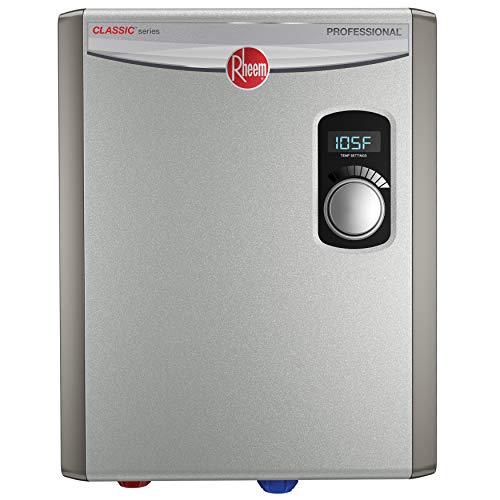
Rheem 18kW 240V Electric Tankless Water Heater
Best for: small households with moderate hot water demand
- Fuel Type
- Electric
- Max Flow Rate
- up to 4.4 GPM
- Heating Capacity
- 18kW
- Voltage
- 240V
- Features
- Tankless
- Wattage
- 18 kW
The Rheem RTEX-18 is a 240V electric tankless water heater with an 18kW heating capacity. It delivers a maximum flow rate of up to 4.4 GPM. The unit features an external digital thermostat with LED display and copper immersion heating elements. Its compact size, measuring 14.5 by 18.5 inches, suits small spaces. This model is designed for whole-home use or point-of-use applications.
- 18kW heating capacity for reliable hot water output
- Maximum flow rate of up to 4.4 GPM
- External digital thermostatic control with LED display
- Durable copper immersion heating elements
- Compact dimensions of 14.5 x 18.5 x 3.5 inches
- Lower heating capacity than the 24kW and 28.8kW electric competitors on this list
- Lower flow rate compared to gas models offering 4.3 to 11.1 GPM
- Heavier build at 14.8 pounds compared to some lighter point-of-use units
- You need a compact electric unit for a single bathroom or small kitchen
- You want precise temperature control via an external digital display
- You prefer a field-serviceable design with copper heating elements
- You require a flow rate above 4.4 GPM for multiple simultaneous showers
- You need higher power output than 18kW for whole-house demand
- You prefer a gas-powered system for higher efficiency
Verdict: Rheem 18kW Electric Tankless Water Heater offers precise temperature control and a compact footprint for homes with moderate hot water needs. It fits well in tight spaces where electric power is available but gas lines are not.
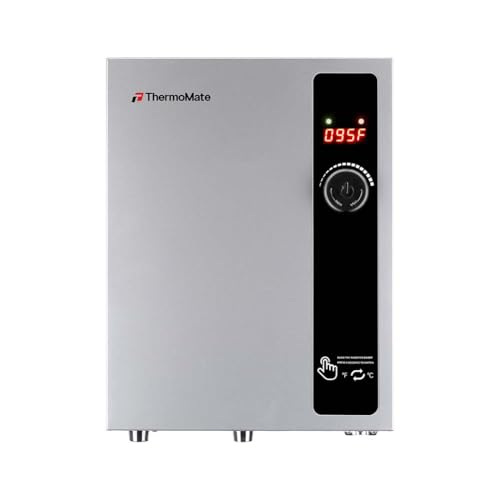
Thermomate 18kW Electric Tankless Water Heater
Best for: indoor showers with moderate hot water needs
- Fuel Type
- Electric
- Max Flow Rate
- Up to 4.4GMP
- Heating Capacity
- 18kW
- Installation Location
- Indoor
- Voltage
- 240 Volt
- Temperature Range
- 80°F to 140°F
The ThermoMate ET180 is an indoor electric tankless water heater with 18kW heating capacity. It delivers up to 4.4 GPM at 240V. The unit features a digital display adjustable from 80°F to 140°F. Its compact wall-mounted design saves floor space. Self-modulating technology regulates energy use based on flow. This model suits households needing reliable on-demand hot water for showers.
- 18kW heating capacity provides up to 4.4 GPM
- Digital display allows 1°F adjustments from 80°F to 140°F
- Compact 17.1-inch height saves floor space
- ETL certified for safety and overheating protection
- 18kW capacity is lower than the 24kW and 28.8kW units on this list
- Requires two double-pole 40A breakers, totaling 80A
- Indoor installation only limits placement options
- You need a compact unit for tight indoor spaces
- You want precise temperature control via a digital display
- You have the electrical capacity for an 80A circuit
- You require a higher flow rate than 4.4 GPM
- You need an outdoor-rated water heater
- You cannot install two 40A double-pole breakers
Verdict: ThermoMate 18kW Electric Tankless Heater delivers steady hot water for single-station use. It fits well in homes with adequate electrical infrastructure and limited installation space.
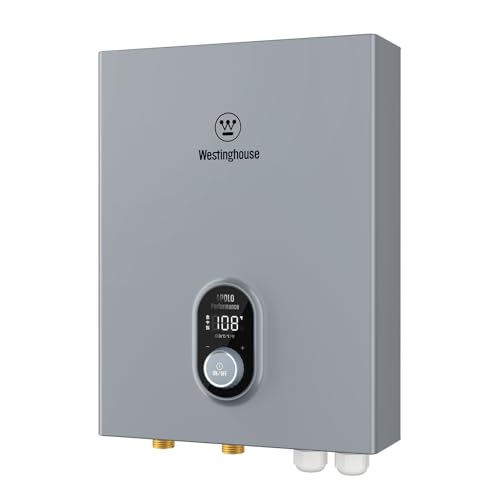
Westinghouse 24kW WiFi Tankless Water Heater
Best for: Whole-house electric hot water with smart control
- Fuel Type
- Electric
- Max Flow Rate
- 5.55 GPM
- Heating Capacity
- 24 kW
- Voltage
- 240 V
- Fixture Capacity
- Shower and sink
- Installation Type
- Whole House
This Westinghouse unit delivers up to 5.55 GPM of hot water at 24kW. It supports simultaneous shower and sink use. The device connects to Wi-Fi for remote temperature control. It measures 17.1 inches high and 13 inches wide. You get a temperature range of 86 to 140°F. This model suits whole-house needs in apartments or homes.
- High flow rate of 5.55 GPM
- 24kW heating capacity for instant hot water
- Wi-Fi control via Alexa and Google Home
- Compact 17.1" H x 13" W x 4.3" D size
- Lower flow rate than the Rinnai RX199iN at 11.1 GPM
- Requires 100A electrical service and 8 AWG wire
- Lower flow rate than the Vancepic model at 4.8 GPM
- You need whole-house hot water for multiple fixtures
- You want smart home integration for remote control
- You have the electrical capacity for a 100A breaker
- You require a flow rate above 5.55 GPM
- You cannot install a 100A electrical circuit
- You prefer gas-powered heating systems
Verdict: Westinghouse 24kW Electric Tankless Water Heater fits homes needing reliable whole-house hot water with smart features. It works well for users who can support the required 100A electrical load.

VancEpic 4.8 GPM Natural Gas Tankless Heater
Best for: Indoor whole-house natural gas hot water
- Fuel Type
- Natural Gas
- Max Flow Rate
- 4.8 GPM
- Heating Capacity
- 110,000 BTU
- Installation Location
- Indoor
- Fixture Capacity
- 3-5 water outlets
- Features
- Tankless, Child Safety Lock, LED Display
This VancEpic unit delivers 4.8 GPM of hot water using 110,000 BTU of natural gas power. It features an oxygen-free copper heat exchanger and ±1°F temperature control for stable output. The compact 24.6-inch frame supports 3-5 outlets. It is designed for indoor installation and includes a child safety lock and LED display for family use.
- 4.8 GPM continuous flow rate
- 110,000 BTU heating capacity
- Oxygen-free copper heat exchanger
- ±1°F precise temperature control
- Child safety lock included
- Lower flow rate than the 5.1 GPM and 11.1 GPM options on the list
- Indoor-only installation requirement
- 2-year warranty is shorter than typical industry standards
- You need a natural gas unit for whole-house use
- You want precise temperature stability
- You have indoor space for installation
- You require outdoor installation
- You need a flow rate above 5.1 GPM
- You prefer a propane fuel source
Verdict: VancEpic Natural Gas 110,000 BTU Tankless Heater provides stable hot water for families with 3-5 outlets. It suits buyers who prioritize temperature precision and indoor natural gas efficiency over maximum flow volume.

Stiebel Eltron Tempra 29 Plus 28.8kW Tankless
Best for: Homes with 200-amp electrical service
- Fuel Type
- Electric
- Heating Capacity
- 28.8kW
- Voltage
- 240 or 208-volt
- Features
- Tankless
- Intended Use
- Home
- Dimensions
- 4.63 × 16.6 × 14.5 inches
The Stiebel Eltron Tempra 29 Plus is a 28.8kW electric tankless water heater designed for whole-house use. It operates on 240V or 208V power and requires three dedicated 40-amp breakers with 8-gauge copper wiring. The unit measures 16.6 by 14.5 inches and weighs 19 pounds. It features two temperature memory presets and requires hard-wired installation. This model suits homes with adequate electrical service capacity.
- High 28.8kW heating capacity for strong hot water flow
- Compact dimensions of 16.6 by 14.5 by 4.63 inches
- Two temperature memory presets for easy adjustment
- Made in Germany with a sleek white design
- Requires three separate 40-amp breakers for operation
- Demands a minimum 200-amp total electrical service
- Heavier at 19 pounds compared to lighter competitors
- You have a 200-amp electrical service panel
- You need a high-capacity electric heater for whole-house use
- You prefer a compact unit with memory presets
- You have less than 200-amp electrical service
- You cannot install three dedicated 40-amp breakers
- You prefer a propane or gas powered unit
Verdict: Stiebel Eltron Tempra 29 Plus 28.8kW is a powerful electric option for homes with robust electrical infrastructure. It fits buyers who need high flow rates and have the necessary wiring and breaker space for installation.

Ranein 4.3 GPM Indoor Propane Tankless Water Heater
Best for: Indoor propane heating for 3-4 fixtures
- Fuel Type
- Propane
- Max Flow Rate
- 4.3 GPM
- Heating Capacity
- 100,000 BTU
- Installation Location
- Indoor
- Fixture Capacity
- 3-4 water points
- Temperature Range
- 95°F-155°F
This Ranein unit delivers 4.3 GPM of hot water using propane fuel. It features a 100,000 BTU heating capacity and an oxygen-free copper heat exchanger for efficient heat transfer. The device supports three to four simultaneous water points. It includes four preset modes and an adjustable temperature range from 95°F to 155°F. The design is intended for indoor installation only.
- 100,000 BTU heating capacity
- 4.3 GPM max flow rate
- Oxygen-free copper heat exchanger
- Four intelligent preset modes
- Anti-freeze protection down to 14°F
- 4.3 GPM flow rate is lower than the Rinnai RX199iN at 11.1 GPM
- Indoor installation only, unlike the Westinghouse and Ranein outdoor options
- 100,000 BTU is lower than the Rinnai RX199iN at 110,000 BTU
- You need hot water for three to four fixtures simultaneously
- You have an indoor space for propane venting
- You want adjustable temperature presets for different seasons
- You require outdoor installation
- You need a flow rate above 4.3 GPM
- You are installing at an elevation above 2,000 feet
Verdict: Ranein Propane 4.3 GPM Tankless Heater provides reliable indoor heating for small to medium households. It suits users who prioritize copper heat exchanger durability and specific temperature presets over high-volume flow rates.

Rinnai 11.1 GPM Condensing Dual-Fuel Water Heater
Best for: large households needing high flow and flexible installation
- Fuel Type
- Natural Gas, Propane
- Max Flow Rate
- 11.1 GPM
- Heating Capacity
- 199k BTU
- Installation Location
- Indoor, Outdoor
- Fixture Capacity
- 7 fixtures
- Features
- Tankless
This condensing gas unit delivers 11.1 GPM and 199k BTU. It runs on natural gas or propane. The Smart Sense system adjusts fuel type automatically. You can install it indoors or outdoors. The UEF rating is 0.98. It fits homes needing high flow. The interface is simple. Quick Flush aids maintenance. It is a compact option for whole-house use.
- 11.1 GPM flow rate for up to 7 fixtures
- 199k BTU heating capacity
- Smart Sense gas control for natural gas or propane
- Versa Vent allows indoor or outdoor installation
- 0.98 energy efficiency factor
- WiFi Controlr module is not included
- Labor warranty is only 1 year without registration
- Requires professional installation
- You need a whole-house heater for up to 7 fixtures
- You want flexibility to install indoors or outdoors
- You prefer a unit that handles both natural gas and propane
- You want built-in WiFi control without buying extra parts
- You prefer a standard 5-year labor warranty
- You want to handle installation yourself
Verdict: Rinnai 11.1 GPM Smart Sense Tankless fits large households needing high flow and flexible installation. It suits users who want gas versatility and high efficiency. It is less ideal for those wanting simple DIY setup.

Orbek 14kW 240V Tankless Water Heater
Best for: small households with 2-3 fixtures
- Fuel Type
- Electric
- Max Flow Rate
- 3.38 GPM
- Heating Capacity
- 14kW
- Voltage
- 240V
- Fixture Capacity
- 2-3 points of use
- Temperature Range
- 86°F to 140°F
This Orbek unit delivers 3.38 GPM at 240V with a 14kW heating capacity. It fits 2-3 points of use and maintains temperature within 1°F. The compact 14.2-inch height saves space. You get instant hot water with LED display control. It suits small households or single-point installations where high flow is not required.
- 14kW heating capacity for 240V circuits
- 3.38 GPM max flow rate
- Temperature stability within 1°F
- Compact 14.2H x 9.5W x 3.1D inch design
- ETL certified with safety protections
- Lower 14kW power compared to 18kW and 24kW competitors
- Smaller 3.38 GPM flow rate than 4.3-11.1 GPM gas models
- Limited to 2-3 fixture capacity
- You need a compact unit for tight spaces
- You require stable temperature control within 1°F
- You have a 240V 60AMP circuit available
- You need high flow for multiple simultaneous showers
- You want whole-house heating for 4+ fixtures
- You prefer gas fuel over electric
Verdict: Orbek 14kW Electric Tankless Heater fits small households needing reliable hot water for 2-3 fixtures. Its compact size and precise temperature control make it ideal for tight spaces.
04 Specifications side by side
| Spec | Rheem 18kW 240V Electric Tankless Water Heater | Thermomate 18kW Electric Tankless Water Heater | Westinghouse 24kW WiFi Tankless Water Heater | VancEpic 4.8 GPM Natural Gas Tankless Heater | Stiebel Eltron Tempra 29 Plus 28.8kW Tankless | Ranein 4.3 GPM Indoor Propane Tankless Water Heater | Rinnai 11.1 GPM Condensing Dual-Fuel Water Heater | Orbek 14kW 240V Tankless Water Heater |
|---|---|---|---|---|---|---|---|---|
| Fuel Type | Electric | Electric | Electric | Natural Gas | Electric | Propane | Natural Gas, Propane | Electric |
| Max Flow Rate | up to 4.4 GPM | Up to 4.4GMP | 5.55 GPM | 4.8 GPM | – | 4.3 GPM | 11.1 GPM | 3.38 GPM |
| Heating Capacity | 18kW | 18kW | 24 kW | 110,000 BTU | 28.8kW | 100,000 BTU | 199k BTU | 14kW |
| Installation Location | – | Indoor | – | Indoor | – | Indoor | Indoor, Outdoor | – |
| Voltage | 240V | 240 Volt | 240 V | – | 240 or 208-volt | – | – | 240V |
| Fixture Capacity | – | – | Shower and sink | 3-5 water outlets | – | 3-4 water points | 7 fixtures | 2-3 points of use |
| Temperature Range | – | 80°F to 140°F | – | – | – | 95°F-155°F | – | 86°F to 140°F |
| Installation Type | – | – | Whole House | – | – | – | – | – |
| Features | Tankless | Tankless | Tankless | Tankless, Child Safety Lock, LED Display | Tankless | Tankless | Tankless | Tankless |
| Application | – | Shower | Bathroom | – | – | – | – | – |
| Wattage | 18 kW | 18 kW | – | – | – | – | – | 14 kW |
| Intended Use | Home | – | Home | – | Home | Home | – | – |
| Dimensions | 18.5 × 14.5 × 3.5 inches | 13.1 × 13.1 × 17.1 inches | 13 × 13 × 17.1 inches | 14.4 × 14.4 × 24.6 inches | 4.63 × 16.6 × 14.5 inches | 14.2 × 14.2 × 22.5 inches | 30.1 × 18.5 × 30.1 inches | 9.5 × 9.5 × 14.2 inches |
| Weight | 14.8 pounds | – | 17 pounds | 25.4 pounds | 19 pounds | – | 55 pounds | – |
| Size | Small | 240V/18kW | L-24 | 4.8GPM, 110,000BTU, NG | 29 (kW) | 4.3GPM Indoor | 11.1 GPM | S-14 |
| Color | Gray | Gray | Gray 24 | Non-Condensing | White | LPG | Silver | Pearl |
| Model | RTEX-18 | ET180 | WET-24K-G | VH11K-W-NG-U01 | 239223 | RANEIN-43GPM-100KBTU | RX199iN | 14kW 2.0 Model |
Match your flow rate and temperature rise needs using the tankless water heater buying guide before you choose.
05 Frequently asked questions
How do I choose the right wattage for an electric tankless water heater?
Match the wattage to your household’s hot water demand and electrical capacity. Lower wattage units, like the 14kW Orbek, suit small households with two to three fixtures. Higher wattage models, such as the 24kW Westinghouse or 28.8kW Stiebel Eltron, support whole-house use but require robust 200-amp electrical service and dedicated breakers to operate safely.
What is the difference between natural gas and propane tankless heaters?
The primary difference is the fuel source and burner configuration. Natural gas units, like the Rinnai 11.1 GPM, often offer higher flow rates and are designed for outdoor installation. Propane models, such as the Ranein 4.3 GPM, are compact and built for indoor use. Both provide on-demand heating, but you must ensure your home has the correct gas line infrastructure.
Can I install a tankless water heater myself?
Installation complexity varies by fuel type and model. Electric units like the Rheem 18kW are compact and may suit DIYers with electrical experience. Gas models, particularly high-flow units like the Rinnai, often require professional installation due to venting, gas line, and safety code requirements. Always check the manufacturer’s guidelines and local regulations before attempting installation.
How does flow rate affect my hot water usage?
Flow rate, measured in gallons per minute, determines how many fixtures can run simultaneously. A 4.3 GPM unit like the Ranein suits three to four fixtures. Higher capacity models, such as the VancEpic at 4.8 GPM or the Rinnai at 11.1 GPM, support larger households with multiple simultaneous uses. Ensure your selected unit meets your peak demand requirements.
Do I need a specific voltage for electric tankless heaters?
Most electric tankless water heaters operate on 240V power. Models like the Thermomate 18kW and Orbek 14kW both require this standard voltage. Verify your home’s electrical panel can support the amperage draw. Higher wattage units demand more current, so you may need to upgrade your panel or wiring to ensure safe and efficient operation.
What size tankless water heater do I need for a small household?
Small households with moderate demand can use lower-capacity units like the Rheem 18kW or Orbek 14kW. These models are compact, often under 15 inches wide, and fit in tight spaces. They provide precise temperature control for limited fixture counts. For slightly larger needs, consider the Thermomate 18kW, which balances size with adequate flow for single-station indoor showers.
Are outdoor gas tankless heaters more efficient?
Outdoor units like the Rinnai RX199iN often feature condensing technology, which improves efficiency by capturing heat from exhaust gases. They eliminate venting costs indoors and handle high flow rates for large households. However, they require outdoor space and protection from elements. Indoor gas models, such as the VancEpic, may be non-condensing and slightly less efficient but easier to install in existing spaces.


