As Amazon Associates, we earn from qualifying purchases. This means we may receive a small commission at no extra cost to you if you click through and make a purchase.
As an Amazon Associate we earn from qualifying purchases. Links on this page are affiliate links.
Choosing between a rinnai vs westinghouse tankless water heater depends on your home’s power source and hot water needs. Both brands offer on-demand heating to eliminate standby losses. The main difference lies in fuel type and capacity. Rinnai provides a high-output gas model for whole-house use, while Westinghouse offers a compact electric unit. You must select based on whether your home uses gas or electricity.
Fuel Type
Natural Gas, Propane
Electric (240V)
Max Flow Rate
11.1 GPM
5.55 GPM
Heating Capacity
199k BTU
24kW
Dimensions
18.5 x 30.1 x 30.1 inches
13 x 17.1 x 13 inches
Weight
55 pounds
17 pounds
Choose the first if
- You have access to natural gas or propane for fuel.
- You need to supply hot water to multiple fixtures simultaneously.
- You want a unit that can be installed indoors or outdoors.
Choose the second if
- Your home is powered by electricity and lacks gas lines.
- You need a compact unit that mounts flush against a wall.
- You want smart Wi-Fi control with voice assistant compatibility.
Verdict
Choose the Rinnai model if you require high flow rates for a full household and have gas infrastructure. Select the Westinghouse unit if you need a space-saving electric solution with smart features for smaller applications.
01 Rinnai vs Westinghouse Comparison
Fuel Type
Edge: Tie
Rinnai uses natural gas or propane, offering dual-fuel flexibility for homes with existing gas lines. You can install it indoors or outdoors with the right venting. Westinghouse relies on 240V electricity, requiring a dedicated 100A breaker and heavy-gauge wiring. If your home lacks gas service, the electric option is a practical alternative. Gas models typically provide higher heating capacity, while electric units avoid combustion risks entirely.
Flow Capacity
Edge: Rinnai 11.1 GPM Condensing Dual-Fuel Water Heater
The Rinnai RX199iN delivers 11.1 GPM, supporting up to seven simultaneous fixtures. This high output handles whole-house demand, including multiple showers and laundry loads. Westinghouse provides 5.55 GPM, suitable for a shower and sink running together. Its starting flow rate is low at 0.79 GPM, ensuring activation even with light usage. For large families or homes with high hot water needs, the Rinnai gas unit offers significantly more capacity.
Dimensions
Edge: Westinghouse 24kW WiFi Tankless Water Heater
Size matters for installation space. The Westinghouse unit is compact, measuring 17.1 inches high, 13 inches wide, and only 4.3 inches deep. It weighs just 17 pounds and mounts flush against the wall, saving valuable floor or closet space. The Rinnai model is larger, standing 30.1 inches tall and weighing 55 pounds. While still compact for a gas heater, it requires more clearance. Small apartments or tight utility closets favor the Westinghouse design.
Smart Features
Edge: Westinghouse 24kW WiFi Tankless Water Heater
Westinghouse includes built-in Wi-Fi for remote temperature adjustment and usage monitoring via an app or voice commands with Alexa and Google Home. This integration is ready out of the box for smart homes. Rinnai supports Smart Sense technology and offers a Controlr module for WiFi control, but the module is not included with the heater. You must purchase it separately to enable remote monitoring and adjustments.
Efficiency
Edge: Rinnai 11.1 GPM Condensing Dual-Fuel Water Heater
The Rinnai RX199iN features a condensing design with a UEF of .98, indicating high energy efficiency for a gas unit. It recovers heat from exhaust gases to preheat incoming water. Westinghouse does not list a UEF or Energy Factor in the provided specifications. Electric tankless heaters generally have high efficiency at the point of use, but without a published metric, you cannot directly compare the energy performance numbers between these two specific models.
Warranty
Edge: Rinnai 11.1 GPM Condensing Dual-Fuel Water Heater
Rinnai offers a limited 15-year warranty on the heat exchanger, 5 years on parts, and 5 years on labor, provided you register the product within 90 days of installation. Without registration, labor coverage drops to one year. Westinghouse warranty details are not included in the available product data. You should check the manufacturer's documentation for specific coverage terms on the electric model before making your final decision.
02 Which tankless water heater fits you best
Homes needing high flow for multiple fixtures
Our pick: Rinnai 11.1 GPM Condensing Dual-Fuel Water Heater
The Rinnai RX199iN delivers 11.1 GPM and handles seven fixtures simultaneously. Its 199k BTU capacity ensures consistent hot water for whole-house use. This gas model suits large families requiring simultaneous showering and appliance use without pressure drops or temperature fluctuations during peak demand hours.
Small spaces or apartments with electric wiring
Our pick: Westinghouse 24kW WiFi Tankless Water Heater
The Westinghouse unit fits tight spaces with its 17x13x4.3 inch footprint. It requires only 240V power and a 100A breaker. This electric model provides 5.55 GPM, ideal for single bathroom or kitchen sink use. Its compact design mounts flush against walls, saving valuable floor space in smaller homes.
Users wanting smart home integration and voice control
Our pick: Westinghouse 24kW WiFi Tankless Water Heater
Westinghouse includes built-in WiFi for remote temperature adjustments and usage monitoring via an app. It supports voice commands through Alexa and Google Home. This connectivity allows you to manage settings from anywhere. The Rinnai requires a separate Controlr module for similar smart features, adding extra cost and complexity.

Rinnai 11.1 GPM Condensing Dual-Fuel Water Heater
Best for: Whole house hot water for seven fixtures
- Fuel Type
- Natural Gas, Propane
- Max Flow Rate
- 11.1 GPM
- Heating Capacity
- 199k BTU
- Installation Location
- Indoor, Outdoor
- Fixture Capacity
- 7 fixtures
- Features
- Tankless
This Rinnai tankless water heater delivers up to 11.1 GPM at 199k BTU. It handles seven fixtures simultaneously and fits indoor or outdoor spaces. The compact unit weighs 55 pounds and measures 18.5 by 30.1 inches. It runs on natural gas or propane with a UEF of .98. You get a 15-year heat exchanger warranty if you register within 90 days.
- Provides 11.1 GPM flow for seven fixtures
- Versa Vent allows indoor or outdoor installation
- High energy efficiency with .98 UEF rating
- Dual fuel compatibility for natural gas or propane
- Heavier at 55 pounds than some electric alternatives
- WiFi control requires a separate Controlr module purchase
- Labor warranty drops to one year if not registered in 90 days
- You need hot water for multiple bathrooms at once
- You want a gas unit for indoor or outdoor use
- You prefer high efficiency with a .98 UEF rating
- You only have electrical power without gas lines
- You want built-in WiFi without buying extra parts
- You need a lighter unit under 50 pounds
Verdict: Rinnai RX199iN 11.1 GPM Gas Tankless Heater suits homes needing high flow for seven fixtures. It fits well where gas lines exist and space allows for a 55-pound unit.
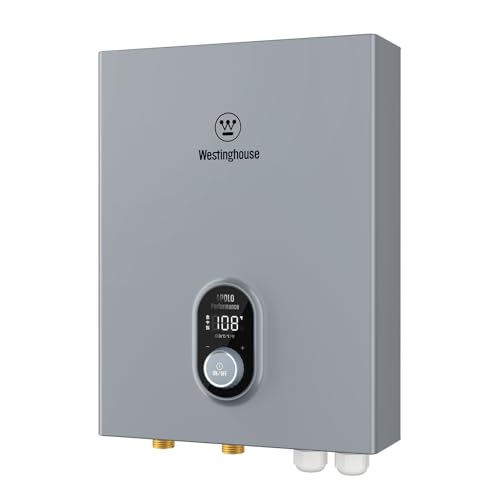
Westinghouse 24kW WiFi Tankless Water Heater
Best for: compact spaces with smart home needs
- Fuel Type
- Electric
- Max Flow Rate
- 5.55 GPM
- Heating Capacity
- 24 kW
- Voltage
- 240 V
- Fixture Capacity
- Shower and sink
- Installation Type
- Whole House
This Westinghouse unit delivers up to 5.55 GPM of hot water at 24kW. It supports simultaneous shower and sink use with a temperature range of 86-140°F. Smart Wi-Fi lets you adjust settings via voice commands. The compact 17-inch height fits flush against walls. It requires 240V power and a 100A breaker. You get endless hot water for residential use.
- Max flow rate of 5.55 GPM for whole house use
- 24kW heating capacity supports shower and sink simultaneously
- Smart Wi-Fi enables remote temperature adjustment and voice control
- Compact dimensions (17" H x 13" W) mount flush to walls
- Max flow rate of 5.55 GPM is lower than the Rinnai RX199iN at 11.1 GPM
- Requires a 100A breaker, which is higher than standard residential circuits
- Weight of 17 pounds adds bulk compared to lighter units
- You need a compact unit that mounts flush against a wall
- You want smart home integration for remote temperature control
- You have the electrical capacity for a 100A breaker
- You need a high flow rate exceeding 5.55 GPM
- You cannot install a 240V circuit with a 100A breaker
- You prefer gas-powered heating over electric resistance
Verdict: Westinghouse 24kW Electric Tankless Water Heater fits homes needing compact, smart-controlled hot water for one or two fixtures. It suits users with adequate electrical infrastructure who prioritize space-saving design over high-volume flow.
03 Specifications side by side
| Spec | Rinnai 11.1 GPM Condensing Dual-Fuel Water Heater | Westinghouse 24kW WiFi Tankless Water Heater |
|---|---|---|
| Fuel Type | Natural Gas, Propane | Electric |
| Max Flow Rate | 11.1 GPM | 5.55 GPM |
| Heating Capacity | 199k BTU | 24 kW |
| Installation Location | Indoor, Outdoor | – |
| Voltage | – | 240 V |
| Fixture Capacity | 7 fixtures | Shower and sink |
| Installation Type | – | Whole House |
| Features | Tankless | Tankless |
| Application | – | Bathroom |
| Intended Use | – | Home |
| Dimensions | 30.1 × 18.5 × 30.1 inches | 13 × 13 × 17.1 inches |
| Weight | 55 pounds | 17 pounds |
| Size | 11.1 GPM | L-24 |
| Color | Silver | Gray 24 |
| Model | RX199iN | WET-24K-G |
04 Frequently asked questions
Can a Westinghouse tankless heater replace a Rinnai for whole-house use?
No, the Westinghouse L-24 is not designed for whole-house coverage. It is best for compact spaces and one or two fixtures. The Rinnai RX199iN delivers 11.1 GPM, handling up to seven fixtures. Choose Westinghouse only if you need a compact, smart-controlled unit for limited simultaneous use.
Which brand offers better smart home integration?
Westinghouse offers superior smart home integration for this comparison. The WET-24K-G model includes built-in WiFi for remote control. Rinnai’s RX199iN focuses on high gas output without mentioned digital connectivity. If you prioritize app-based monitoring and adjustments, the electric Westinghouse unit is the better fit.
How much space does each unit require?
The Westinghouse unit is significantly smaller and lighter. It measures 13 by 17.1 inches and weighs just 17 pounds. The Rinnai model is larger, measuring 30.1 by 30.1 inches and weighing 55 pounds. Choose Westinghouse for tight closets or small utility rooms where space is limited.
Do I need special wiring for the Westinghouse heater?
Yes, the Westinghouse WET-24K-G requires specific electrical infrastructure. It operates on 240V power and needs a dedicated 100A breaker with heavy-gauge wiring. The Rinnai RX199iN uses natural gas instead. Ensure your home has adequate electrical capacity before selecting the electric Westinghouse model for your installation.
Is the Rinnai heater suitable for outdoor installation?
Yes, the Rinnai RX199iN is designed for outdoor installation. It is a condensing dual-fuel unit that fits well where gas lines exist. The Westinghouse model is intended for whole-house indoor use. If you prefer outdoor placement to save indoor space, the Rinnai gas model is the appropriate choice.
Which tankless water heater is better for large families?
The Rinnai RX199iN is better for large families. It provides 11.1 GPM of hot water, supporting up to seven fixtures simultaneously. The Westinghouse L-24 is limited to one or two fixtures. For homes needing consistent hot water for showers, dishes, and laundry at the same time, Rinnai is the superior option.
What fuel types do these brands use?
Rinnai and Westinghouse use different fuel sources. The Rinnai RX199iN runs on natural gas, offering dual-fuel flexibility. The Westinghouse WET-24K-G is an electric unit requiring 240V power. Your choice depends on your home’s existing infrastructure. Select Rinnai if you have gas lines, or Westinghouse if you have strong electrical service.


