As Amazon Associates, we earn from qualifying purchases. This means we may receive a small commission at no extra cost to you if you click through and make a purchase.

When additive manufacturing hardware runs on demanding daily production schedules, a worn or clogged printhead quickly disrupts workflows and causes costly machine downtime. Operators troubleshooting feed hesitations or inconsistent layer lamination require a dependable factory replacement that restores original factory tolerances without custom wiring or mechanical fabrication. Procuring genuine flashforge ad5x parts guarantees that mechanical clearances and thermal heat dissipation align with factory design standards.
The Flashforge AD5X Extruder V1 provides a complete factory-built toolhead assembly designed to get compatible 3D printers operating at peak performance with minimal turnaround time. Featuring an all-in-one hotend and a high-throughput melt chamber capable of high-speed volumetric output, it serves as an exact-fit swap for damaged components. However, purchasers must pay close attention to hardware revisions, as this V1 configuration does not interchange with V2 hardware.
01 Quick Verdict
This all-in-one factory replacement assembly offers a direct, drop-in solution to restore high-speed extrusion rates, provided you verify that your machine matches the V1 physical interface prior to installation.
- Complete pre-assembled printhead unit simplifies component replacement and reduces maintenance downtime.
- High-flow melt zone engineered to maintain volumetric extrusion speeds reaching up to 32 mm³/s.
- Unified hotend architecture promotes rapid heating, efficient heat sink cooling, and simplified nozzle swaps.
- Strict top cover interface requirements make this unit non-interchangeable with V2 toolhead carriages.
02 Flashforge AD5X Extruder V1 Features Explained
01 Version Compatibility and Hardware Verification
Navigating the ad5x extruder v1 vs v2 hardware variance is the most critical step before purchasing replacement parts. Flashforge manufactures two distinct iterations of the AD5X extruder assembly that cannot be interchanged on the toolhead carriage. The distinguishing physical marker between them is the specific shape of the top cover interface, which allows operators to verify compatibility through visual inspection without disassembling the printhead assembly.
Attempting to mount this V1 unit onto a carriage designed for a different revision will cause physical interference and alignment failure. Verifying the top cover interface shape against your current machine ensures an exact drop-in match, avoiding maintenance delays and preventing mechanical damage during installation.
02 All-in-One Hotend Architecture
At the center of this ad5x extruder assembly is an integrated hotend assembly engineered for rapid heat transfer and long-term thermal stability. The structural design incorporates a precision metal tube linking the heater block directly to the heat sink. This configuration creates an efficient thermal gradient, allowing the heater block to reach printing temperatures quickly while the heat sink prevents warmth from creeping up into the drive mechanism.
This unified structure also streamlines the flashforge ad5x hotend replacement process. By integrating the heat break and heater block into a unified rigid path, the assembly minimizes the risk of filament leaks between components during thermal expansion cycles. When routine servicing is required, completing a flashforge ad5x nozzle replacement is straightforward and avoids putting rotational strain on delicate hotend sensors.
03 Volumetric Flow Rate and High-Speed Printing
Maintaining high printing velocities requires continuous, uniform thermoplastic liquefaction, which is supported by the integrated ad5x 32mm3/s hotend system. Capable of supporting volumetric extrusion rates up to 32 mm³/s, this hotend liquefies filament rapidly to keep pace with fast machine motion without encountering under-extrusion or intermittent feed stutter.
The high volumetric output ensures that the toolhead delivers uniform line widths even during demanding acceleration profiles. Equipping your machine with this flashforge ad5x high flow nozzle configuration ensures reliable layer-to-layer cohesion, whether you are outputting rapid functional prototypes or large-scale technical parts.
04 Nozzle Sizing Versatility and Material Compatibility
The extruder design accommodates several standard nozzle apertures tailored to different material types. Flashforge recommends standard 0.25 mm and 0.4 mm nozzles for conventional filaments such as PLA, PETG, and ABS, where fine surface detail and precise edge definition are paramount. When running enclosed printing environments such as those configured with a flashforge adventurer 5m enclosure kit, the factory thermal setup maintains reliable melt stability across these standard diameters.
For industrial applications utilizing abrasive engineering polymers, the manufacturer designates 0.6 mm and 0.8 mm nozzle diameters as ideal choices for carbon fiber, glass fiber, and other composite filaments. These wider apertures reduce abrasive friction, decrease the risk of clogging from suspended reinforcement strands, and permit rapid infill deposition on structural components.
05 Drive Gear Maintenance and Filament Loading Protocol
Sustained extrusion consistency depends on adhering strictly to the manufacturer-specified operational procedures. Flashforge mandates that users always load and unload filament through the automated interface on the printer touchscreen rather than manually pulling strands from the toolhead. Manually pulling filament out risks drawing semi-molten plugs up into the drive gear cavity, which can cause severe drive gear clogging and gear tooth slippage.
Furthermore, because slight mechanical tolerance shifts occur whenever a toolhead is replaced, Flashforge requires running an automated bed leveling calibration immediately following hardware installation. Completing this calibration ensures that bed tilt compensation and Z-offset values are recalculated accurately, preventing nozzle scraping and ensuring consistent first-layer bonding.
03 Specs
| Attribute | Detail |
|---|---|
| Manufacturer | Zhejiang Flashforge 3D Technology Co., Ltd. |
| Hardware Model | Extruder V1 |
| Assembly Type | Entire Extruder Assembly with Hotend Kit |
| Installed Nozzle | 0.4 mm High Flow |
| Maximum Extrusion Flow Rate | Up to 32 mm³/s |
| Supported Nozzle Sizes | 0.25 mm, 0.4 mm, 0.6 mm, 0.8 mm |
| Item Weight | 15.5 ounces |
| Package Dimensions | 5.31 x 4.8 x 4.29 inches |
| Post-Installation Requirement | Bed leveling calibration required |
04 Flashforge AD5X Extruder V1 Pros and Cons
Pros
- High volumetric flow up to 32 mm³/s
- Complete drop-in all-in-one assembly
- Visual version identification via top cover
- Integrated precision metal tube thermal design
- Supports nozzle sizes from 0.25 mm to 0.8 mm
Cons
- Not interchangeable with V2 hardware
- Manual filament extraction risks gear clogging
- Package does not specify alternate nozzle sizes
05 Best Use Cases
- Replacing a damaged or worn factory toolhead to restore original mechanical tolerances and extrusion consistency.
- Equipping a compatible 3D printer for high-velocity printing that demands up to 32 mm³/s volumetric material flow.
- Transitioning to abrasive carbon fiber or glass fiber composites using compatible 0.6 mm or 0.8 mm nozzle setups.
- Maintaining standardized backup toolhead assemblies in commercial print workshops to minimize unexpected machine downtime.
06 Before You Buy
Carefully inspecting your current printhead hardware is necessary before buying this replacement part. Flashforge explicitly highlights that the V1 and V2 extruders are non-interchangeable due to physical mounting differences on the top cover interface. You can visually identify your hardware version by examining the top cover interface shape without needing to dismantle the carriage. Users working across varied equipment lines, such as the adventure 5m pro 3d printer, must double-check equipment-specific mounting requirements to avoid ordering parts incompatible with their machine carriage.
You should also evaluate package contents against your planned manufacturing requirements. The listing supplies a complete extruder assembly fitted with a 0.4 mm high-flow hotend kit. However, the listing does not specify whether extra mounting screws or alternative nozzle diameters (such as 0.25 mm, 0.6 mm, or 0.8 mm) are included in the package. If your projects require printing composite materials using a 0.6 mm or 0.8 mm nozzle, plan to purchase those compatible nozzles separately. Finally, plan time in your maintenance schedule to run a full automated bed leveling routine immediately after bolting on the new unit.
07 How It Compares With Similar Picks
| Product | Best For | Key Difference |
|---|---|---|
| Flashforge AD5X Extruder V1 | Compatible Flashforge AD5X V1 Printers | Integrated 32 mm³/s high-flow hotend assembly tailored for the V1 top cover interface. |
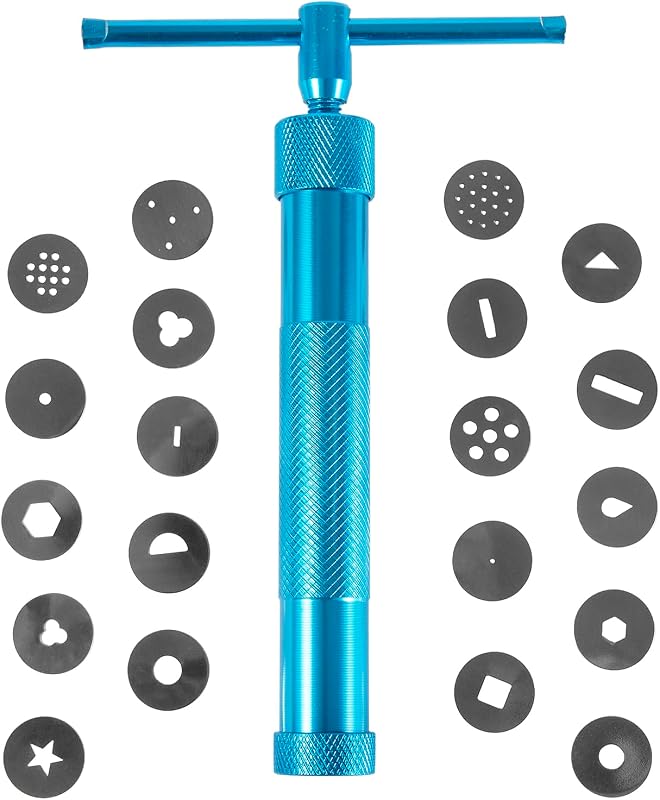
| Stainless Steel Clay Extruder Sugar | Pottery and Cake Decorating Crafts | Manual hand-crank screw press designed for clay and sugar paste, not thermoplastic 3D printing. |
| Polymer Clay Tools | Fondant and Ceramic Modeling | Handheld craft tool for soft modeling pastes without electronic heating or mechanical feed systems. |
| Creality Official K2 Plus Extruder | Creality K2 Series 3D Printers | Dedicated Creality toolhead kit featuring dual gears with 80N force and a filament break sensor. |
Choosing an extruder depends entirely on your machine ecosystem and intended fabrication material. For operators maintaining a Flashforge machine with a V1 top cover interface, the genuine V1 assembly is the only option that preserves plug-and-play mechanical fitment and 32 mm³/s flow capability. If you operate an alternative platform such as the Creality Official K2 Plus Extruder, that unit is built exclusively for K2 hardware with an 80N dual-gear drive and a filament break sensor. Manual craft tools like the Stainless Steel Clay Extruder Sugar or Polymer Clay Tools are intended for manual clay shaping and confectionery work and cannot be used on automated 3D printing equipment.
08 Bottom Line
When evaluating whether the flashforge ad5x extruder v1 is worth the investment, the primary consideration is hardware compatibility. For users operating a machine configured with the V1 top cover interface, this complete assembly resolves persistent feeding issues, restores structural thermal control, and ensures that high-velocity print jobs achieve up to 32 mm³/s volumetric flow without jamming.
Ensure you inspect your current carriage to confirm that your unit matches the V1 cover interface rather than the V2 design. By executing filament load and unload cycles through the automated touchscreen system and completing a full bed leveling calibration upon installation, you can restore your printhead to factory-original operational reliability.
09 FAQ
How can I identify whether my machine needs an AD5X Extruder V1 or V2?
The difference between the V1 and V2 assemblies is the physical shape of the top cover interface. Flashforge designed this distinguishing shape so operators can visually identify their extruder revision without disassembling the printhead carriage. You must confirm that the top cover interface shape matches your machine prior to purchase because V1 and V2 models are not interchangeable.
What filament types can I print with this extruder?
The extruder supports standard filaments including PLA, PETG, and ABS when paired with recommended 0.25 mm or 0.4 mm nozzles. It can also print abrasive composite filaments such as carbon fiber and glass fiber when configured with recommended 0.6 mm or 0.8 mm nozzle sizes.
What volumetric flow rate does this extruder hotend support?
The included hotend kit is engineered for high-speed operation, supporting extrusion rates up to 32 mm³/s. This high volumetric ceiling provides reliable material melting during rapid raster moves and elevated printhead feed rates.
Why does Flashforge advise against pulling filament out manually?
Pulling filament out manually can draw partially molten material back up into the drive gear assembly. This practice increases the risk of filament plugging and drive gear clogging, which is why Flashforge recommends always using the automated load and unload routines on the printer display interface.
Is bed leveling required after installing this replacement extruder?
Yes, Flashforge instructs operators to perform an automated bed leveling calibration immediately following extruder replacement. This step ensures that toolhead Z-offset clearances and bed compensation meshes are properly updated to ensure reliable first-layer adhesion.


