As Amazon Associates, we earn from qualifying purchases. This means we may receive a small commission at no extra cost to you if you click through and make a purchase.
As an Amazon Associate we earn from qualifying purchases. Links on this page are affiliate links.
01 Understanding Filtration Stages in RO Systems
Filtration stages explained reveals how many distinct filters a reverse osmosis system uses. Each stage targets specific contaminants. The count ranges from three to eleven. Most systems fall between five and seven stages.
A three-stage system offers basic protection. It typically includes sediment, carbon, and reverse osmosis filters. This setup removes large particles, chlorine, and dissolved solids. It suits buyers with low contamination levels.
Five-stage systems add a second carbon filter or a remineralization stage. The extra carbon improves taste and odor removal. Remineralization adds healthy minerals back into the water. This creates a balanced pH level.
Seven-stage systems often include dedicated feed and drain filters. They may also feature post-carbon polishing. These extra steps ensure consistent water quality. They protect the membrane from clogging and extend its life.
Higher counts like eight, nine, or eleven stages are less common. They usually include multiple pre-filters and advanced polishing units. These systems target very specific contaminants. They are best for areas with poor water quality.
You should check the listing for the exact stage count. Look for the breakdown of each filter type. The number alone does not guarantee better performance. The quality of individual filters matters more.
More stages mean more filters to replace. This increases maintenance costs and space requirements. You need under-sink space for each canister. Consider your household water usage when choosing.
For most homes, a five or seven-stage system is sufficient. They balance performance with ease of use. Always verify the micron ratings of sediment filters. Check the carbon block specifications for chlorine reduction.
Understanding filtration stages helps you compare products accurately. It prevents you from paying for unnecessary complexity. Focus on the contaminants you need to remove. Match the stage count to your water quality needs.
02 Compare Filtration Stages
3-Stage
A three-stage setup provides basic filtration for targeted contaminant removal. This configuration typically includes sediment, carbon, and reverse osmosis filters. It is ideal for buyers who need to reduce chlorine and lead without complex maintenance. The GE GXRQ18NBN exemplifies this approach with a compact footprint and straightforward upkeep. You get essential water quality improvements in a small space. However, you sacrifice advanced purification and remineralization. This option suits households with lower daily water needs or those on a budget. It is a practical choice for basic under-sink installation where space is tight and simplicity is preferred over high output.
6-Stage
Six-stage systems are common in high-capacity models like the iSpring RCC2AK. They typically include multiple pre-filters, the RO membrane, and an alkaline remineralization stage. This setup ensures high output for large families while improving taste. The iSpring model delivers 200 GPD with visible maintenance indicators. You get robust purification and mineral enhancement. The trade-off is a larger footprint and higher weight. This option suits households prioritizing capacity and visible maintenance over compactness. It is a versatile choice for those who want both high volume and improved water chemistry. The added stages help protect the membrane and enhance the final product.
8-Stage
Eight-stage systems, such as the Waterdrop G3P600, focus on high-flow tankless performance. They often include multiple pre-filters, the RO membrane, and extensive post-filtration. The Waterdrop model offers certified filtration with a 2:1 pure to drain ratio. You get steady, high-volume water without a storage tank. This is ideal for space-constrained kitchens. The trade-off is higher complexity and potentially higher filter costs. You benefit from advanced purification and remineralization. This option suits households needing continuous filtered water for cooking and drinking. It is a modern choice for those who value tankless convenience and high stage counts.
9-Stage
Nine-stage systems like the Waterdrop T3-M deliver strong tankless performance with remineralization. They include multiple pre-filters, the RO membrane, and extensive post-filtration stages. This setup ensures high mineral content and excellent taste. The Waterdrop model provides 450 GPD with a 2:1 pure to drain ratio. You get high flow and mineral enhancement. The trade-off is a larger footprint and higher weight. This option suits homes prioritizing high flow and mineral content over maximum stage counts. It is a robust choice for those who want both speed and quality. The additional stages help ensure consistent performance and water taste.
11-Stage
Eleven-stage systems, such as the Express Water ROALKUV10, provide extensive filtration and UV purification. They include multiple pre-filters, the RO membrane, alkaline stages, and UV light. This setup targets a wide range of contaminants and improves water chemistry. You get certified purification and mineral addition. The Express Water model offers 100 GPD with a chrome faucet. The trade-off is a larger footprint and higher weight. This option suits buyers wanting alkaline and UV filtration with certification. It is ideal for households prioritizing water quality over high daily output. The UV stage adds an extra layer of protection against bacteria.
7-Stage
Seven-stage configurations add an extra layer of filtration or post-filtration. This often includes an additional carbon filter or a dedicated remineralization stage. You get slightly more refined taste and contaminant removal than six-stage models. This count is less common but offers a nuanced approach to water quality. It may include a UV stage or additional sediment protection. The benefit is a more comprehensive purification process. However, it adds complexity to maintenance. You must replace more filters regularly. This option suits buyers who want detailed filtration without jumping to the highest stage counts. It is a practical step up for those seeking enhanced clarity and taste.
03 Deciding If More Stages Matter
Who needs it
You should prioritize higher stage counts if your water source contains complex contaminant profiles. Systems with seven to eleven stages offer specialized filtration layers for specific pollutants. These additional filters target volatile organic compounds, pharmaceuticals, or excess hardness that basic setups miss. If you rely on well water or live in an area with known industrial runoff, extra stages provide targeted protection. Each added stage refines the output further, removing particles that previous filters might allow through. This matters most when you need high purity for drinking or cooking without relying on bottled water. Buyers with specific health concerns or sensitive household members often benefit from this granular approach. The extra filters ensure that even trace contaminants are captured before the water reaches your tap, providing peace of mind through verified removal capabilities rather than general assumptions about water quality.
Who can skip it
You can ignore high stage counts if your municipal water supply is already treated to high standards. Three to five stage systems effectively remove common issues like chlorine taste, sediment, and lead. Adding more filters does not significantly improve taste or safety for already clean water. You will pay more for unnecessary complexity and replacement parts that wear out faster. Prioritize flow rate and filter lifespan instead of counting stages. A simpler system is easier to maintain and less prone to clogging. Focus on the quality of the reverse osmosis membrane and carbon block rather than the total number of steps. Most households do not need specialized filters for rare contaminants. Stick to basic configurations unless your water test reveals specific problems that require additional treatment layers beyond standard purification.
04 Key RO Terms Explained
Filtration stages
The number of distinct filter layers in your system. Each stage targets specific contaminants, ranging from basic sediment to advanced reverse osmosis membranes for pure water.
Reverse osmosis membrane
The core filter that removes dissolved solids. It forces water through a semi-permeable barrier, blocking contaminants like lead, arsenic, and fluoride from passing through.
Pure to drain ratio
The amount of clean water produced per gallon of wastewater. A 1:1 ratio is efficient, while older 3:1 systems waste more water during the filtration process.
Sediment filter
The first line of defense against large particles. It captures sand, rust, and silt to protect downstream filters and extend the life of the reverse osmosis membrane.
Carbon block filter
A filter using activated carbon to remove chlorine and volatile organic compounds. It improves taste and odor, preventing damage to the sensitive reverse osmosis membrane.
Post-carbon filter
A final polishing filter installed before the faucet. It ensures the water tastes fresh and crisp by removing any residual flavors from the storage tank or lines.
Capacity
The volume of filtered water the system can store or produce daily. Higher capacity tanks provide more immediate water for cooking or filling large pots without waiting.
| # | Product | Best for | Price |
|---|---|---|---|
| 1 | iSpring RCC2AK 200 GPD Alkaline RO | large families needing high output | |
| 2 | GE GXRQ18NBN 3-Stage Under Sink RO | targeted lead and chlorine reduction | |
| 3 | Waterdrop G3P600 600 GPD Tankless RO | high-flow tankless under-sink filtration | |
| 4 | Waterdrop T3-M 450 GPD Remineralization RO | High-flow tankless remineralization needs | |
| 5 | Express Water 11-Stage Alkaline RO | Buyers wanting alkaline and UV filtration with certification | |
| 6 | APEC Water ROES-PH75 75 GPD Alkaline | Budget-conscious buyers wanting certified alkaline water |
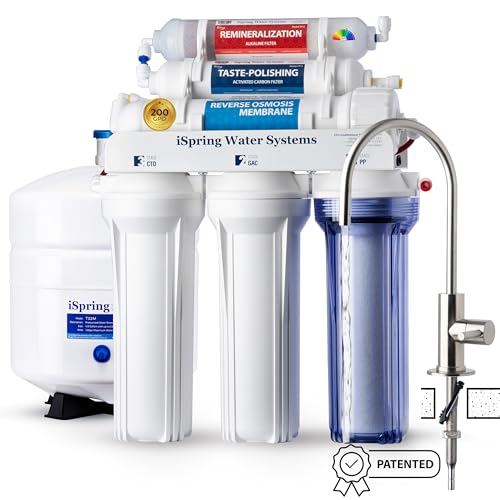
iSpring RCC2AK 200 GPD Alkaline RO
Best for: large families needing high output
- Filtration Stages
- 6-Stage
- Installation Type
- Under Sink
- Daily Production Rate
- 200 GPD
- Remineralization
- Alkaline Remineralization
- Faucet Finish
- Brushed Nickel
- Dimensions
- 15.5 × 5 × 18.5 inches
The iSpring RCC2AK is a 6-stage under sink reverse osmosis system with a 200 GPD membrane. It includes alkaline remineralization to restore minerals and improve taste. The transparent first-stage housing lets you see trapped contaminants. A top-mounted faucet design simplifies installation from above the sink. This system targets large families needing high daily water output.
- 200 GPD membrane supports large families
- 6-stage filtration with alkaline remineralization
- Transparent housing shows contaminant buildup
- Top-mounted faucet for easy installation
- 6-stage filtration has fewer stages than 8-stage or 11-stage competitors
- 200 GPD production is lower than 450 GPD tankless models
- 20 pounds weight is heavier than many tankless systems
- You need high daily water output for a large family
- You want alkaline remineralization to improve taste
- You prefer visible filter status monitoring
- You require a tankless design for under-sink space
- You need more than 6 filtration stages
- You want a production rate above 200 GPD
Verdict: iSpring RCC2AK 6-Stage 200 GPD RO System suits households prioritizing high capacity and visible maintenance over tankless compactness or advanced multi-stage purification.

GE GXRQ18NBN 3-Stage Under Sink RO
Best for: targeted lead and chlorine reduction
- Filtration Stages
- 3-Stage
- Installation Type
- Under Sink
- Target Contaminant
- Chlorine, Lead
- Dimensions
- 12.5 × 3.63 × 9.25 inches
- Weight
- 14.1 pounds
The GE GXRQ18NBN is a 3-stage under sink reverse osmosis system designed to reduce 95 impurities, including lead and chlorine. It features a twist-lock filter design for easy changes and a faucet with a filter change indicator. The unit weighs 14.1 pounds and measures 12.5 inches in length. You should choose this if you want a simpler filtration setup that targets specific contaminants without the complexity of multi-stage units.
- 3-stage filtration reduces 95 impurities
- Reduces lead and chlorine
- Twist-lock filter design for easy changes
- Faucet includes filter change indicator
- Only 3 filtration stages compared to 6, 7, 8, 9, or 11 stages on other products
- Weighs 14.1 pounds, making it heavier than tankless or lighter systems
- Requires adding the FQ18RT filter separately to restore minerals
- You want to reduce lead and chlorine specifically
- You prefer a simpler 3-stage filtration process
- You need an under sink system with easy filter changes
- You need remineralization built-in without buying a separate filter
- You want higher filtration stages for broader impurity reduction
- You prefer a tankless design to save space
Verdict: GE GXRQ18NBN 3-Stage RO System offers targeted lead and chlorine reduction with a simple 3-stage setup. It fits buyers who prioritize specific contaminant removal and easy maintenance over high-stage complexity.

Waterdrop G3P600 600 GPD Tankless RO
Best for: high-flow tankless under-sink filtration
- Filtration Stages
- 8-Stage
- Installation Type
- Under-Sink
- Daily Production Rate
- 600 GPD
- Pure to Drain Ratio
- 2:1
- Certifications
- NSF/ANSI 42 & 53 & 58 & 372
- Features
- Tankless
The Waterdrop G3P600 is an 8-stage under-sink reverse osmosis system with a 600 GPD tankless design. It holds NSF/ANSI 42, 53, 58, and 372 certifications. The unit features a smart display faucet for TDS monitoring and filter life tracking. It achieves a 2:1 pure-to-drain ratio and produces filtered water in seconds. This system suits you if you need high daily output and space savings without a storage tank.
- 8-stage filtration reduces TDS, PFAS, and heavy metals
- Certified by NSF/ANSI 42, 53, 58, and 372
- 600 GPD tankless design saves under-sink space
- 2:1 pure-to-drain ratio minimizes water waste
- Smart display faucet shows TDS and filter life
- 600 GPD capacity is lower than the 450 GPD and 200 GPD models on this list
- Requires under-sink electricity to operate
- Physical footprint of 18.1 inches long may not fit smaller cabinets
- You need a high-capacity system for a large household
- You want to save under-sink space by avoiding a storage tank
- You value certified filtration for lead and chlorine reduction
- You have limited under-sink electrical outlets
- You prefer a system with a higher daily production rate
- Your cabinet depth is less than 18 inches
Verdict: Waterdrop G3P600 600 GPD Tankless RO delivers certified 8-stage filtration and a space-saving tankless build for households needing steady, high-volume filtered water.
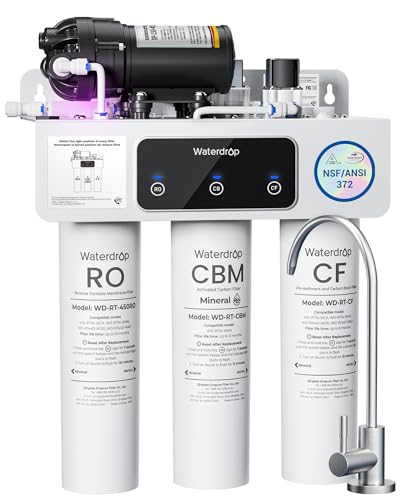
Waterdrop T3-M 450 GPD Remineralization RO
Best for: High-flow tankless remineralization needs
- Filtration Stages
- 9-Stage
- Installation Type
- Under-sink
- Daily Production Rate
- 450 GPD
- Pure to Drain Ratio
- 2:1
- Certifications
- NSF/ANSI 372
- Remineralization
- Mineral-infused
This under-sink system uses a 9-stage filtration process to reduce contaminants and remineralize water. It produces 450 gallons per day through a tankless design. The unit holds NSF/ANSI 372 certification. It features a 2:1 pure-to-drain ratio. Smart alerts signal filter changes. The LED light indicates status. You get mineral-infused water for better taste. This setup suits households needing high daily output.
- 9-stage filtration reduces heavy metals and chlorine
- 450 GPD tankless production rate
- NSF/ANSI 372 certification
- Remineralization adds calcium and magnesium
- 2:1 pure-to-drain water ratio
- 450 GPD output is lower than the 200 GPD iSpring and 600 GPD Waterdrop G3P600 on this list
- 20-pound weight is heavier than the 75 GPD APEC and 3-stage GE systems
- 9-stage count is fewer than the 11-stage Express Water model
- You need a tankless system with high daily water production
- You want remineralized water for improved taste
- You prefer a 9-stage filtration process over simpler 3-stage units
- You require the highest flow rate available on this list
- You want the maximum number of filtration stages offered
- You need a lightweight unit for easy under-sink storage
Verdict: Waterdrop T3-M 450 GPD 9-Stage RO delivers strong tankless performance with remineralization. It fits homes that prioritize high flow and mineral content over maximum stage counts or lowest weight.

Express Water 11-Stage Alkaline RO
Best for: Buyers wanting alkaline and UV filtration with certification
- Filtration Stages
- 11-Stage
- Installation Type
- Under Sink
- Daily Production Rate
- 100 GPD
- Certifications
- NSF Certified 372
- Remineralization
- Active Mineral Technology
- Features
- Alkaline, UV Filter
This Express Water unit offers 11 filtration stages, including alkaline remineralization and UV purification. It produces 100 gallons per day and carries NSF Certified 372 certification for lead-free materials. The system includes an emergency leak stop detector and a chrome faucet. It suits buyers seeking comprehensive contaminant removal and mineral addition in an under-sink configuration.
- 11-stage filtration with alkaline and UV technology
- 100 GPD daily production rate
- NSF Certified 372 for lead-free components
- Built-in emergency leak stop detector
- 100 GPD output is lower than the 450 GPD and 200 GPD options on this list
- 31-pound weight is heavier than most tankless competitors
- You want alkaline minerals and UV protection in one system
- You need NSF Certified 372 certification for lead-free parts
- You prefer a traditional tank-based under-sink setup
- You require a tankless design for under-sink space
- You need a production rate above 100 GPD
- You prefer a lighter system under 31 pounds
Verdict: Express Water 11-Stage RO System provides extensive filtration and mineral addition for households prioritizing water quality over high daily output. It fits buyers who value certification and UV purification in a standard under-sink footprint.
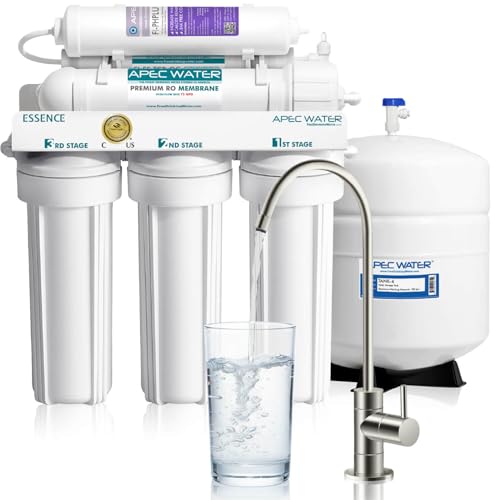
APEC Water ROES-PH75 75 GPD Alkaline
Best for: Budget-conscious buyers wanting certified alkaline water
- Filtration Stages
- 6-Stage
- Installation Type
- Under Sink
- Daily Production Rate
- 75 GPD
- Certifications
- NSF 372, NSF 58, WQA
- Remineralization
- Alkaline
- Dimensions
- 15.5 × 5.25 × 17.5 inches
This 6-stage under sink system produces 75 gallons per day. It includes an alkaline stage to add calcium minerals for better taste. The unit holds NSF 372 and 58 certifications plus WQA approval. You get reliable filtration for up to 2000 ppm total dissolved solids. The white unit fits under most standard sinks with compact dimensions.
- NSF 372 and 58 certifications ensure material safety and filtration performance
- Alkaline stage adds calcium minerals to improve water pH and taste
- 75 GPD daily production rate provides ample clean drinking water
- WQA certified system for trusted quality and durability
- 75 GPD output is lower than the 200 to 450 GPD options on this list
- 6-stage filtration removes fewer contaminants than the 7 to 11-stage systems available
- Includes a storage tank, unlike the tankless designs offered by other brands
- You want NSF certified filtration with added alkaline minerals
- You have a standard under sink space for a tank system
- You prefer a proven 6-stage setup over complex multi-stage units
- You need high flow rates above 100 gallons per day
- You prefer a tankless system to save under cabinet space
- You want maximum contaminant removal with 8 or more stages
Verdict: APEC ROES-PH75 6-Stage Alkaline RO delivers certified, mineral-enhanced water for households that do not need high daily volume. It suits buyers who value established certifications and taste over maximum speed or stage count.
05 Specifications side by side
| Spec | iSpring RCC2AK 200 GPD Alkaline RO | GE GXRQ18NBN 3-Stage Under Sink RO | Waterdrop G3P600 600 GPD Tankless RO | Waterdrop T3-M 450 GPD Remineralization RO | Express Water 11-Stage Alkaline RO | APEC Water ROES-PH75 75 GPD Alkaline |
|---|---|---|---|---|---|---|
| Installation Type | Under Sink | Under Sink | Under-Sink | Under-sink | Under Sink | Under Sink |
| Daily Production Rate | 200 GPD | – | 600 GPD | 450 GPD | 100 GPD | 75 GPD |
| Filtration Stages | 6-Stage | 3 Stage | 8-Stage | 9-stage | 11-Stage | 6-Stage |
| Pure to Drain Ratio | – | – | 2:1 | 2:1 | – | – |
| Certifications | – | – | NSF/ANSI 42 & 53 & 58 & 372 | NSF/ANSI 372 | NSF Certified 372 | NSF 372, NSF 58, WQA |
| Remineralization | Alkaline Remineralization | – | – | Mineral-infused | Active Mineral Technology | Alkaline |
| Capacity | – | – | – | – | 100 GPD | 75 GPD |
| Features | Alkaline, Remineralization | – | Tankless | Tankless, Remineralization | Alkaline, UV Filter | Alkaline |
| Faucet Finish | Brushed Nickel | – | – | – | Chrome | – |
| Target Contaminant | – | Chlorine, Lead | – | – | – | – |
| Dimensions | 15.5 × 5 × 18.5 inches | 12.5 × 3.63 × 9.25 inches | 18.1 × 5.68 × 17.8 inches | 13.4 × 6.22 × 18 inches | 19 × 15 × 5 inches | 15.5 × 5.25 × 17.5 inches |
| Weight | 20 pounds | 14.1 pounds | 31 pounds | 20 pounds | 31 pounds | 3.11 pounds |
| Color | Brushed Nickel Faucet | White | White | White- Mineral Water | Chrome | White |
| Model | RCC2AK | GXRQ18NBN | WD-G3 | WD-RT34-WMA | ROALKUV10* | ROES-PH75 |
| Size | – | 1 Count (Pack of 1) | 600 GPD | 450 GPD | 11 Stage, Alkaline + UV | RO System |
06 Frequently asked questions
Does a higher stage count mean better water quality?
More stages do not automatically guarantee superior water. They add specialized filters for specific contaminants like minerals or UV protection. For example, the Express Water 11-Stage RO adds alkaline and UV filtration. The Waterdrop T3-M 9-Stage system focuses on remineralization. You should choose based on your specific water needs, not just the number.
What is the difference between 3-stage and 5-stage RO systems?
A 3-stage system provides basic filtration for targeted contaminants like chlorine and lead. The GE GXRQ18NBN exemplifies this simple setup. A 5-stage system typically adds a carbon block or remineralization filter for improved taste and broader contaminant removal. You gain more versatility with five stages, but it requires more maintenance space under your sink.
Do alkaline filters add significant value to RO systems?
Alkaline filters add minerals back into purified water, raising the pH level. This improves taste and provides remineralization. The iSpring RCC2AK 6-Stage and APEC ROES-PH75 6-Stage systems both include this feature. If you prefer mineral-enhanced water, these systems deliver that benefit without needing additional complex stages.
How does tankless design affect filtration stages?
Tankless designs remove the storage tank, allowing water to flow directly through the filters. This often supports higher stage counts in a compact footprint. The Waterdrop G3P600 600 GPD offers 8-stage filtration without a tank. The Waterdrop T3-M 450 GPD provides 9-stage filtration tanklessly. You get steady high-volume water without bulky storage.
Is an 11-stage system necessary for home use?
An 11-stage system is not necessary for most households. It adds extensive filtration layers like UV and alkaline stages. The Express Water 11-Stage RO provides this for buyers prioritizing water quality over high daily output. You only need this complexity if your water source has unique contaminants requiring specialized treatment layers.
What does the capacity rating have to do with stages?
Capacity measures daily water production, not filtration stages. A 200 GPD system like the iSpring RCC2AK produces more water than a 75 GPD APEC ROES-PH75. Both can have six stages. The stage count determines what contaminants are removed. The capacity determines how much filtered water you get per day. They are separate specifications.


