As Amazon Associates, we earn from qualifying purchases. This means we may receive a small commission at no extra cost to you if you click through and make a purchase.
As an Amazon Associate we earn from qualifying purchases. Links on this page are affiliate links.
Choosing between an electric vs propane tankless water heater depends on your home’s infrastructure and hot water needs. Both Rheem and Rinnai models provide endless hot water without a storage tank, saving space and energy. The main difference lies in the fuel source and output capacity. The electric unit uses 240V power for modest flow rates, while the propane model delivers significantly higher volume for larger households. Your choice hinges on available fuel lines and electrical capacity.
Fuel Type
Electric
Propane (and Natural Gas)
Max Flow Rate
up to 4.4 GPM
11.1 GPM
Heating Capacity
18kW
199k BTU
Fixture Capacity
not listed
7 fixtures
Built-in Pump
not listed
Yes (Smart-Circ)
Choose the first if
- You have limited space and prefer a compact, lightweight unit that mounts easily.
- You already have a dedicated 240V electrical circuit and no gas line access.
- You need hot water for a single bathroom or point-of-use application.
Choose the second if
- You need high flow rates to run multiple showers and appliances simultaneously.
- You want a condensing unit with high energy efficiency and built-in recirculation.
- You have access to propane or natural gas and need a versatile indoor/outdoor unit.
Verdict
The electric model suits smaller homes or single-bathroom setups where space and electrical infrastructure are the primary constraints. The propane model is better for larger households requiring simultaneous hot water across multiple fixtures. Select the fuel type that matches your existing home utilities.
01 Electric vs Propane Tankless Heaters
Flow Capacity
Edge: Rinnai 11.1 GPM Condensing Tankless Water Heater
The Rheem 18kW electric model delivers up to 4.4 gallons per minute. This output suits a single bathroom or point-of-use sink. The Rinnai RXP199iN propane unit provides 11.1 gallons per minute. It can support up to seven fixtures running simultaneously. If your household has multiple bathrooms or high demand, the propane unit handles the volume. The electric model is better for low-flow applications. You must match the flow rate to your daily usage patterns to avoid cold showers.
Power Source
Edge: Tie
The Rheem unit requires a 240V electrical connection. It uses 18kW of power to heat water through copper immersion elements. The Rinnai model burns propane or natural gas. It generates 199,000 BTUs of heating capacity. Your home must have the correct infrastructure for either fuel. Electric models need adequate amperage and wiring. Gas models need a propane tank or line and proper venting. The fuel type dictates your installation options and ongoing energy costs.
Physical Size
Edge: Rheem 18kW 240V Electric Tankless Water Heater
The Rheem electric heater is compact. It measures 14.5 inches wide, 3.5 inches high, and 18.5 inches long. It weighs 14.8 pounds. The Rinnai propane heater is significantly larger. It measures 19 inches wide, 31 inches high, and 19 inches long. It weighs 58 pounds. The electric unit fits in tight spaces like a closet or under a sink. The propane unit requires more vertical clearance and floor space. You need to measure your installation area carefully before choosing.
Smart Features
Edge: Rinnai 11.1 GPM Condensing Tankless Water Heater
The Rheem model features an external digital thermostatic control with an LED display. It offers plus or minus one degree accuracy. It uses self-modulation to adjust power based on demand. The Rinnai model includes Smart-Circ intelligent recirculation. It has an internal pump that learns your usage patterns. It also supports WiFi control via the Controlr module. The Rinnai offers more automation and remote management. The Rheem provides precise manual temperature control without additional modules.
Installation Location
Edge: Rinnai 11.1 GPM Condensing Tankless Water Heater
The Rheem electric heater is designed for indoor installation. It connects via bottom 3/4 inch NPT water connections. The Rinnai propane heater can be installed indoors or outdoors. It uses Versa Vent technology for flexible venting. You must use an RX-OVC vent cap for outdoor setups. The Rinnai offers greater flexibility for placement. The Rheem is limited to protected indoor environments. Consider your available space and local building codes when deciding.
02 Which Tankless Water Heater Fits Your Needs
Renters or small households with one bathroom
Our pick: Rheem 18kW 240V Electric Tankless Water Heater
You need a compact unit that fits easily in tight spaces. This 14.8-pound electric heater measures just 14.5 by 3.5 inches. It delivers 4.4 gallons per minute, which handles single-bathroom demands. The 18kW heating capacity is sufficient for low-to-moderate usage. Its small footprint makes it ideal for apartments or small homes where space is limited.
Large families needing high volume hot water
Our pick: Rinnai 11.1 GPM Condensing Tankless Water Heater
You require simultaneous hot water for multiple fixtures. This propane unit provides 11.1 gallons per minute, supporting up to seven fixtures at once. The 199k BTU heating capacity ensures consistent temperature during heavy use. It includes an internal booster pump and smart recirculation technology. This high output prevents running out of hot water during peak usage times.
Users wanting precise temperature control
Our pick: Rheem 18kW 240V Electric Tankless Water Heater
You want exact temperature settings without guesswork. This electric model features an external digital thermostat with LED display. It offers plus or minus one degree accuracy for precise control. The self-modulation technology adjusts power to meet your specific hot water demand. This level of precision helps maintain consistent water temperature for comfort and safety.
Homeowners seeking high energy efficiency
Our pick: Rinnai 11.1 GPM Condensing Tankless Water Heater
You prioritize efficiency and advanced features. This condensing unit achieves a UEF of .98, indicating superior energy performance. It includes a Quick Flush feature for simplified maintenance. The smart interface allows for optimized operation based on usage patterns. Its versatility allows installation indoors or outdoors, providing flexibility for different home layouts and venting requirements.
| # | Product | Best for | Price |
|---|---|---|---|
| 1 | Rheem 18kW 240V Electric Tankless Water Heater | Compact electric whole-home heating | |
| 2 | Rinnai 11.1 GPM Condensing Tankless Water Heater | large households needing high flow rates |
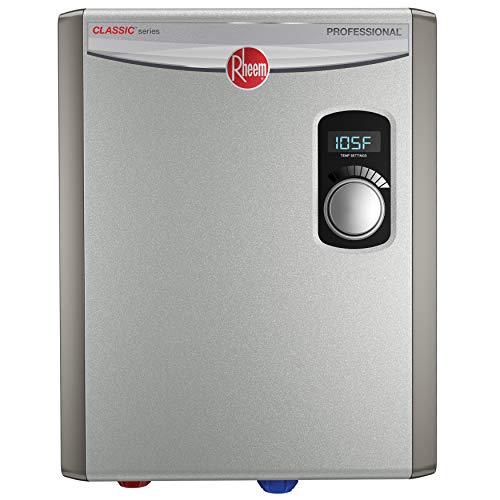
Rheem 18kW 240V Electric Tankless Water Heater
Best for: Compact electric whole-home heating
- Fuel Type
- Electric
- Max Flow Rate
- up to 4.4 GPM
- Heating Capacity
- 18kW
- Voltage
- 240V
- Features
- Tankless
- Wattage
- 18 kW
This Rheem unit delivers 18 kW of heating power at 240V. It reaches up to 4.4 GPM with copper immersion elements. The compact gray body measures 14.5 by 18.5 inches. An external digital display offers precise temperature control. You get field-serviceable parts and simple NPT connections. It suits homes needing reliable electric tankless performance.
- 18 kW heating capacity for consistent hot water
- Up to 4.4 GPM flow rate
- External digital thermostatic control with LED display
- Field-serviceable copper immersion heating elements
- Compact dimensions: 14.5 x 18.5 x 3.5 inches
- Lower flow rate of 4.4 GPM compared to the 11.1 GP propane option
- Heavier build at 14.8 pounds
- Requires 240V electrical connection
- You need a compact electric water heater for a specific location
- You want precise temperature control via an external digital display
- You prefer field-serviceable components for long-term maintenance
- You require a flow rate higher than 4.4 GPM
- You do not have a 240V electrical circuit available
- You prefer propane fuel for higher flow capacity
Verdict: Rheem RTEX-18 Electric Tankless Heater provides steady 18 kW output in a small footprint. It fits homes prioritizing electric efficiency and precise temperature management over maximum flow volume.

Rinnai 11.1 GPM Condensing Tankless Water Heater
Best for: large households needing high flow rates
- Fuel Type
- Propane
- Max Flow Rate
- 11.1 GPM
- Heating Capacity
- 199k BTU
- Installation Location
- Indoor, Outdoor
- Fixture Capacity
- 7 fixtures
- Features
- Tankless, Booster Pump
The Rinnai RXP199iN is a condensing tankless water heater powered by propane or natural gas. It delivers 11.1 GPM with 199k BTU heating capacity. The unit supports up to seven fixtures and fits indoor or outdoor spaces. It includes built-in recirculation to learn your usage patterns. This model suits homes needing high flow rates and efficient hot water delivery without running out.
- High flow rate of 11.1 GPM
- 199k BTU heating capacity
- Supports up to 7 fixtures simultaneously
- Built-in recirculation pump with Smart-Circ technology
- Versa Vent allows indoor or outdoor installation
- Heavier at 58 pounds
- Larger dimensions at 31 inches tall
- Requires professional installation
- You need hot water for multiple bathrooms at once
- You prefer propane as your fuel source
- You want a unit that can be installed outdoors
- You prefer electric heating systems
- You need a smaller unit under 19 inches wide
- You want to handle the installation yourself
Verdict: Rinnai RXP199iN 11.1 GPM Propane Water Heater delivers strong performance for large households. It fits users who need high flow rates and flexible placement options.
03 Specifications side by side
| Spec | Rheem 18kW 240V Electric Tankless Water Heater | Rinnai 11.1 GPM Condensing Tankless Water Heater |
|---|---|---|
| Fuel Type | Electric | Natural Gas, Propane |
| Max Flow Rate | up to 4.4 GPM | 11.1 GPM |
| Heating Capacity | 18kW | 199k BTU |
| Installation Location | – | Indoor, Outdoor |
| Voltage | 240V | – |
| Fixture Capacity | – | 7 fixtures |
| Features | Tankless | Tankless, Booster Pump |
| Wattage | 18 kW | – |
| Intended Use | Home | – |
| Dimensions | 18.5 × 14.5 × 3.5 inches | 19 × 19 × 31 inches |
| Weight | 14.8 pounds | 58 pounds |
| Size | Small | 11.1 GPM |
| Color | Gray | Silver |
| Model | RTEX-18 | RXP199iN |
04 Frequently asked questions
Which is better for a large family, electric or propane tankless?
Propane models typically offer higher flow rates for busy households. The Rinnai RXP199iN delivers 11.1 gallons per minute. This supports up to seven fixtures simultaneously. Electric units like the Rheem RTEX-18 provide 4.4 gallons per minute. They suit smaller homes with lower simultaneous demand.
Do propane tankless heaters require special ventilation?
Propane units often use condensing technology that requires specific venting. The Rinnai RXP199iN is designed for outdoor installation. This placement helps manage exhaust gases safely. Electric models do not produce combustion byproducts. They do not require venting, making them easier to install indoors.
Can I install an electric tankless heater myself?
Installation complexity depends on your home’s electrical capacity. The Rheem RTEX-18 requires a 240V power source. It weighs only 14.8 pounds and measures 14.5 by 3.5 inches. Its compact size fits tight spaces. Propane units like the Rinnai need gas line connections and outdoor clearance, which may require professional help.
Which heater is more energy efficient?
Electric tankless heaters generally have higher energy efficiency ratings. The Rheem RTEX-18 converts nearly all electricity into heat. Propane units lose some energy through exhaust. However, propane is often cheaper per unit of energy. Efficiency depends on your local fuel costs and usage patterns.
What is the difference in size between electric and propane units?
Electric units are often smaller and lighter. The Rheem RTEX-18 is 18.5 inches long and weighs 14.8 pounds. Propane models like the Rinnai RXP199iN are larger and heavier. It measures 31 inches high and weighs 58 pounds. The propane unit also includes a booster pump, adding to its bulk.
Is propane safer than electric for indoor installation?
Electric heaters are safer for indoor spaces. They do not produce carbon monoxide or combustion gases. The Rheem RTEX-18 can be installed in closets or utility rooms. Propane units produce exhaust and typically require outdoor placement. The Rinnai RXP199iN is rated for outdoor use. Indoor propane installation needs strict ventilation and safety codes.


