As Amazon Associates, we earn from qualifying purchases. This means we may receive a small commission at no extra cost to you if you click through and make a purchase.
As an Amazon Associate we earn from qualifying purchases. Links on this page are affiliate links.
This APUS vs westinghouse tankless water heater comparison looks at two distinct heating methods. Both units deliver on-demand hot water for whole-home use without a storage tank. The main difference lies in their energy source. The APUS model runs on propane gas, while the Westinghouse unit uses electric power. You also need to consider your home’s electrical panel capacity or gas line availability. Each system offers a different flow rate and temperature control method. Understanding these specs helps you pick the right fit for your plumbing setup.
Fuel Type
Propane
Electric
Heating Capacity
95,000 BTU
24kW
Voltage
120V
240V
Max Flow Rate
4.42 GPM
5.55 GPM
Temperature Range
95–140°F
86–140°F
Smart Features
LED touchscreen
Wi-Fi and app control
Choose the first if
- You have a propane gas line available for indoor installation.
- You prefer precise temperature stability with a ±1°F tolerance.
- You want a unit with built-in freeze protection and high thermal efficiency.
Choose the second if
- You need a higher maximum flow rate of 5.55 GPM.
- You want remote temperature adjustment via Wi-Fi and voice commands.
- You have a 240V electrical panel with sufficient breaker capacity.
Verdict
Choose the APUS model if you prioritize propane efficiency, precise temperature stability, and gas-powered reliability. Select the Westinghouse unit if you need higher flow capacity and smart app connectivity for remote control. Your existing fuel source and electrical infrastructure will ultimately determine which system is the correct choice.
01 APUS vs Westinghouse Spec Breakdown
Heating capacity
Edge: Westinghouse 24kW WiFi Tankless Water Heater
The APUS unit delivers 95,000 BTU of heating power using propane gas. This high output supports a maximum flow rate of 4.42 gallons per minute. The Westinghouse model uses 24kW of electric power. This generates a higher maximum flow rate of 5.55 gallons per minute. Electric heating often provides faster recovery for simultaneous use. However, the propane unit offers strong thermal efficiency at 98%. You should choose based on whether you prioritize raw flow volume or fuel type efficiency.
Smart features
Edge: Westinghouse 24kW WiFi Tankless Water Heater
Westinghouse includes built-in Wi-Fi connectivity for remote control. You can adjust temperatures and monitor usage via a mobile app or voice commands through Alexa and Google Home. This adds convenience for modern smart homes. The APUS model relies on an intuitive LED touchscreen for local adjustments. It lacks wireless connectivity features in its specifications. If you want to change settings from another room, the Westinghouse option is the clear choice for remote management.
Physical dimensions
Edge: Westinghouse 24kW WiFi Tankless Water Heater
Size matters for installation space. The APUS heater measures 20.55 inches in height, 13.27 inches in width, and 5.91 inches in depth. It weighs 19.2 pounds. The Westinghouse unit is more compact vertically, standing at 17 inches tall. It is 13 inches wide and only 4.3 inches deep. The Westinghouse model also weighs slightly less at 17 pounds. Its slimmer profile allows it to mount flush against a wall, saving more lateral space in tight utility areas.
Temperature precision
Edge: APUS 95,000 BTU 4.42 GPM Indoor Propane Heater
Both units offer adjustable temperature ranges suitable for household use. The APUS heater allows settings between 95°F and 140°F. It uses smart CPU technology and high-precision sensors to maintain water temperature within ±1°F of your target. This prevents sudden hot or cold shocks during use. The Westinghouse heater offers a range of 86°F to 140°F. While it provides instant hot water, the specifications do not mention a specific temperature stability margin. The APUS model emphasizes steady output more explicitly.
Safety protections
Edge: APUS 95,000 BTU 4.42 GPM Indoor Propane Heater
Both manufacturers include safety mechanisms for reliable operation. The APUS model features built-in intelligent freeze protection. It activates automatically when ambient temperatures drop near or below 41°F. It also includes multiple-layer safety protections that shut down the unit if risks are detected. The Westinghouse heater lists compatibility with 100A breakers and specific wiring requirements. It does not explicitly mention freeze protection or automated shutdown sensors in the provided data. The APUS model offers more detailed automated safety features.
02 Which tankless water heater suits you best
You need high flow for multiple fixtures
Our pick: Westinghouse 24kW WiFi Tankless Water Heater
The Westinghouse unit offers a higher maximum flow rate of 5.55 gallons per minute. This capacity supports simultaneous use of a shower and sink. Its 24kW electric heating element provides robust performance for whole-house demands. You get steady hot water even when multiple fixtures are active.
You want precise temperature control
Our pick: APUS 95,000 BTU 4.42 GPM Indoor Propane Heater
The APUS model maintains water temperature within ±1°F of your setting. This precision prevents sudden hot or cold shocks during showers. Its smart CPU technology and high-precision sensors ensure steady output. You enjoy consistent comfort without manual adjustments, even when other faucets are running nearby.
You prefer gas efficiency and durability
Our pick: APUS 95,000 BTU 4.42 GPM Indoor Propane Heater
The APUS unit achieves 98% thermal efficiency with a UEF of 0.81. It uses oxygen-free copper heat exchangers for long-lasting performance. This propane heater delivers 30% greater energy savings than conventional tank models. You benefit from durable construction and efficient heating for your indoor installation needs.
You want smart home integration
Our pick: Westinghouse 24kW WiFi Tankless Water Heater
The Westinghouse heater features built-in Wi-Fi for remote temperature adjustments. You can monitor usage via an app or use voice commands with Alexa and Google Home. This connectivity allows you to manage your hot water settings from anywhere. It is ideal for modern smart home setups.

APUS 95,000 BTU 4.42 GPM Indoor Propane Heater
Best for: Indoor multi-fixture hot water needs
- Fuel Type
- Propane
- Max Flow Rate
- 4.42 GPM
- Heating Capacity
- 95,000 BTU
- Installation Location
- Indoor
- Voltage
- 120V
- Fixture Capacity
- 2–3 Fixtures
This APUS propane tankless water heater delivers 95,000 BTU of heating power with a maximum flow rate of 4.42 GPM. It supports 2–3 fixtures simultaneously and maintains water temperature within ±1°F of your setting. The unit operates indoors, features an LED touchscreen, and includes built-in freeze protection. It is designed for households needing reliable hot water for multiple fixtures without the bulk of a traditional tank.
- 95,000 BTU heating capacity for strong performance
- 4.42 GPM max flow rate supports 2–3 fixtures
- Temperature stability within ±1°F of desired setting
- 98% thermal efficiency with 0.81 UEF rating
- Built-in freeze protection activates below 41°F
- Indoor-only installation limits placement options
- 120V voltage requirement may need dedicated circuit
- 2-year warranty is shorter than some competitors
- You need hot water for 2–3 fixtures at once
- You have indoor space for a propane unit
- You want precise temperature control within ±1°F
- You require outdoor installation capability
- You need more than 3 simultaneous fixtures
- You prefer electric power sources over propane
Verdict: APUS Propane Tankless Water Heater 95k BTU fits households that need reliable, high-flow hot water for multiple fixtures in an indoor setting. It suits buyers who value precise temperature stability and energy efficiency over outdoor versatility.
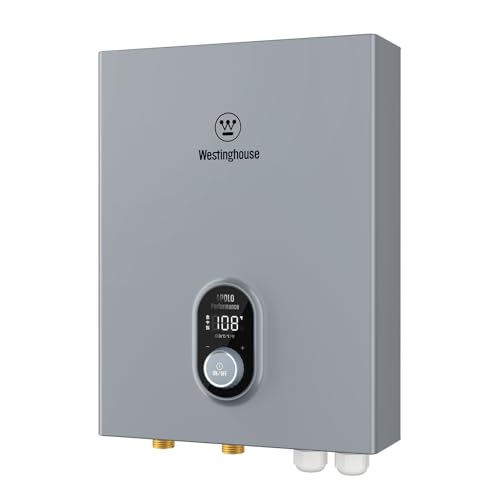
Westinghouse 24kW WiFi Tankless Water Heater
Best for: Whole-house electric hot water with smart control
- Fuel Type
- Electric
- Max Flow Rate
- 5.55 GPM
- Heating Capacity
- 24 kW
- Voltage
- 240 V
- Fixture Capacity
- Shower and sink
- Installation Type
- Whole House
The Westinghouse 24kW electric unit delivers up to 5.55 GPM of hot water at 240V. It supports simultaneous shower and sink use with a temperature range of 86-140°F. Smart Wi-Fi allows remote control via app or voice commands. Its compact 17-inch height fits flush against walls. This model suits whole-house residential needs where space is limited.
- High 5.55 GPM max flow rate for whole-house use
- 24kW heating capacity supports shower and sink simultaneously
- Wi-Fi connectivity enables remote temperature adjustment
- Compact 17" H x 13" W design saves space
- Requires 100A electrical current and 3 X 40 AMP breakers
- Heavier 17-pound build compared to lighter alternatives
- Larger 13-inch width may not fit tight spaces
- You need a high-flow unit for multiple fixtures
- You want remote temperature control via an app
- You have the required 100A electrical capacity
- You only have standard 40A breaker capacity
- You need a propane-powered unit for off-grid use
- You require a smaller footprint under 13 inches wide
Verdict: Westinghouse 24kW Electric Tankless Water Heater provides reliable whole-house hot water for homes with adequate electrical infrastructure. It fits users who prioritize smart features and high flow rates over compact size.
03 Specifications side by side
| Spec | APUS 95,000 BTU 4.42 GPM Indoor Propane Heater | Westinghouse 24kW WiFi Tankless Water Heater |
|---|---|---|
| Fuel Type | Propane | Electric |
| Max Flow Rate | 4.42 GPM | 5.55 GPM |
| Heating Capacity | 95,000 BTU | 24 kW |
| Installation Location | Indoor | – |
| Voltage | 120V | 240 V |
| Fixture Capacity | 2–3 Fixtures | Shower and sink |
| Temperature Range | 95–140°F | – |
| Installation Type | – | Whole House |
| Features | Tankless | Tankless |
| Application | – | Bathroom |
| Intended Use | – | Home |
| Dimensions | 5.9 × 5.9 × 20.6 inches | 13 × 13 × 17.1 inches |
| Weight | 19.2 pounds | 17 pounds |
| Color | Propane Gas,4.42GPM,95,000BTU,Space Gray | Gray 24 |
| Model | AP-AWH-Q13LPG | WET-24K-G |
| Size | – | L-24 |
04 Frequently asked questions
Can I install the APUS propane heater indoors?
Yes, the APUS unit is designed for indoor installation. It runs on propane gas and delivers 95,000 BTU of heating power. This output supports a flow rate of 4.42 gallons per minute. Its compact dimensions of 20.6 inches in height allow it to fit in standard utility spaces. You should ensure proper ventilation for gas appliances.
Does the Westinghouse heater require special wiring?
Yes, the Westinghouse model requires a 240V electrical connection. It uses 24kW of electric power to heat water on demand. This high power draw means you need adequate electrical infrastructure in your home. The unit is intended for whole-house use. Verify your panel capacity before installation to ensure safe operation.
Which tankless heater is lighter?
The Westinghouse unit is slightly lighter. It weighs 17 pounds, while the APUS model weighs 19.2 pounds. Both units are relatively compact for tankless heaters. The APUS measures 5.9 inches wide, whereas the Westinghouse is 13 inches wide. Weight may matter if you plan to mount the unit high on a wall.
What is the difference in flow rate between these two?
The Westinghouse model offers a higher maximum flow rate of 5.55 gallons per minute. The APUS unit provides 4.42 gallons per minute. This difference allows the Westinghouse to support more simultaneous fixtures. Both systems deliver hot water without a storage tank. Choose based on your household's peak water usage needs.
Is the Westinghouse heater smart-enabled?
Yes, the Westinghouse model includes WiFi connectivity. This feature allows for remote control and monitoring via a smartphone app. The APUS propane unit does not list smart features in its specifications. If you prefer managing your water heater settings from a distance, the Westinghouse option is the better choice.
Which unit is better for whole-house use?
Both units are designed for whole-house applications. The Westinghouse electric model is explicitly labeled for whole-house installation. The APUS propane unit is also suitable for multi-fixture indoor needs. The Westinghouse offers higher flow capacity, while the APUS provides reliable propane heating. Your choice depends on your available energy source.


