As Amazon Associates, we earn from qualifying purchases. This means we may receive a small commission at no extra cost to you if you click through and make a purchase.
As an Amazon Associate we earn from qualifying purchases. Links on this page are affiliate links.
When you compare a 21 pure to drain vs 11 pure to drain reverse osmosis system, you are looking at two very different approaches to water efficiency. Both units provide under-sink filtration for drinking water. The main difference lies in their output and waste. One model prioritizes high daily production with a 2:1 ratio. The other focuses on a balanced 1:1 ratio with remineralization. Your choice depends on your household size and water usage habits.
Daily Production Rate
600 GPD
100 GPD
Pure to Drain Ratio
2:1
1:1
Filtration Stages
8-Stage
6-Stage
Features
Tankless, Smart display faucet
Alkaline remineralization
Certifications
NSF/ANSI 42, 53, 58, 372
not listed
Choose the first if
- You need a high volume of filtered water for cooking or large families
- You want to minimize under-sink space with a tankless design
- You prefer a system with a smart faucet that displays TDS levels
Choose the second if
- You want a more water-efficient system with a 1:1 drain ratio
- You prefer alkaline water that restores healthy minerals
- You are satisfied with a standard 100 GPD output rate
Verdict
Choose the Waterdrop G3P600 if you need rapid water flow and high capacity for a busy household. Select the iSpring PH100 if you prioritize water conservation and the taste benefits of alkaline remineralization.
01 2:1 vs 1:1 RO System Comparison
pure to drain ratio
Edge: Waterdrop G3P600 600 GPD Tankless RO
Water efficiency is the primary difference between these two systems. The Waterdrop G3P600 features a 2:1 pure to drain ratio. This means it produces only one cup of waste water for every two cups of filtered water. The iSpring PH100 operates at a 1:1 ratio. It generates one cup of waste for every cup of pure water. The Waterdrop design reduces wastewater significantly. This makes the Waterdrop G3P600 the more efficient choice for minimizing water usage during operation. You will waste less water with the 2:1 model compared to the 1:1 system.
daily production rate
Edge: Waterdrop G3P600 600 GPD Tankless RO
Output speed matters when you need water for cooking or filling containers. The Waterdrop G3P600 has a daily production rate of 600 gallons per day. It fills an 8 oz cup in about 8 seconds. The iSpring PH100 produces 100 gallons per day. The Waterdrop G3P600 delivers water much faster. This higher capacity is better for households with high demand. The iSpring PH100 is sufficient for standard drinking needs but slower for filling large pots. If speed is important, the Waterdrop G3P600 is the superior option.
filtration stages
Edge: Tie
The number of filtration stages affects contaminant removal. The Waterdrop G3P600 uses an 8-stage filtration process. It includes NSF/ANSI 42, 53, 58, and 372 certifications. The iSpring PH100 uses a 6-stage system. It adds an alkaline remineralization filter as the final stage. This restores healthy minerals and raises the pH level. The Waterdrop G3P600 focuses on reducing contaminants like PFAS and lead without adding minerals. The iSpring PH100 offers alkaline water for better taste. Choose based on whether you prefer mineral-rich water or maximum contaminant reduction.
design and space
Edge: Waterdrop G3P600 600 GPD Tankless RO
Under-sink space is often limited in modern kitchens. The Waterdrop G3P600 features a tankless design. It saves 70% of under-sink space compared to traditional tank systems. It also includes a smart display faucet that shows TDS levels and filter life. The iSpring PH100 is a traditional system that likely uses a storage tank, though the tank is not explicitly described in the data. It includes a brushed nickel all-metal faucet. The tankless Waterdrop G3P600 is more compact and offers digital monitoring. The iSpring PH100 offers a premium metal faucet finish.
certifications
Edge: Waterdrop G3P600 600 GPD Tankless RO
Verified certifications ensure safety and material quality. The Waterdrop G3P600 holds NSF/ANSI 42, 53, 58, and 372 certifications. These cover chlorine, taste, TDS reduction, and lead-free materials. The iSpring PH100 mentions removing up to 99% of over 1,000 contaminants and uses a Dupont membrane. However, specific NSF certification numbers are not listed in the provided data for the iSpring PH100. The Waterdrop G3P600 provides explicit third-party verification for its performance and materials. This makes the Waterdrop G3P600 the clearer choice for verified safety standards.
02 Which RO System Fits Your Needs
You want high output and water efficiency
Our pick: Waterdrop G3P600 600 GPD Tankless RO
The Waterdrop G3P600 delivers 600 gallons per day with a 2:1 pure to drain ratio. This low waste design saves water. The tankless form factor saves under-sink space. A smart faucet displays TDS levels and filter life. You get fast flow and certified contaminant removal in a compact unit.
You prefer alkaline remineralized water
Our pick: iSpring PH100 100 GPD Alkaline RO
The iSpring PH100 includes a 6th stage alkaline filter. This restores healthy minerals for better taste. It produces 100 gallons daily with a 1:1 drain ratio. The system uses a Dupont membrane and US-made filters. You get a brushed nickel faucet and easy DIY installation with quick-connect fittings.
You need compact installation and smart features
Our pick: Waterdrop G3P600 600 GPD Tankless RO
This tankless system measures 18.1 inches long and saves 70% space. It features a digital faucet showing TDS and filter status. You can change filters in three seconds without tools. The unit holds NSF/ANSI 42, 53, 58, and 372 certifications. It fits well in smaller cabinets under your sink.
| # | Product | Best for | Price |
|---|---|---|---|
| 1 | Waterdrop G3P600 600 GPD Tankless RO | High-efficiency 2:1 pure to drain ratio needs | |
| 2 | iSpring PH100 100 GPD Alkaline RO | Moderate usage households seeking balanced pH water |

Waterdrop G3P600 600 GPD Tankless RO
Best for: High-efficiency 2:1 pure to drain ratio needs
- Pure to Drain Ratio
- 2:1 Pure to Drain
- Installation Type
- Under-Sink
- Daily Production Rate
- 600 GPD
- Filtration Stages
- 8-Stage
- Certifications
- NSF/ANSI 42 & 53 & 58 & 372
- Features
- Tankless
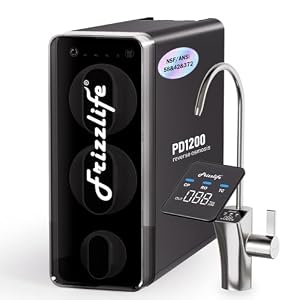
The Waterdrop G3P600 is an 8-stage tankless reverse osmosis system rated at 600 gallons per day. It features a 2:1 pure to drain ratio, producing one cup of waste for every two cups of pure water. The unit includes NSF/ANSI 42, 53, 58, and 372 certifications for contaminant reduction and lead-free materials. A smart display faucet shows TDS levels and filter life. This system saves 70% of under-sink space compared to tank-based models.
- 2:1 pure to drain ratio reduces water waste
- 600 GPD daily production rate fills an 8 oz cup in 8 seconds
- Certified against NSF/ANSI 42, 53, 58, and 372 standards
- Tankless design saves 70% under-sink space
- Smart display faucet monitors TDS and filter life
- Requires under-sink electricity to operate
- Dimensions of 18.1 x 5.68 x 17.8 inches need cabinet verification
- Weighs 15.4 pounds, requiring sturdy cabinet support
- You want a high-efficiency 2:1 pure to drain ratio
- You need 600 GPD output for drinking and cooking
- You have space for a tankless unit with electrical access
- You require a 1:1 pure to drain ratio
- You cannot install under-sink electricity
- You prefer a system with a storage tank
Verdict: Waterdrop G3P600 Tankless RO System offers a 2:1 pure to drain ratio and 600 GPD output for households prioritizing water efficiency and high daily volume. It suits buyers who need certified contaminant reduction and have the cabinet space and electrical access for a tankless installation.

iSpring PH100 100 GPD Alkaline RO
Best for: Moderate usage households seeking balanced pH water
- Pure to Drain Ratio
- 1:1 Pure to Drain
- Installation Type
- Under-sink
- Daily Production Rate
- 100 GPD
- Filtration Stages
- 6-stage
- Remineralization
- Alkaline remineralization
- Use
- Drinking Water
The iSpring PH100 is a 6-stage under-sink reverse osmosis system designed for efficient water purification. It features a 100 GPD daily production rate and a 1:1 pure to drain ratio, which reduces water waste compared to older models. The system includes an alkaline remineralization stage to improve taste and balance pH levels. It fits under standard kitchen sinks and uses a Dupont membrane to remove contaminants. This unit suits households seeking balanced, alkaline drinking water with moderate daily usage.
- 1:1 pure to drain ratio for less water waste
- 100 GPD daily production capacity
- 6-stage filtration with alkaline remineralization
- Alkaline filter restores healthy minerals and improves taste
- 100 GPD capacity is lower than the 600 GPD Waterdrop G3P600
- System dimensions require 16 x 19 x 17.5 inches of under-sink space
- 1-year manufacturer warranty is shorter than typical industry standards
- You want alkaline, remineralized water for better taste
- You prefer a 1:1 pure to drain ratio to save water
- You have a standard under-sink space for a 6-stage system
- You need high flow rates for ice makers or large families
- You want a tankless system with faster production speeds
- You require a longer warranty period than one year
Verdict: iSpring PH100 100 GPD Alkaline RO is a solid choice for buyers who prioritize water taste and efficiency over speed. It fits users who want balanced pH water and have moderate daily drinking water needs.
03 Specifications side by side
| Spec | Waterdrop G3P600 600 GPD Tankless RO | iSpring PH100 100 GPD Alkaline RO |
|---|---|---|
| Installation Type | Under-Sink | Under-sink |
| Daily Production Rate | 600 GPD | 100 GPD |
| Filtration Stages | 8-Stage | 6-stage |
| Pure to Drain Ratio | 2:1 | 1:1 |
| Certifications | NSF/ANSI 42 & 53 & 58 & 372 | – |
| Remineralization | – | Alkaline remineralization |
| Capacity | – | 100 GPD |
| Features | Tankless | Alkaline, Remineralization |
| Use | – | Drinking Water |
| Dimensions | 18.1 × 5.68 × 17.8 inches | 17.5 × 16 × 19 inches |
| Weight | 32 pounds | – |
| Size | 600 GPD | – |
| Color | White | White |
| Model | WD-G3 | PH100 |
04 Frequently asked questions
Does a 2:1 pure to drain RO system save more water than a 1:1 model?
Yes. A 2:1 pure to drain ratio produces one cup of waste water for every two cups of purified water. The Waterdrop G3P600 uses this efficient design to reduce waste. In contrast, a 1:1 system like the iSpring PH100 generates more waste water for the same amount of pure output.
Which system is better for large households needing high daily water volume?
The Waterdrop G3P600 is better for high volume needs. It offers a 600 GPD output, which suits households with significant daily drinking water demands. The iSpring PH100 provides only 100 GPD, making it suitable for moderate usage rather than large family requirements.
Do these reverse osmosis systems require a storage tank for installation?
No. The Waterdrop G3P600 is a tankless system, which saves under-sink cabinet space. The iSpring PH100 does not list tankless features, implying it may use a traditional storage tank. Tankless designs allow for faster water delivery without waiting for a tank to refill.
Does the 1:1 pure to drain system add minerals back into the water?
Yes. The iSpring PH100 includes alkaline and remineralization features. This process adjusts the pH level for balanced taste. The Waterdrop G3P600 focuses on filtration stages but does not list remineralization as a feature in its specifications.
How much under-sink space does a 600 GPD tankless RO system take up?
The Waterdrop G3P600 measures 5.68 inches wide, 17.8 inches high, and 18.1 inches long. Its compact tankless design fits into most standard under-sink cabinets. The iSpring PH100 is slightly larger at 16 inches wide and 19 inches high.
Is a 2:1 pure to drain ratio certified for contaminant reduction?
The Waterdrop G3P600 is designed for certified contaminant reduction. It uses an 8-stage filtration process to ensure water quality. Buyers prioritizing efficiency and safety should verify specific certification documents for their local water conditions.